Cruise Lines International Association has published its annual report on the implementation of environmental technologies in the cruise industry. According to CLIA, cruise companies are increasing the number of vessels with shore power, multi-fuel engines, modern wastewater treatment systems, and their own freshwater production.
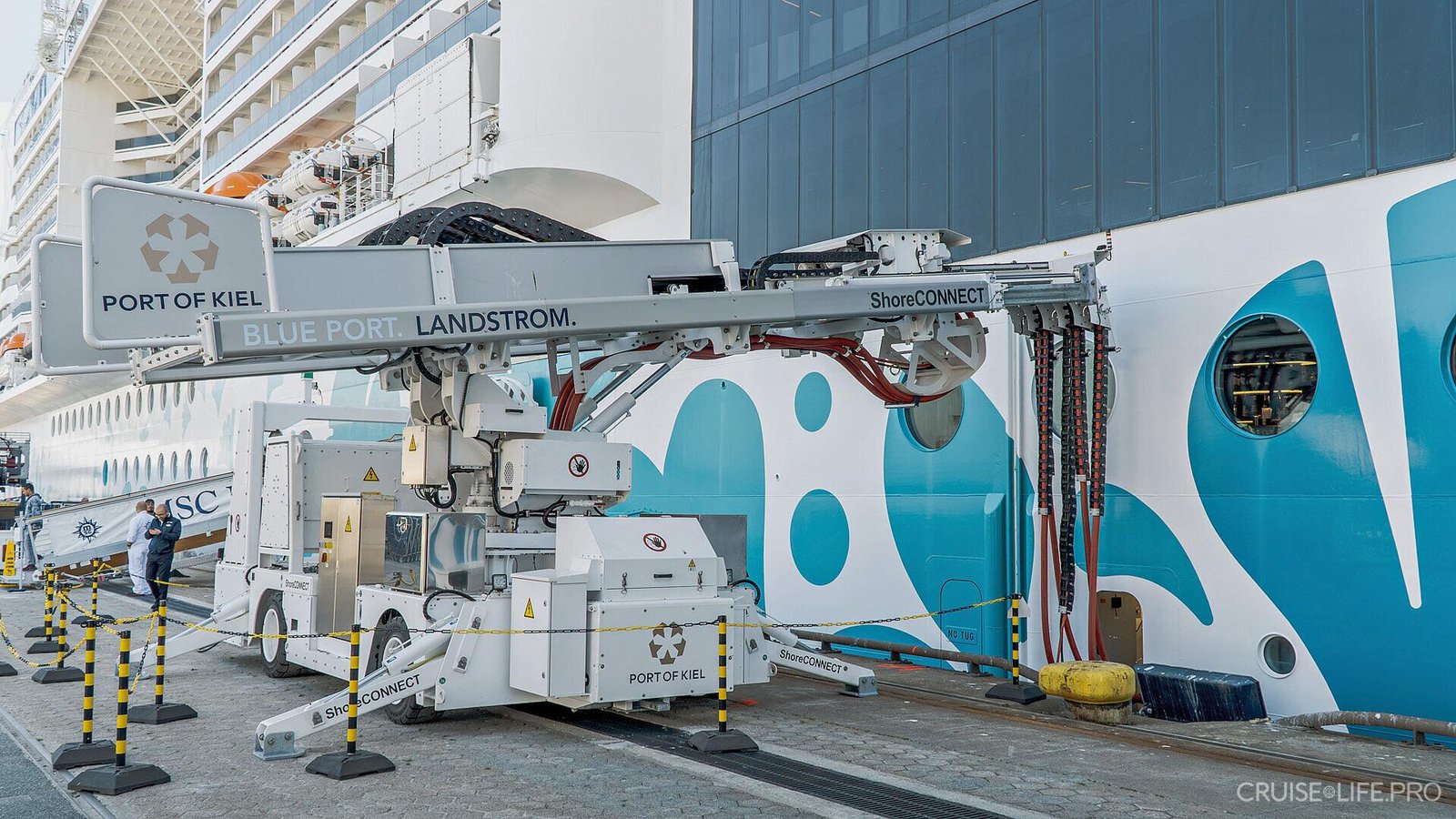
At the same time, vessel capabilities are outpacing port development: 193 cruise liners can connect to the shore power grid, but the relevant equipment is available in less than 3% of ports that receive cruise ships.
Which cruise liners does the report cover?
As of August 2026, 45 sea cruise companies - CLIA members operated 327 ships with approximately 692 thousand passenger berths on double occupancy. This is more than 90% of the world’s capacity of the sea cruise fleet.
Detailed data on environmental equipment has been collected for 297 liners that operated during 2025. They represent 96% of the ships and 98% of the passenger capacity of the CLIA company fleet.
Shore power has been installed on 193 vessels.
Shore power allows a cruise ship to shut down its main engines while in port and receive electricity from the port grid. This helps reduce emissions and noise levels directly next to the cruise terminal.
The number of equipped vessels increased from 55 in 2018 to 193 in 2026. This means:
65% of the ships included in the report;
72.5% of their total passenger capacity.
Another 47 ships are planned to be retrofitted, and 39 new cruise liners will receive the corresponding systems during construction.
However, shore power can only be used where compatible port infrastructure is available. According to CLIA, at least one equipped cruise berth is available in only 40 ports worldwide-less than 3% of the ports where cruise ships call.
The actual emissions reduction also depends on the source of electricity. CLIA cites studies by ports and regulatory bodies indicating that emissions reductions while at berth may reach 98%, but this is not a universal figure for every port.
The use of fuel oil is gradually being phased out.
According to data submitted by passenger vessels to the International Maritime Organization, the share of heavy fuel oil in reported fuel consumption decreased from 74.2% in 2019 to 60.6% in 2024.
Over this period, the share of other fuel types increased from 25.8% to 39.4%. The statistics include marine diesel oil, gasoil, low- and ultra-low-sulfur fuel, liquefied natural gas, and other fuel types.
Importantly, the “non-HFO” category does not automatically mean renewable or zero-carbon fuel. A significant portion of it is still accounted for by fossil energy sources.
Average CO₂ emissions per ship have decreased.
Data analysis of the European THETIS-MRV system shows that in the period from 2018 to 2025, the average fuel consumption per cruise ship reporting in the system decreased by approximately 18.5%. Average CO₂ emissions per ship decreased by approximately 19.4%.
These figures characterize the average ship, not the total emissions of the entire cruise industry. The overall emissions volume also depends on the number of liners, the number of cruises performed, the length of routes, and passenger traffic.
More multi-fuel liners are becoming available
The number of cruise ships with modern multi-fuel engines increased from one in 2018 to 30 by 2026. Such engines can run on different types of fuel and in the future use biological or synthetic analogs of methane and methanol.
Based on the current order portfolio, CLIA forecasts:
56 multi-fuel liners by the end of 2030;
69 vessels by 2039.
The presence of a multi-fuel engine does not yet mean that the liner is already using fuel with zero or almost zero emissions. This depends on the availability of such fuel in ports, its price, and production at industrial scale.
Wastewater treatment and fresh water production
Freshwater production systems are installed on 293 cruise ships - 98.7% of the liners covered by the report. Of these, 218 could theoretically fully meet their own freshwater needs without replenishing supplies in ports.
Modern wastewater treatment systems equip 249 ships, or 83.8% of the fleet that provided data. In 2018, there were 136 such liners.
Among them, 124 ships can comply with stricter requirements for the Special Area of the Baltic Sea under MARPOL Annex IV. In 2018, only 16 such ships were in service.
What does this mean for passengers?
Environmental characteristics of cruise ships are gradually becoming a noticeable part of travel choice. New vessels more often have shore power, modern wastewater treatment, energy-saving systems, and equipment for independent production of fresh water.
However, it’s not worth evaluating the eco-friendliness of a cruise only by the age of the ship or by promotional claims. What matters is the specific ship actually used, the fuel used in practice, the itinerary, port infrastructure, and the availability of connection to the shore power grid.
Keep up with news from Cruise-Life to learn more about new cruise ships, eco-friendly technologies, and the development of the modern cruise industry.