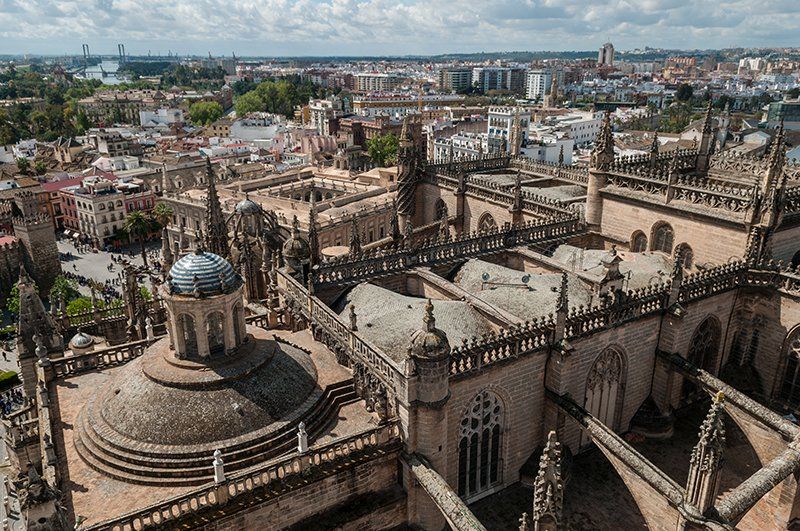
Seville Cathedral
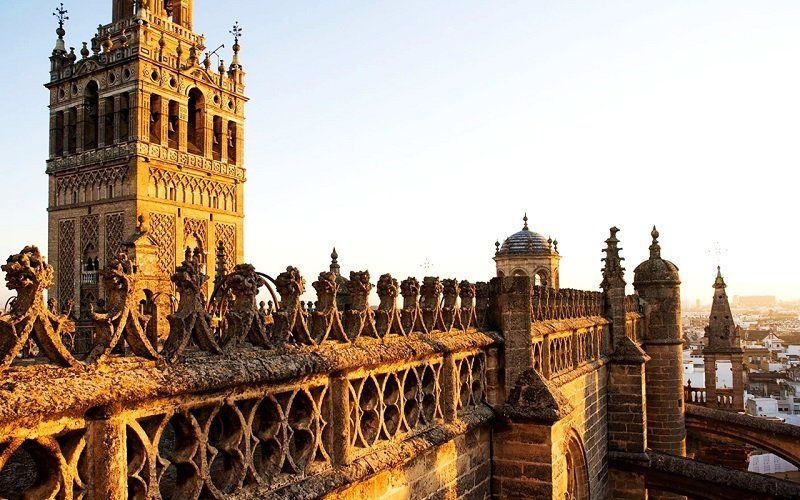
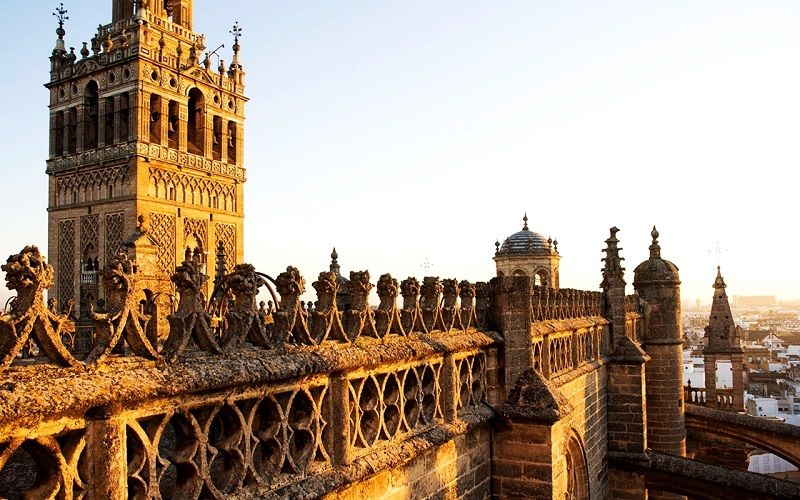
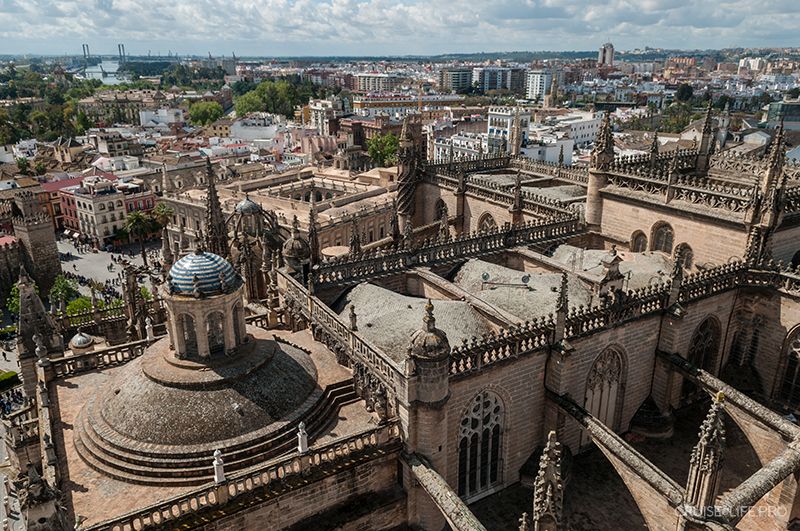
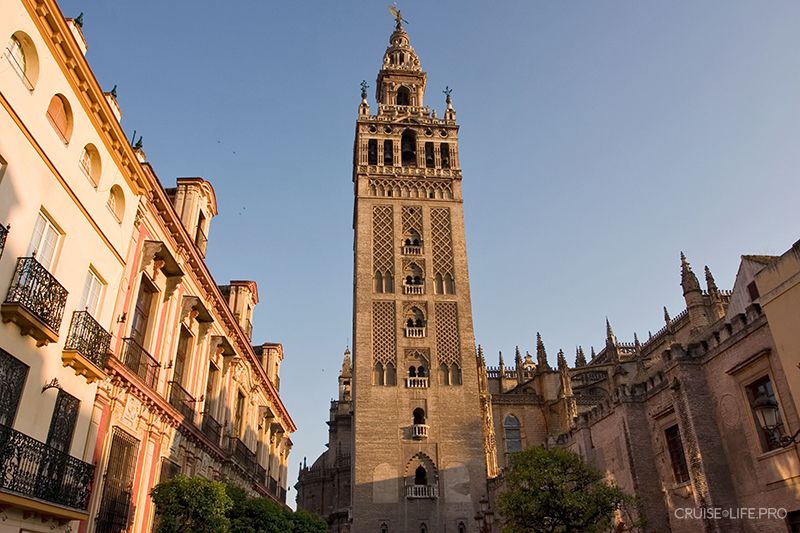
The world’s largest Gothic cathedral was built on the site of a 12th-century mosque. The building was constructed until 1575, which fully reflects its appearance, having absorbed the history of the country’s greatness. Inside the cathedral there are 80 chapels and the tomb of Christopher Columbus, where the great navigator’s remains lie-brought from Cuba in the late 19th century. Rising above the structure is an 87-meter bell tower-the Giralda, which many years ago served as the minaret of the Seville mosque. The cathedral showcases works by the great Seville sculptors and artists. In the northern part of the cathedral there is an orange grove with 66 trees and a Gothic fountain in the center.
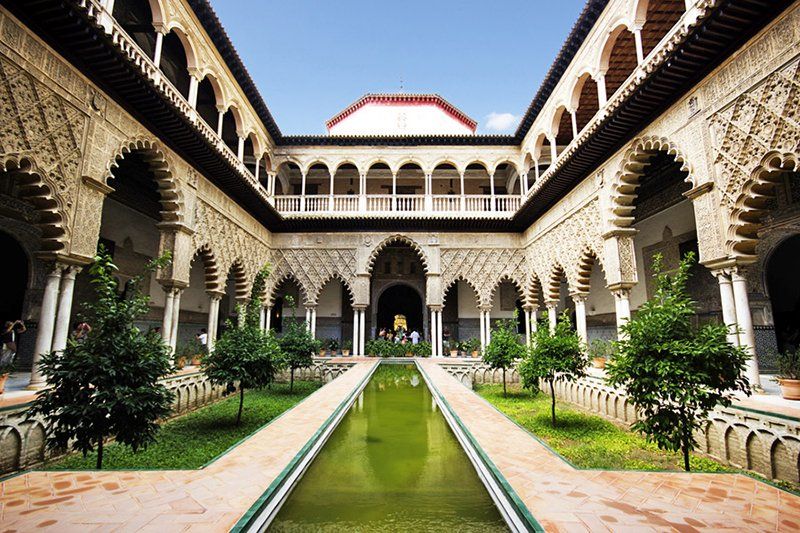
Alcázar Palace
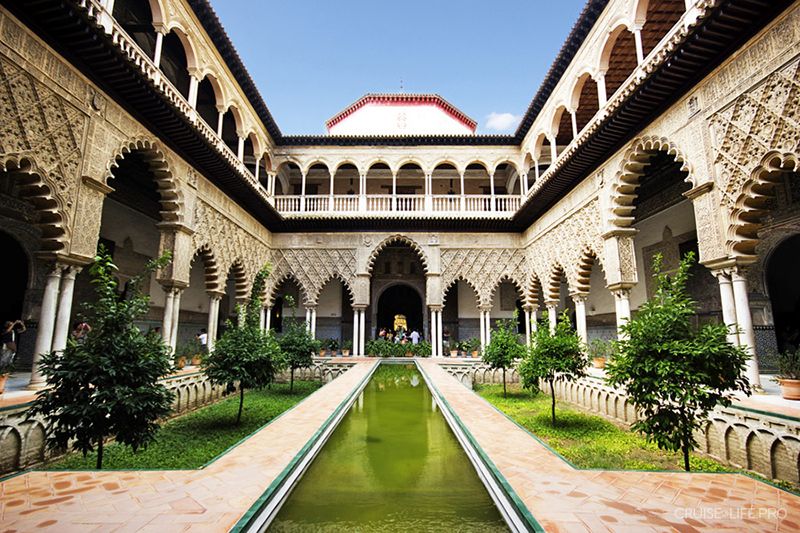
Once a Moorish fortress, founded in the 10th century and significantly rebuilt in the 14th century, the Alcázar is considered one of the finest examples of Mudejar architecture, comparable in beauty to the Alhambra. A visit to the Alcázar can take at least half a day, if you want to properly explore its many courtyards and halls. The tour can begin at the Patio de Leones, literally the “lion courtyard,” where the palace garrison once was. In the next courtyard-the Patio de la Montería-it’s a must to peek into the “north” room, where there is a unique collection of fans from around the world. In the very heart of the Alcázar lies the Patio de las Doncellas, famous for its secret garden, discovered by archaeologists beneath marble slabs in 2004.
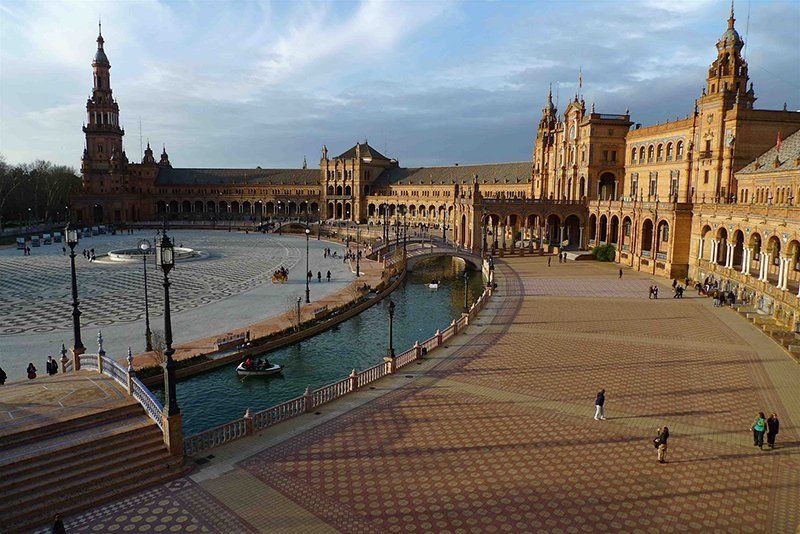
Spain Area
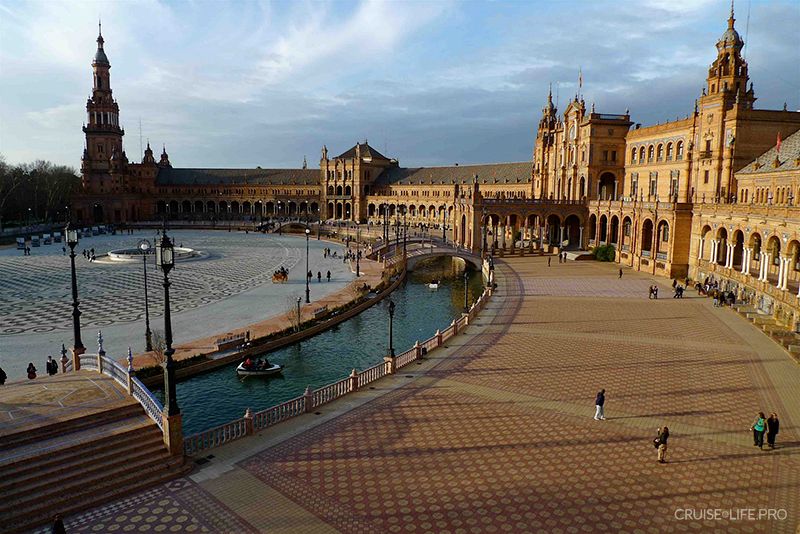
The Plaza of Spain is part of the María Luisa Park. It was built for the 1929 Ibero-American Exhibition according to a design by the Seville architect Aníbal González. The square is oriented toward the Guadalquivir River, as if facing toward America, and has a semicircular shape symbolizing Spain’s “embrace” extended to its former colonies. Various government institutions are located around the square, and along its perimeter, in niches decorated with mosaics, all Spanish provinces are represented. The Plaza of Spain has been turned into a film set several times for directors of movie hits. Several scenes from the Star Wars epic were filmed here (\"Episode I: The Phantom Menace\" and \"Episode II: Attack of the Clones\").
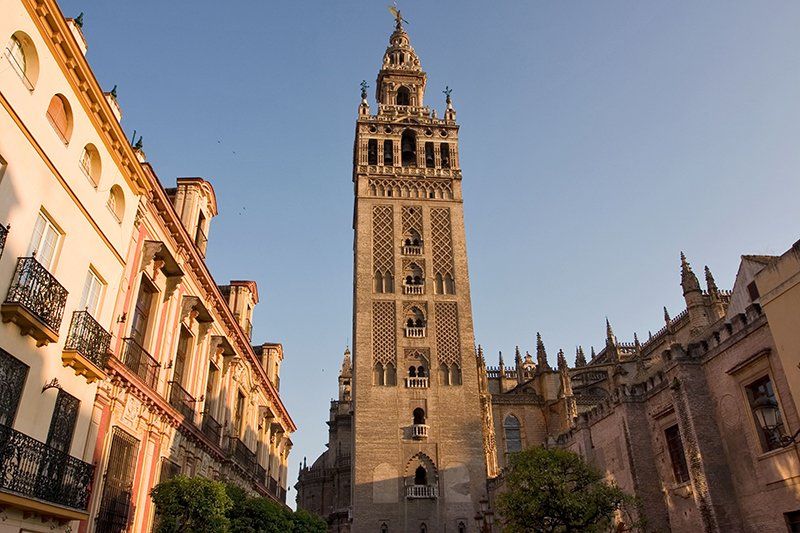
Giralda Tower
La Giralda is one of the oldest structures in Seville. Built at the end of the 12th century by order of the caliph Abu Yugb Yusuf (the construction model taken was the minaret of the Kutubia Mosque in Marrakech), it originally served as the minaret of the great Seville mosque. When the city passed into the hands of Fernando III, the mosque began to function as a cathedral, and later it was rebuilt in the Gothic style. The Giralda, meanwhile, became a bell tower, remaining an important symbol of Seville. Originally, the tower was adorned with four copper spheres, which were destroyed after the earthquake in 1365. In the 16th century, architect Hernán Ruiz completed the tower in the Spanish Renaissance style; a statue of Faith holding a banner was also added, which became a weather vane-“giraldillo” (hence the tower’s name).
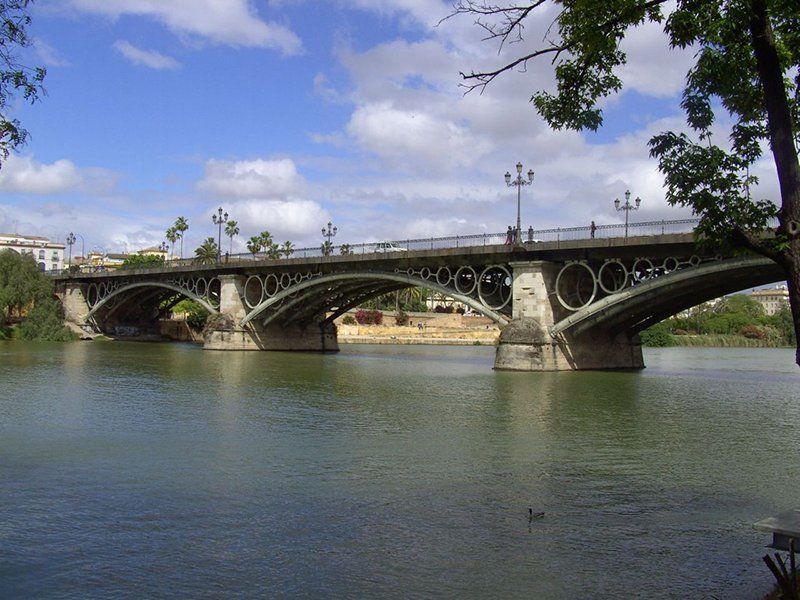
Isabella II Bridge
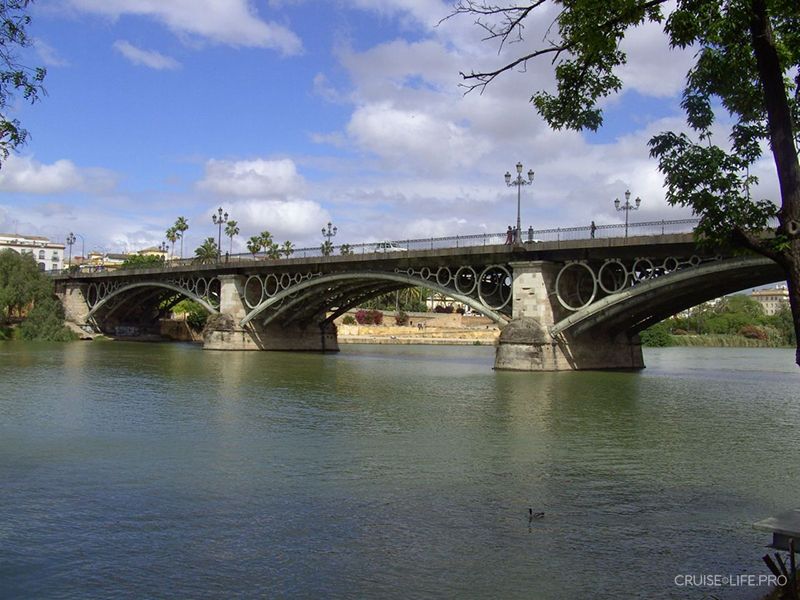
The stone bridge spanning the Guadalquivir River and connecting the center of Seville with the Triana district was built in 1854 to a design by Andrea Oviedo during the reign of Isabella II, after whom it was named. In the popular imagination, it is known as the Triana bridge. It is considered one of the largest bridges in Seville and one of the city’s main symbols. Its length is 149 meters, and its width is 7 meters.
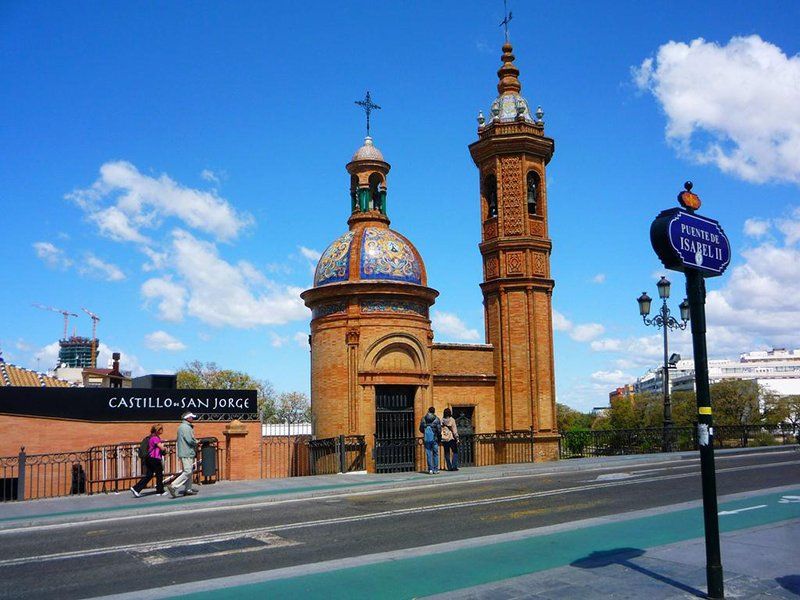
San Jorge Fortress
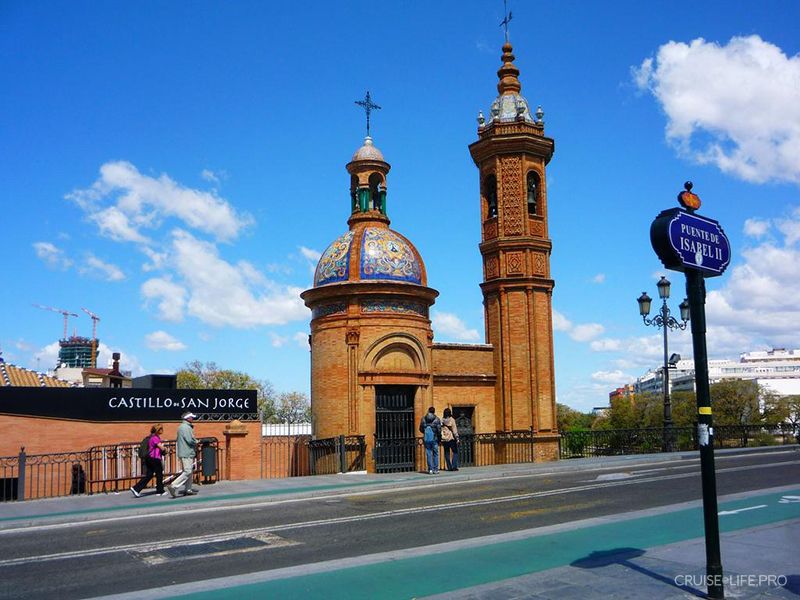
In the Middle Ages, the Fortress of San Jorge was built by the Visigoths to protect the city, and in the 15th-17th centuries it served as a center of the Inquisition in Spain. Thousands of men and women languished within the fortress prison walls and were subjected to torture. Today, the Inquisition Museum is located in the fortress. Various installations and multimedia exhibits tell the story of the church’s dark past. Be sure to watch the moving video about a young woman who prepared medicines from various herbs, was falsely accused of witchcraft, and was sentenced to be burned. From the ruins of the castle, you can enjoy views of the Guadalquivir River.