Basilica of San Vitale
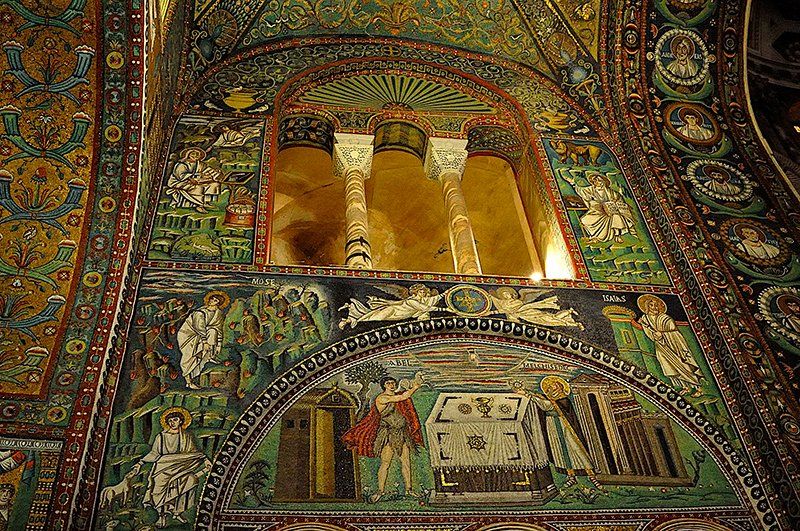
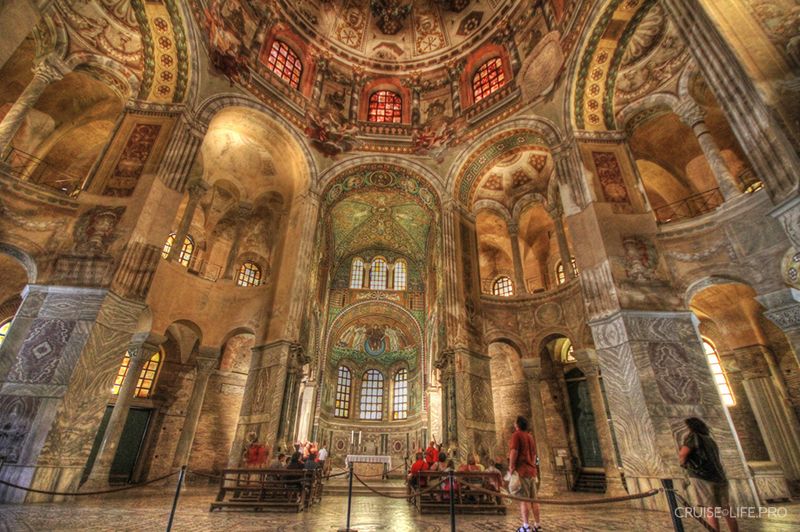
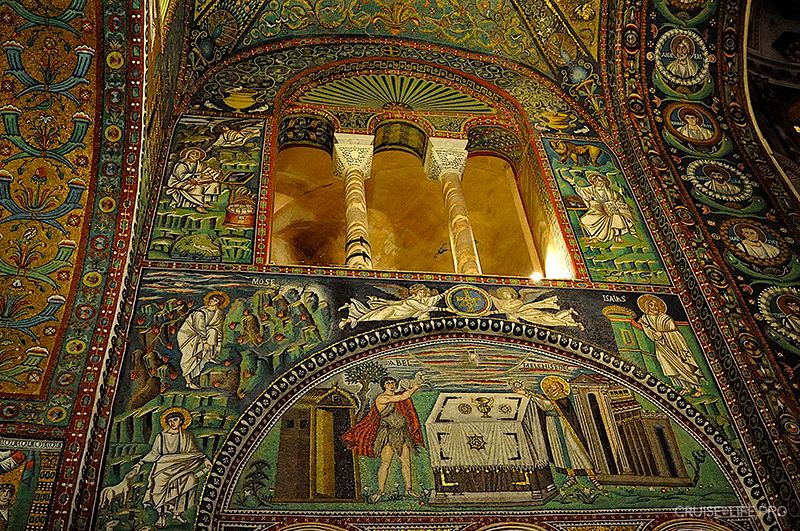
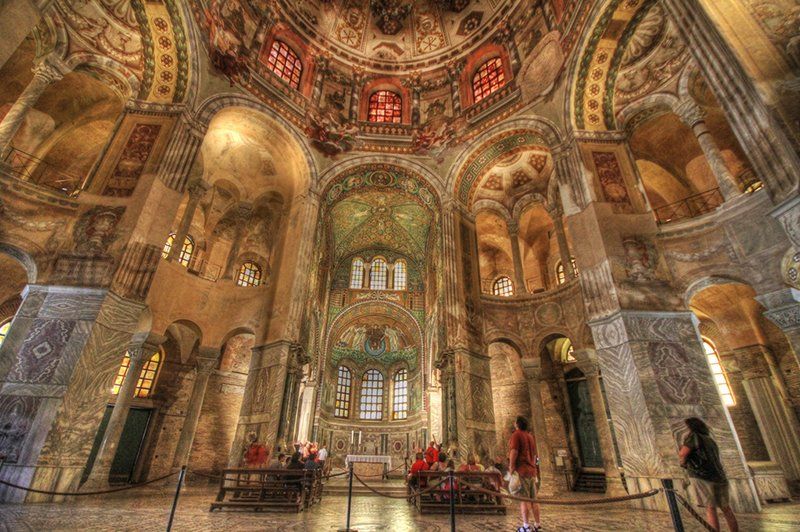
Basilica San Vitale is one of the oldest churches in Emilia-Romagna, having survived to this day from Byzantine times. The construction of the basilica began in 525 and was completed in 547. At that time, Ravenna was under Byzantine rule, so the temple turned out to be very similar to Constantinople churches: octagonal and crowned with a round dome. Inside the church you can see unique Byzantine mosaic portraits of Emperor Justinian and his wife, Empress Theodora. The mosaics made during their lifetimes are of immense artistic value and are protected by UNESCO. Copies of these works are displayed in many museums around the world, including the Pushkin State Museum of Fine Arts (GMII) in Moscow.
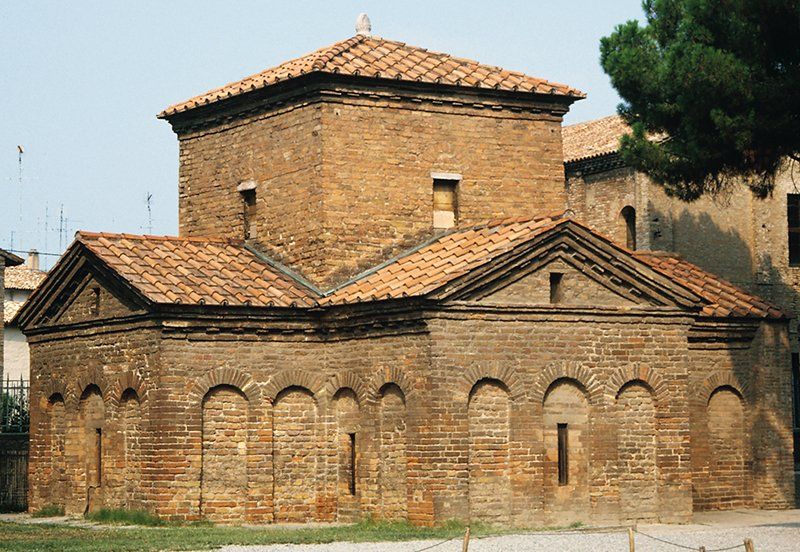
Mausoleum of Galla Placidia
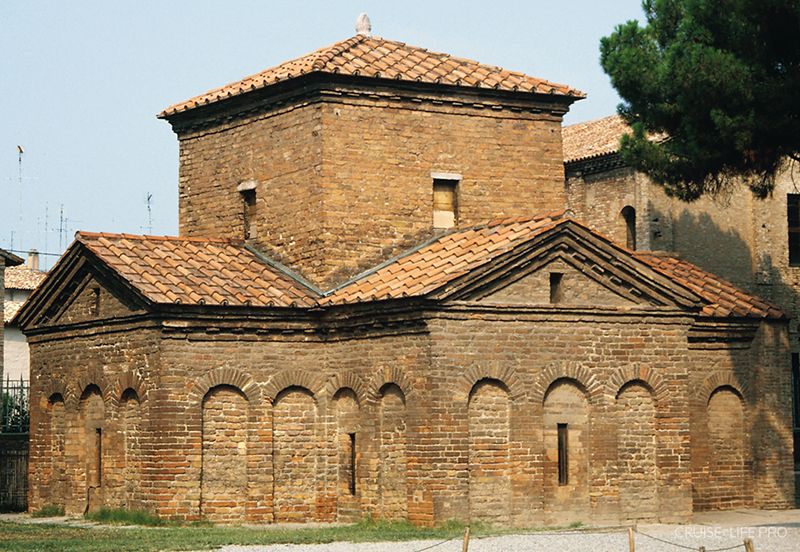
Galla Placidia was the daughter of the Emperor Theodosius the Great. Even during her lifetime, she had her own mausoleum built, but she was never laid to rest in it. Quite modest on the outside, inside the Mausoleum of Galla Placidia is a true treasure trove. All its walls and vaults are covered with exquisitely preserved Byzantine mosaics-the oldest in Ravenna. At the center of the dome there is a Latin cross framed by eight hundred golden stars. On the walls-depictions of Saint Lawrence in spotless white garments and Christ as the Good Shepherd. You are not allowed to stay in the room for more than five minutes, so you have to run back and forth to take everything in properly.
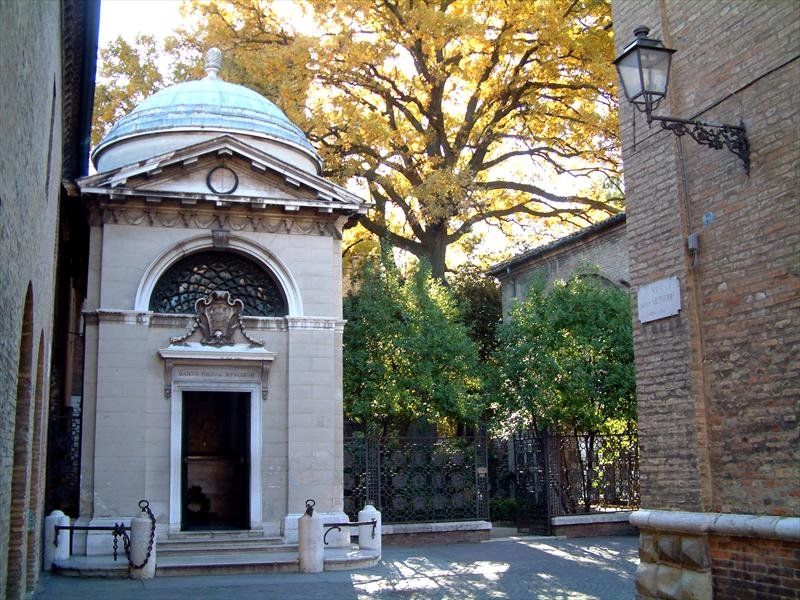
Dante’s Tomb
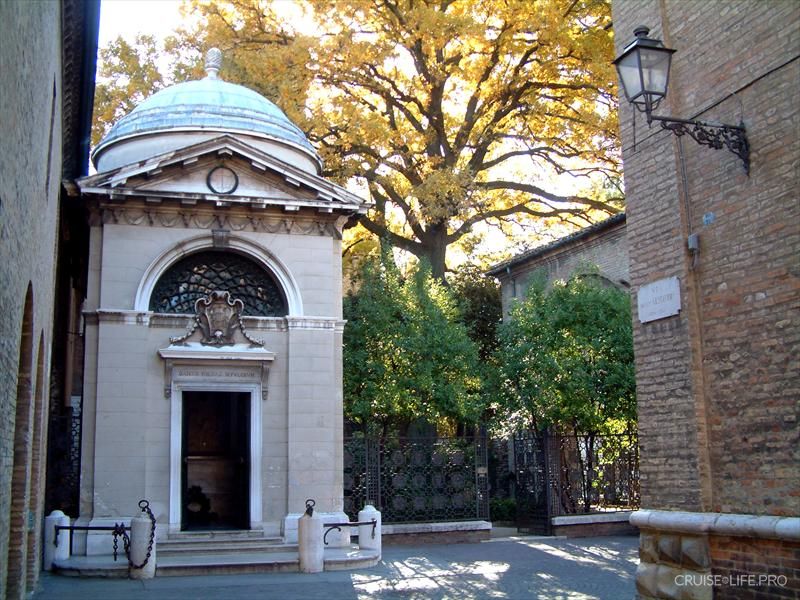
In 1302, the great Italian poet Dante Alighieri was expelled from his native Florence, together with his family, for political reasons. After long years of wandering, Dante finally found refuge in Ravenna at the court of the city’s ruler, Guido da Polenta. It was here that Dante wrote “Paradise” - the final part of his “Divine Comedy.” In 1321, Dante died of malaria on the journey from Venice, where he had traveled as an envoy of Ravenna. He was buried in the Church of Saint Francis. But five centuries later, the poet’s remains were moved to a new marble tomb, where they still rest to this day.
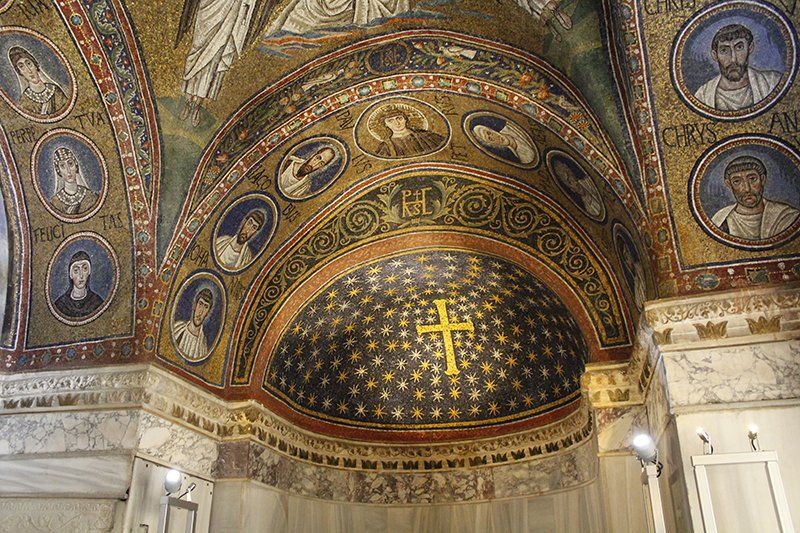
Archbishop’s Chapel
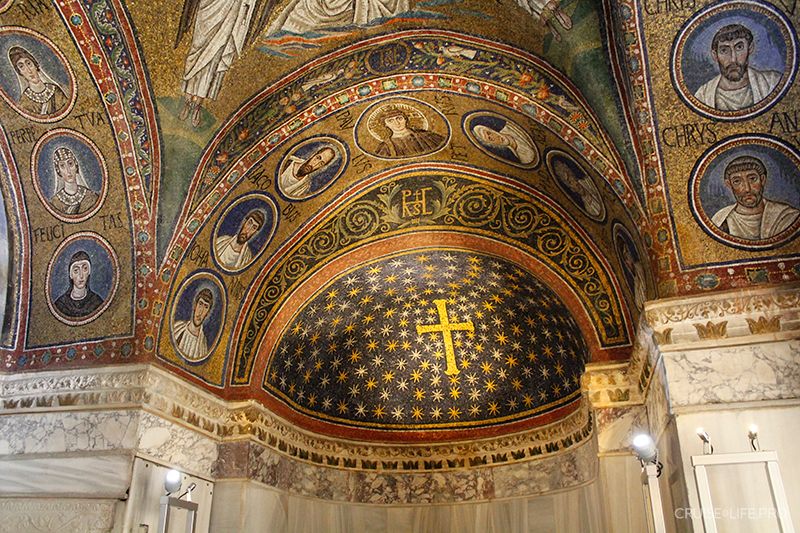
Included among eight monuments protected by UNESCO in Ravenna, this chapel for a long time served as the local archbishop’s “home” chapel. It was built during the reign of Theodoric the Great. After taking Ravenna and making it the capital of his vast kingdom, he ensured it had a proper appearance. In addition to frescoes, the chapel houses a silver archiepiscopal cross adorned with medallions. Some of the medallions were made in the early 6th century-the same period when the chapel itself was built. The chapel is built in the shape of a cross; on the ceiling and above the entrance, there are well-preserved mosaics, which is precisely why so much attention is drawn to it. The building was restored in the early 20th century and survived the bombings.
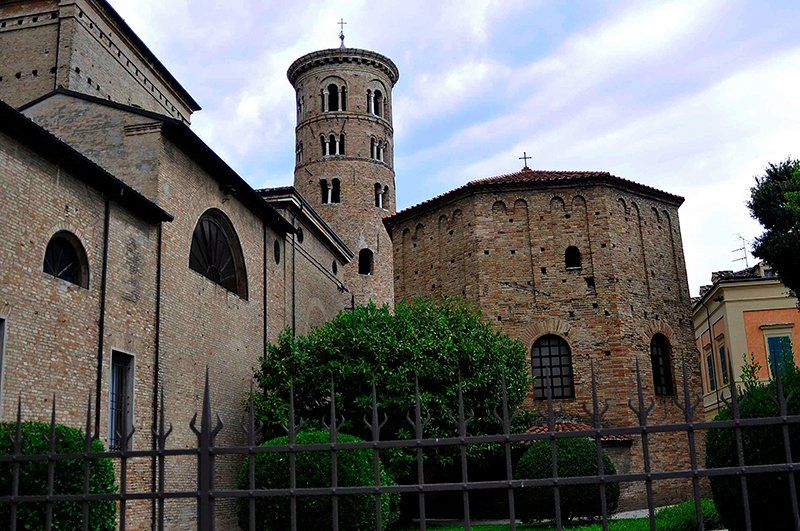
Baptistery of the Orthodox Church
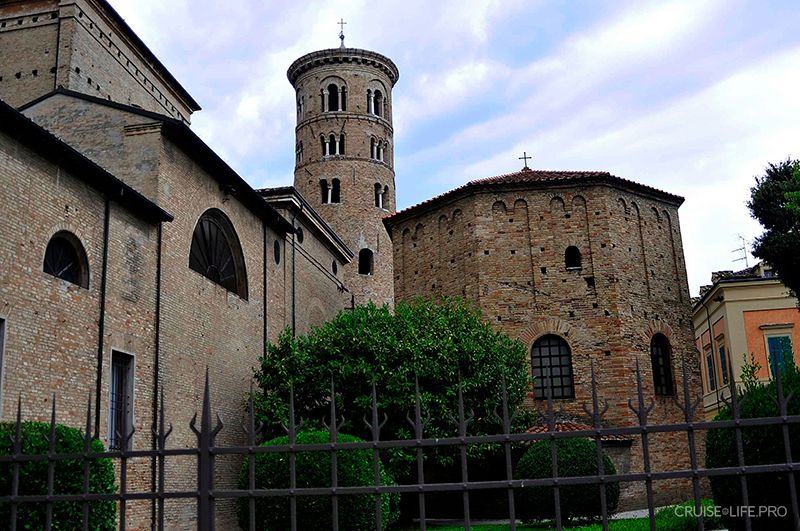
The baptistery of the Orthodox was named so in order to distinguish it from another Ravenna baptistery-the Arian one. By “Orthodox” here, we mean not the Byzantine Orthodox, but adherents to the “true” Christian faith as opposed to the Arian heresy. The baptistery building was constructed as early as the 5th century and is famous for its mosaics. On the walls there are images of the prophets, and in the dome there is the scene of the Baptism of the Lord, along with mosaic figures of the twelve apostles, shown full-length. In addition to ordinary smalti, precious gemstones were also used in the baptistery mosaic.
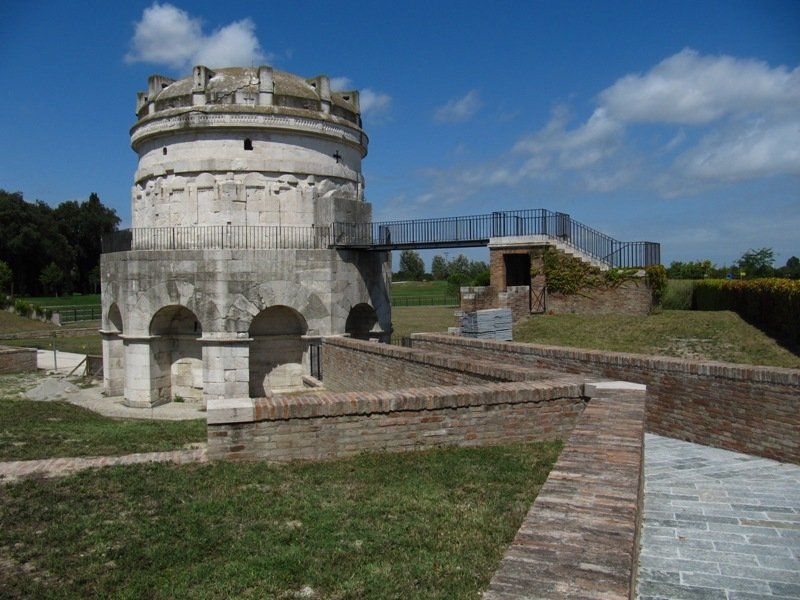
Mausoleum of Theoderic the Great
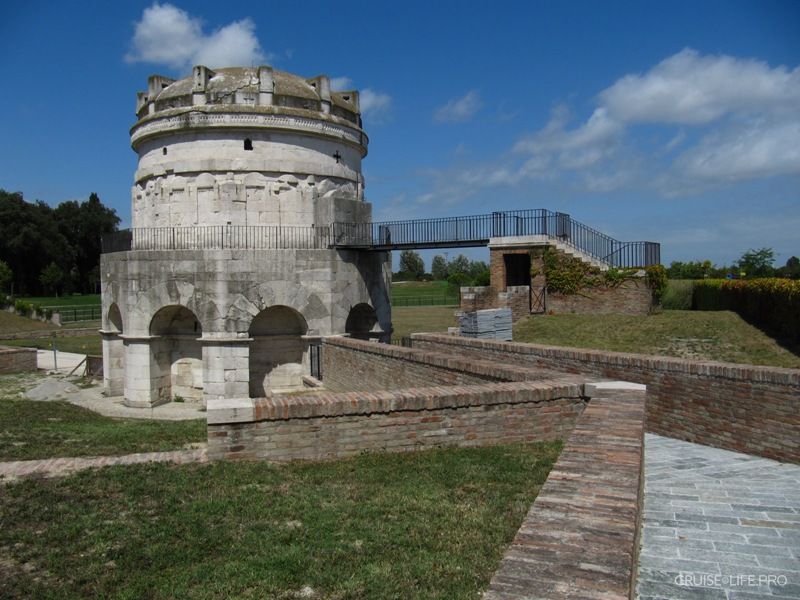
Not only enlightened Byzantines built their own tombs in Ravenna, but also the so-called “barbarians” - the Ostrogoths. The best-known of them, the Mausoleum of Theodoric the Great, stands not far from the city center of Ravenna next to the Ostrogothic cemetery. The two-tiered mausoleum, built of white Istrian limestone for the Ostrogoth king Theodoric, nicknamed the Great, has the shape of a rotunda. On the first tier there is a chapel for funeral services, and on the second - the sarcophagi themselves containing the remains of members of the royal family. The building is crowned by a massive dome carved from a single 300-ton stone. After Ravenna was freed from the barbarians, Theodoric’s remains were taken out of the mausoleum in an unknown direction. Since then, the Ostrogoth king’s porphyry sarcophagus has stood empty.