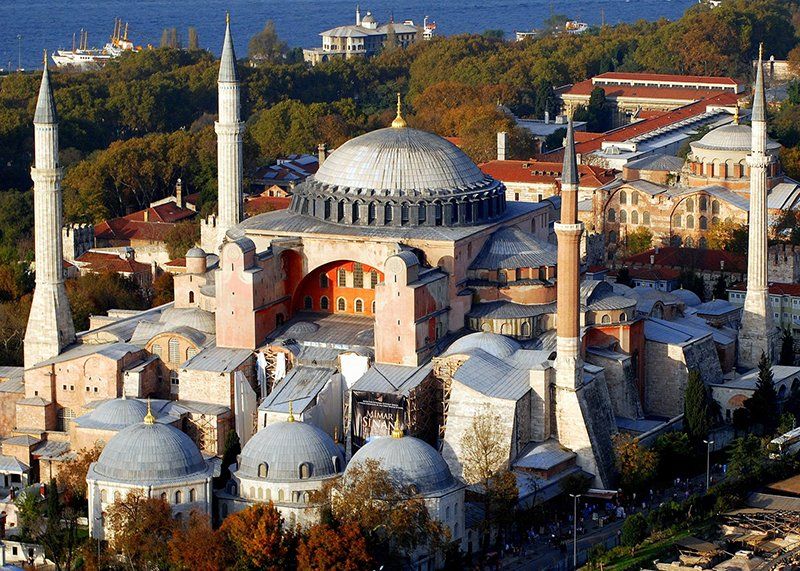
Hagia Sophia
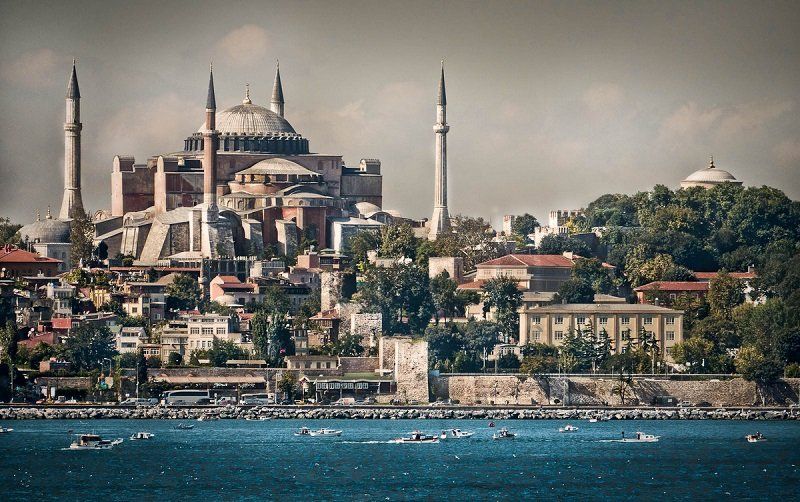
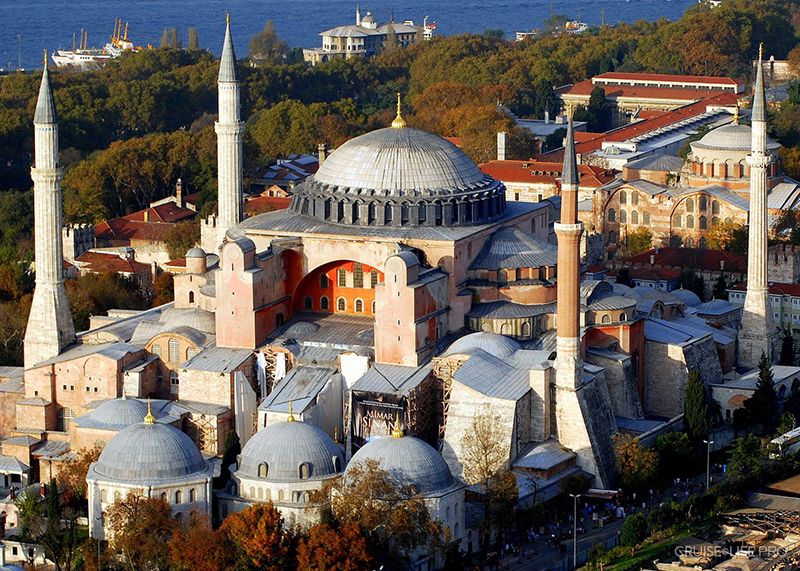
Up to 360 years ago, a pagan Temple of Artemis stood on this site. Emperor Constantine erected a small church in honor of Holy Sophia in its place. And in the 6th century, according to legend, an angel appeared to Emperor Justinian in a dream with a plan for building a new grand temple. The construction of the most beautiful church in Asia Minor took 5 years, and during that time all of the empire’s revenues could not cover the cost of the building. In the mid-15th century, the troops of Sultan Mehmed II captured Constantinople, after which minarets were added to the Church of Holy Sophia and it became a Muslim mosque. If you stand under the dome, you can see a mark in colored stone to the right of the altar. This is the Center of the Universe, where Byzantine emperors were crowned.
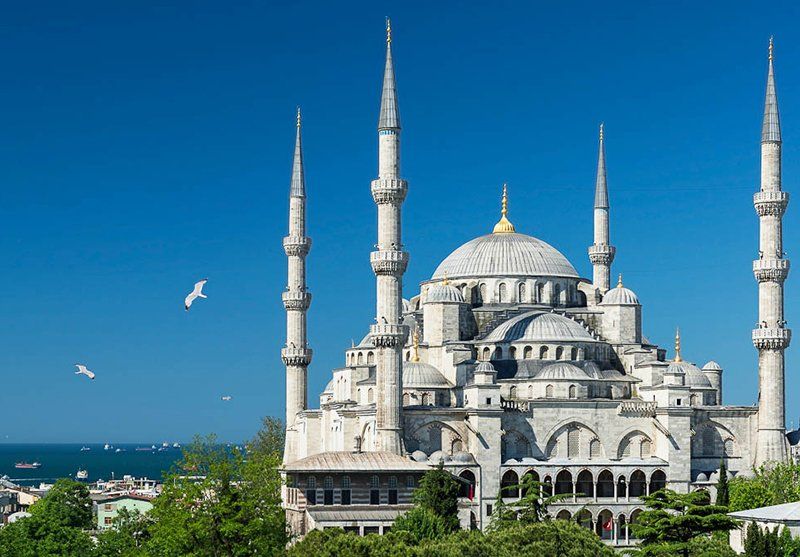
Blue Mosque Sultanahmet
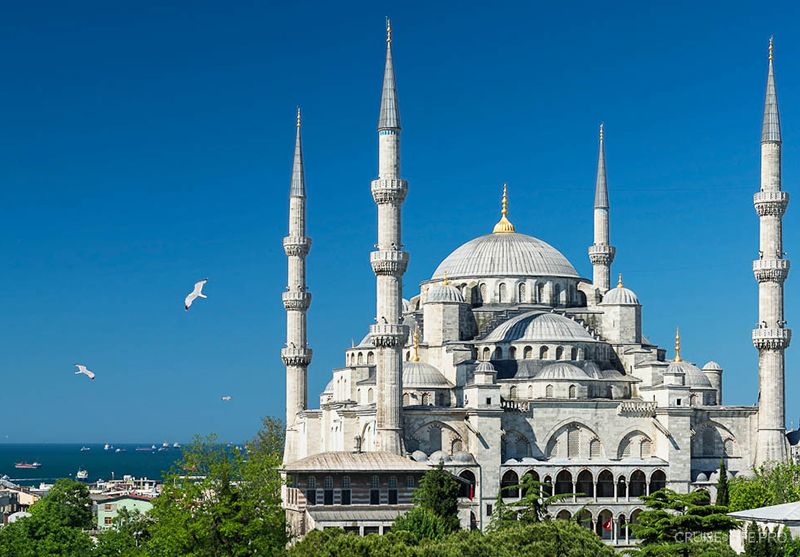
Across the square, opposite Hagia Sophia, stands the Sultan Ahmed Mosque. Between these two places of worship there is almost a millennium. It is often called the Blue Mosque,-because of the color of the decorative tiles used in the interior. When sunlight enters through its 260 windows, a blue, cosmic glow is created. Muslim worshippers may enter through the main gate; other visitors go in via the southern entrance, which is covered by a leather carpet that must be moved aside in order to enter. During prayer, men are separated from women and tourists by a partition. Photography is allowed, but only without a flash. Shoes must be removed before entering and left in front of the door or placed in a bag and taken inside, where they should be kept in a storage cubby. From May to October, musical and light shows are held in the northern part of the mosque.
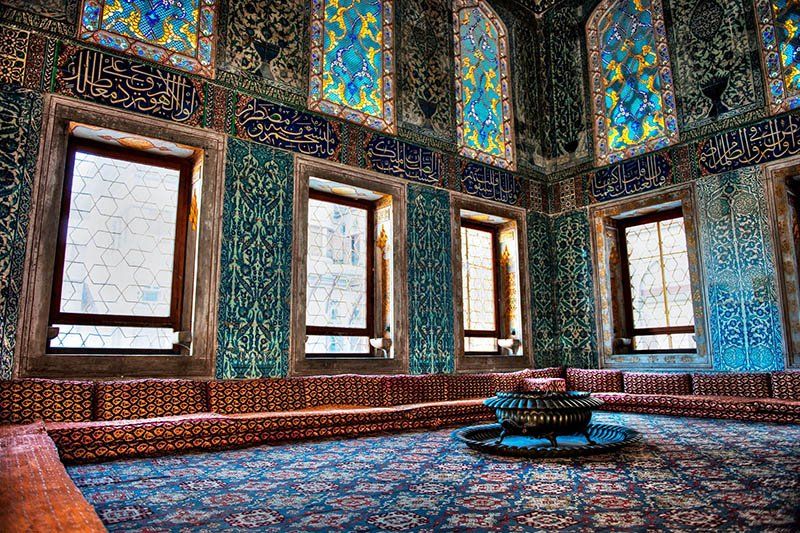
Topkapi Palace
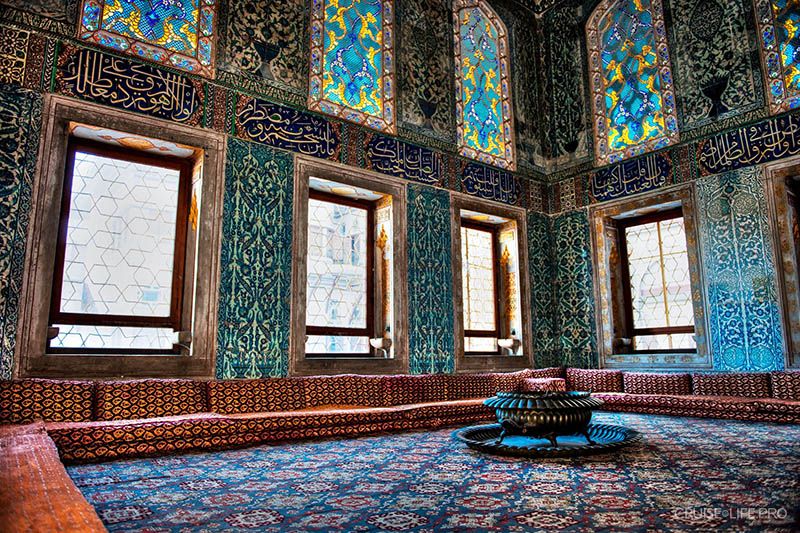
This is the main palace of the Ottoman Empire. The palace comprises four courtyards. The first courtyard has the main entrance; here, a slightly younger church of Saint Irene (about 1700 years old) was built on the foundations of the ancient Temple of Aphrodite. The entrance to the second courtyard is through the Gate of Welcoming. The harem is on the left. Here lived the wives, eunuchs, concubines, and the sultan’s mother-the mistress of this part of the palace. The Gate of Happiness leads to the third courtyard. At the entrance there is a small pavilion-a hall for audiences. On the right is the collection of the sultans’ clothing. Next is a treasury of three halls, where precious jewels are kept. Nearby is the entrance to the Collection of Sacred Relics, such as: the Prophet Muhammad’s tooth, a hair from the Prophet’s beard, the Prophet’s banner, and the Prophet’s clothing. There are also Christian shrines-for example, the hand of Saint John the Baptist. In the fourth courtyard, the famous Tulip Garden used to be located.
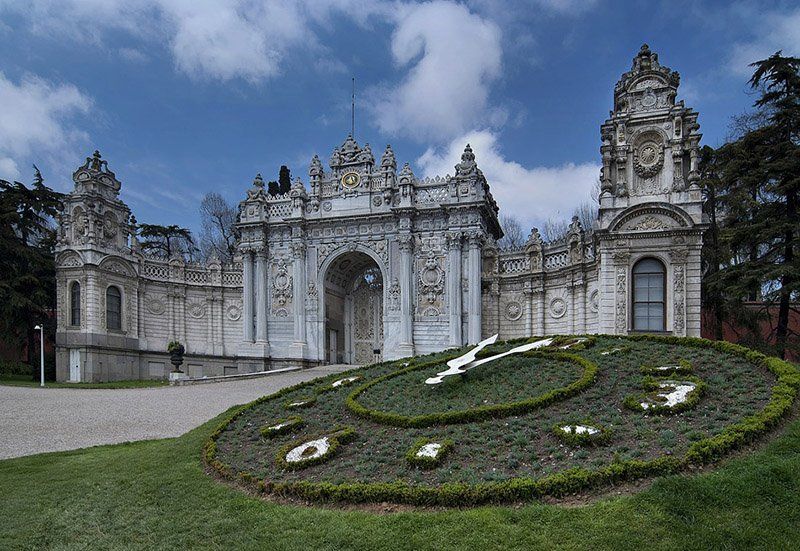
Dolmabahçe Palace
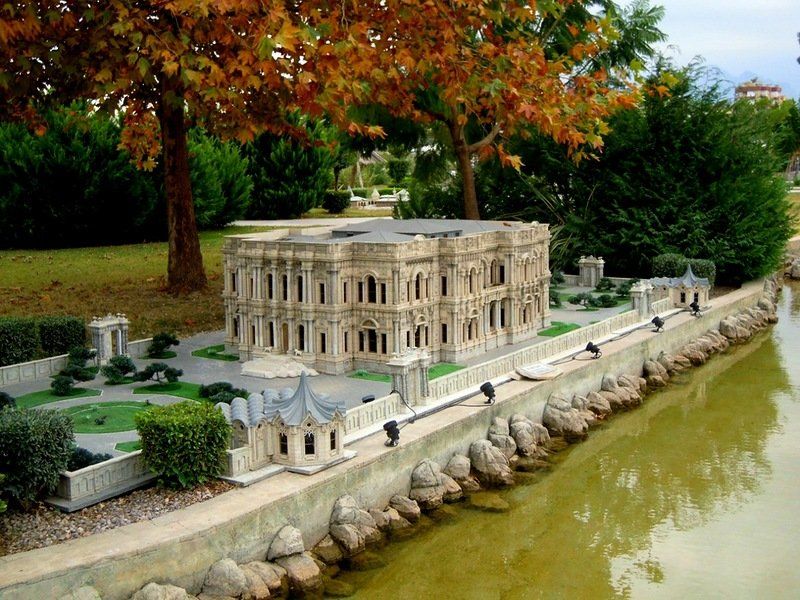
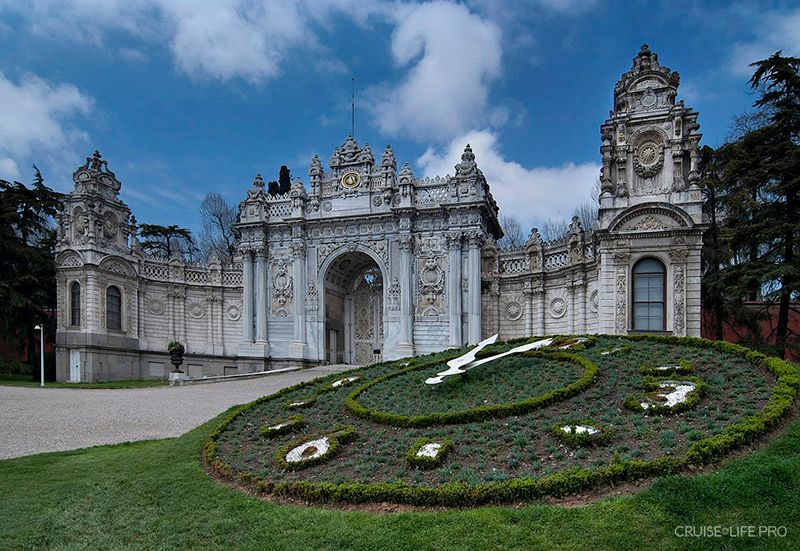
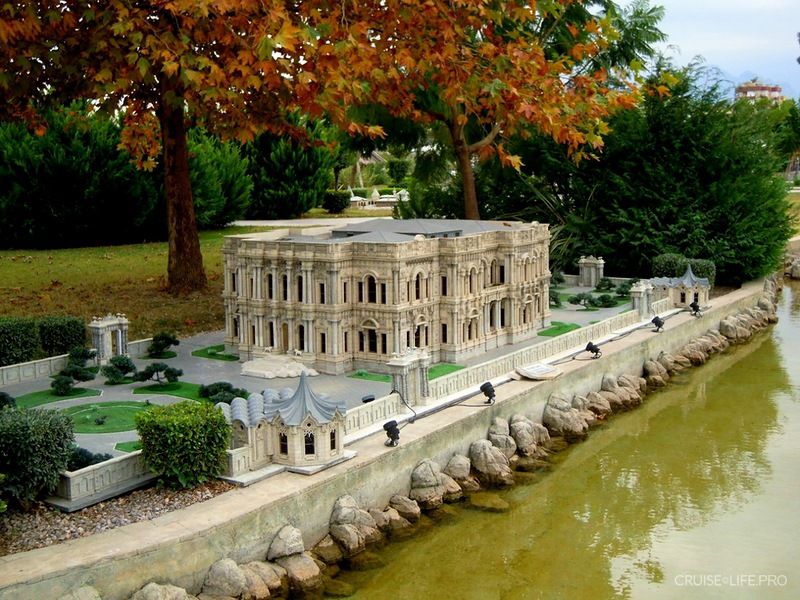
In a palace built on the shores of the Bosphorus, there are 285 rooms, 68 bathrooms, a staircase with Baccarat crystal balustrades, and a Bohemian crystal chandelier weighing four and a half tons. The chandelier hangs in the Ceremonial Hall, where in the 19th century the Sultan’s coronation took place. Peacocks roam in the courtyard. Visiting the palace takes at least 2-3 hours. Tours are held every 15-20 minutes.
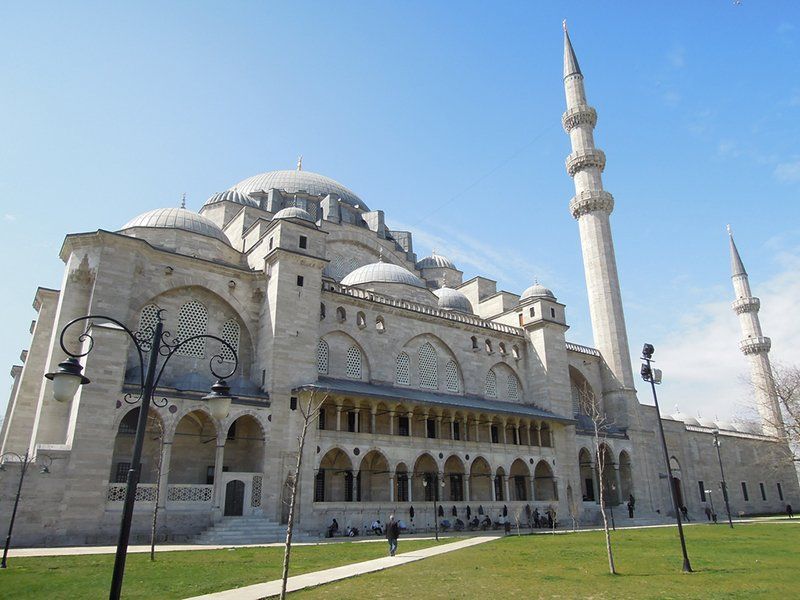
Suleymaniye Mosque
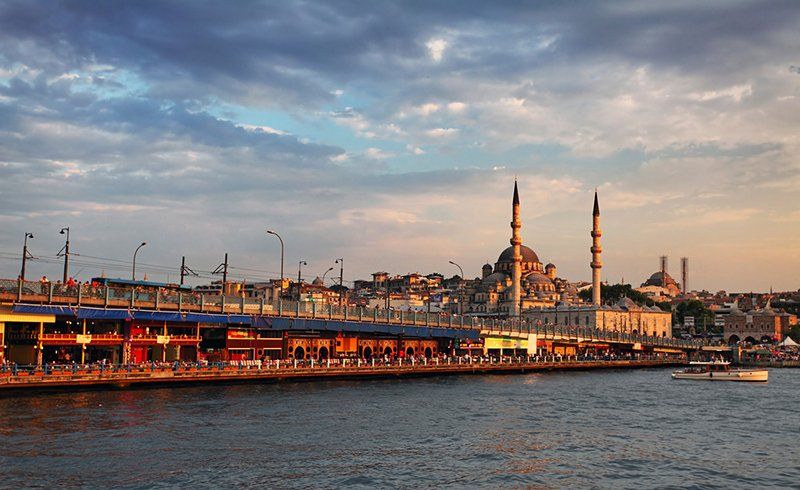
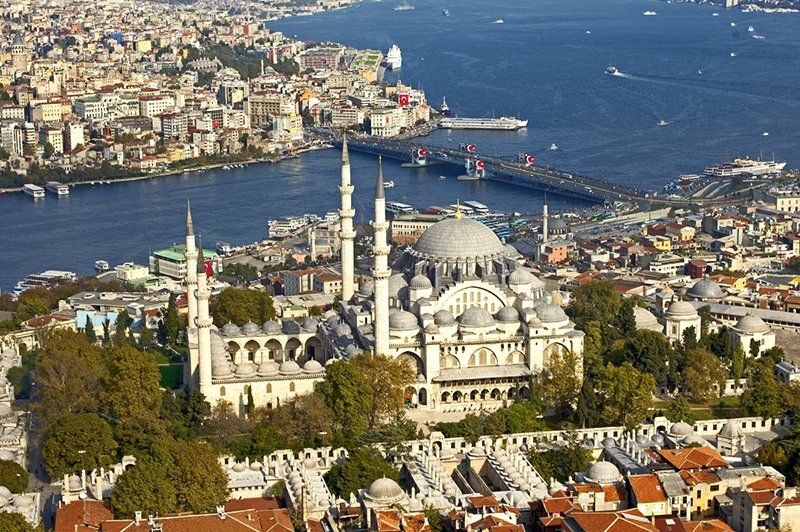
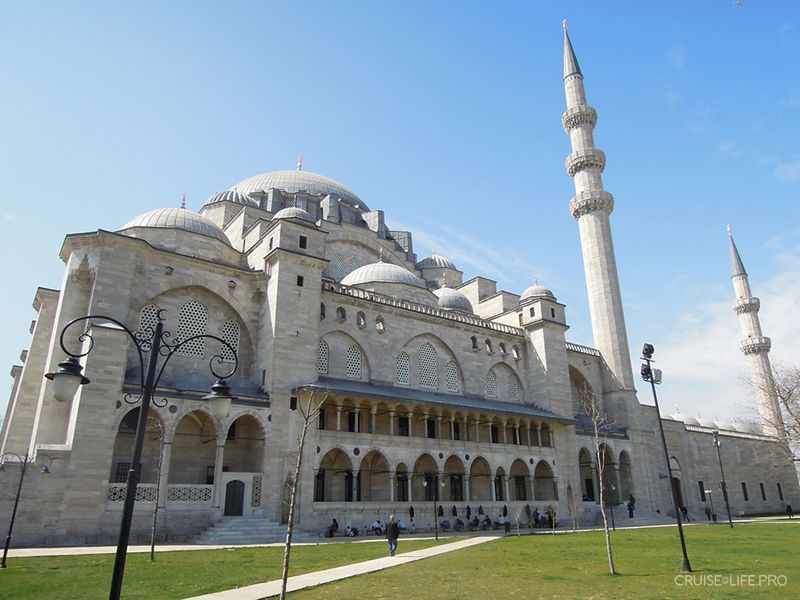
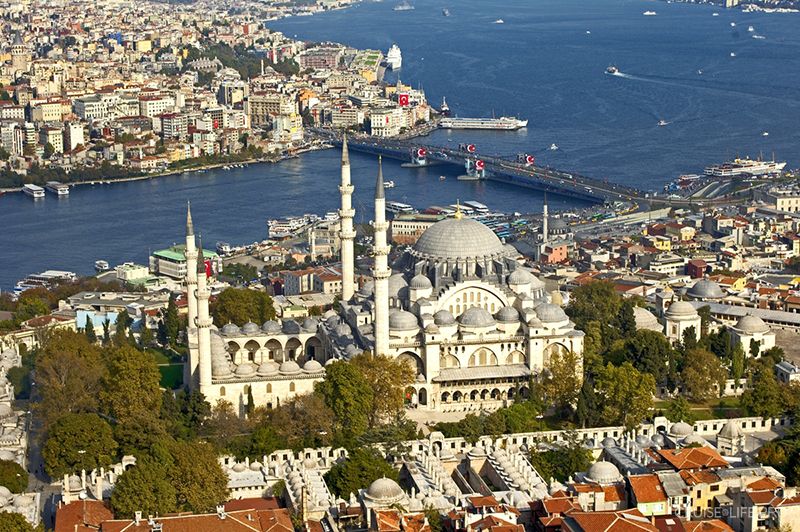
The Suleymaniye Mosque (Süleymaniye Camii) with its four minarets is named after the sultan who commissioned its construction, Sultan Suleiman Kanuni-“the Lawgiver.” Construction lasted for nearly seven years under the guidance of Khoja Mim ar Sinan, a Greek who had converted to Islam. Inside its walls, vase-shaped resonators are embedded to ensure excellent acoustics. The dome is supported by four columns-one brought from Egypt, another from Baalbek (Lebanon), and two more “made in Turkey.” At one time, the mosque was encircled by four madrasas, a library, bathhouses, and an inn. At his own expense, the sultan also maintained a free dining hall for pilgrims. Today, in the surrounding area, only a hospital and a repository of manuscripts have survived.