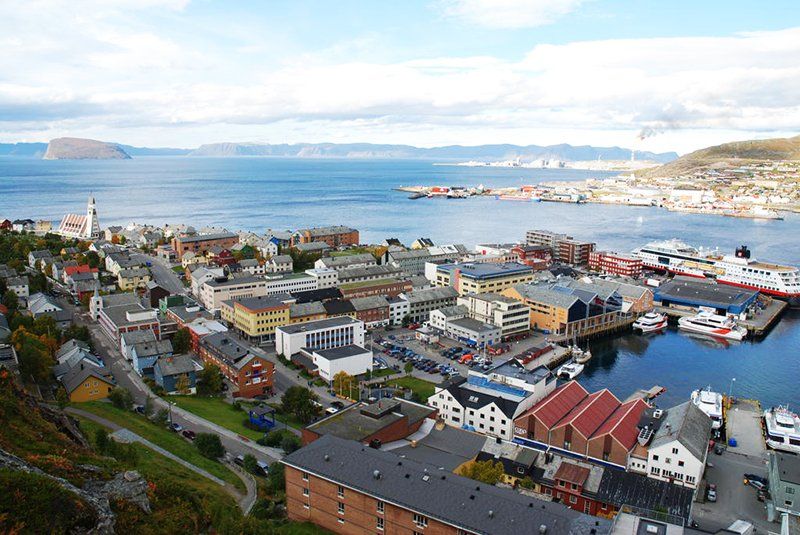
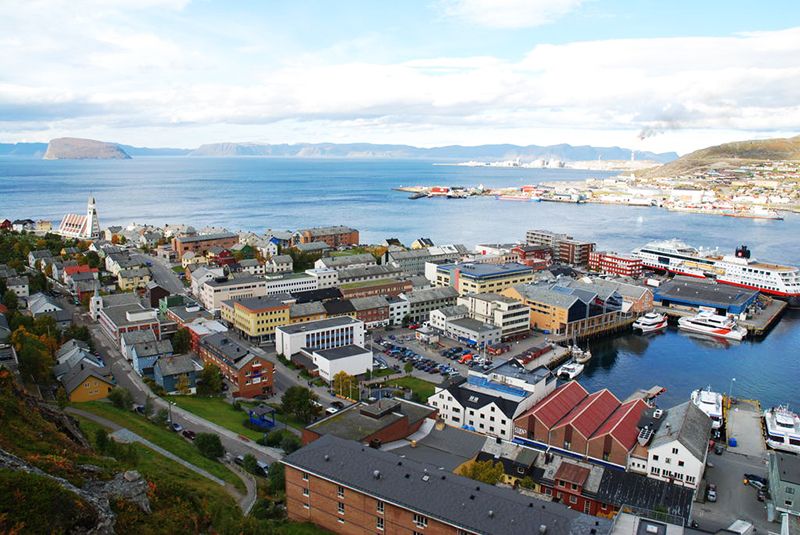
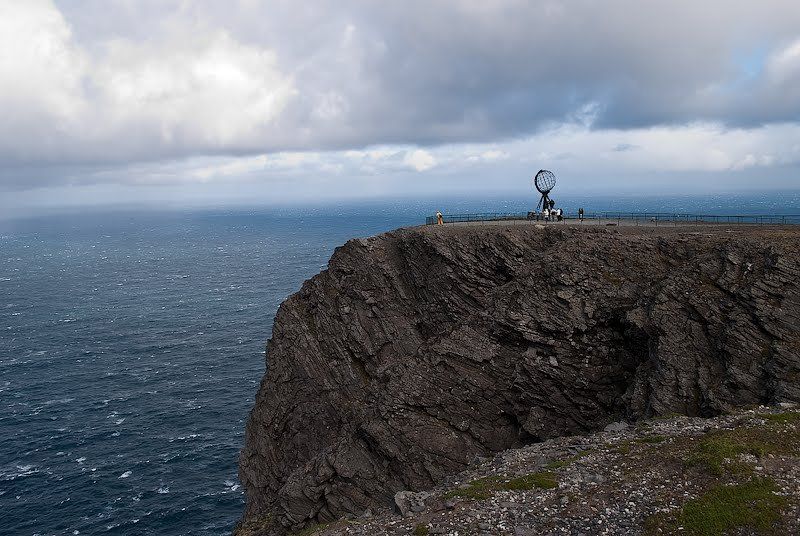
Hammerfest is a town and municipality in northern Norway, in the Finnmark county. It is partly located on three islands: Kvaløya, Sørøya and Seiland. The northernmost city in Europe (not counting Honningsvåg, which also lays claim to this status). The question comes down to what should be considered a city: in any case, there is no place farther north than Hammerfest in the world with a population exceeding 5,000.
Settlements in the area of what is now northern Hammerfest existed as far back as the Stone Age: these lands were important for fishing in the Arctic Ocean long before, in 1789, King Christian VII of Denmark-Norway granted the settlement the right to be called a trading center. Hammerfest is considered the oldest city in Northern Norway.
Life in Hammerfest was far from trouble-free: bans, unemployment, wars, fires, and plague and cholera epidemics-all of this it experienced over its relatively short history as a city. In 1890, a fire broke out in one of Hammerfest’s bakeries, instantly engulfing nearly 2/3 of the town. Many countries around the world expressed their sympathy by immediately sending humanitarian aid and financial subsidies; the largest sponsor was Emperor Wilhelm II of Germany. The Kaiser visited the city repeatedly on his yacht and became very attached to it, which is what explains his extravagance. Already a year after the devastating fire, Hammerfest became the first city in Northern Europe whose streets received electric lighting.
Another tragedy struck Hammerfest during World War II. After occupying Norway, the Germans chose Hammerfest itself as their main base, having managed to fortify it by that time. During the retreat in autumn 1944, the German forces preferred to burn the abandoned city completely. Only one building-the chapel for burials built in 1937-survived, and it is now the oldest building in Hammerfest.
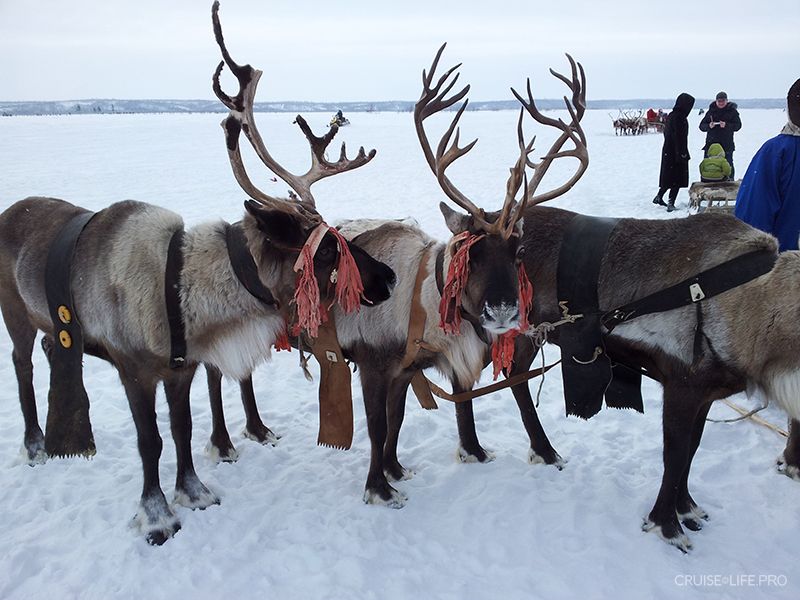
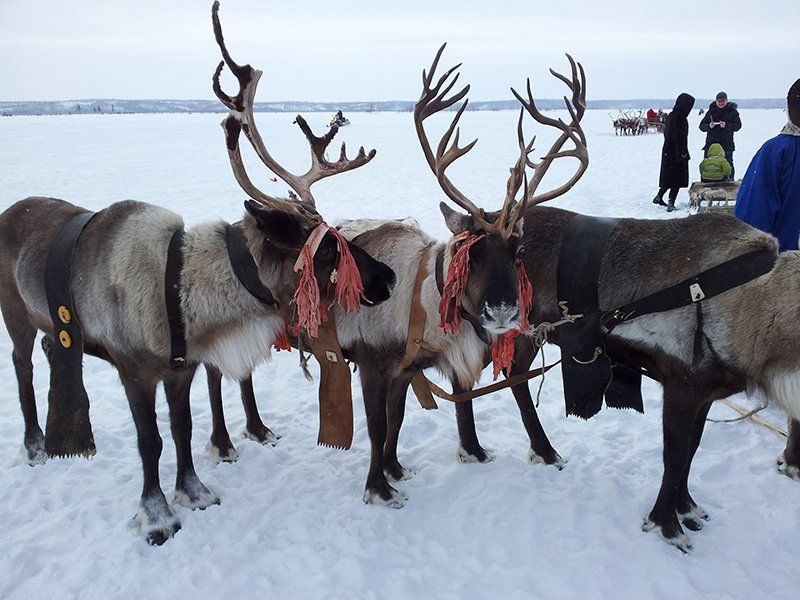
Today, Hammerfest leads a peaceful life, supported by fishing, ship repair, natural gas extraction, and of course tourism. The town is also one of the centers of Sámi culture: in summer, enormous herds of reindeer gather along the coast for grazing, and many of them can often be seen walking along the town’s streets to the delight of tourists and the misfortune of local residents, who complain about the traffic jams that arise and the unbearable smell from the animals’ presence.
In Hammerfest, visitors come mainly to admire the fascinating natural phenomenon-the Northern Lights. In addition, Hammerfest has the Kvaløysvatnet lake, which does not freeze all year round. Ships constantly ply its waters, including sightseeing boats. One of the most popular activities for tourists in Hammerfest is sport fishing, both in the sea’s salt waters with a small boat and in the lake. Among outdoor extreme activities in Hammerfest, snowmobile safari rides are popular. You can also ride snowmobiles up to the top of a mountain from which an unforgettable view opens up-a panorama of the northern city stretching out to the Arctic Ocean. By the way, swimming in the Arctic Ocean is also included in some tourist programs.
ClimateThe climate of Hammerfest is close to a moderately cold one. Even during the driest month, plenty of precipitation falls here. The average annual temperature in the city is -1 °C. The average annual precipitation is 654 mm. The driest month is May, with most precipitation falling in December. The warmest month is July, with an average temperature of +12 °C. The average temperature in the coldest month, January, is -12.6 °C.