Zeebrugge, Belgium

Port of call

Zeebrugge, Belgium

Cruises to Northern Europe

Description — Zeebrugge, Belgium

Zeebrugge is a seaport in Belgium on the North Sea coast, administratively part of the city of Bruges (Lissewege district). Bruges is the centre of the West Flanders province. One of the most picturesque cities in Europe. Population: 117,172 (2013).

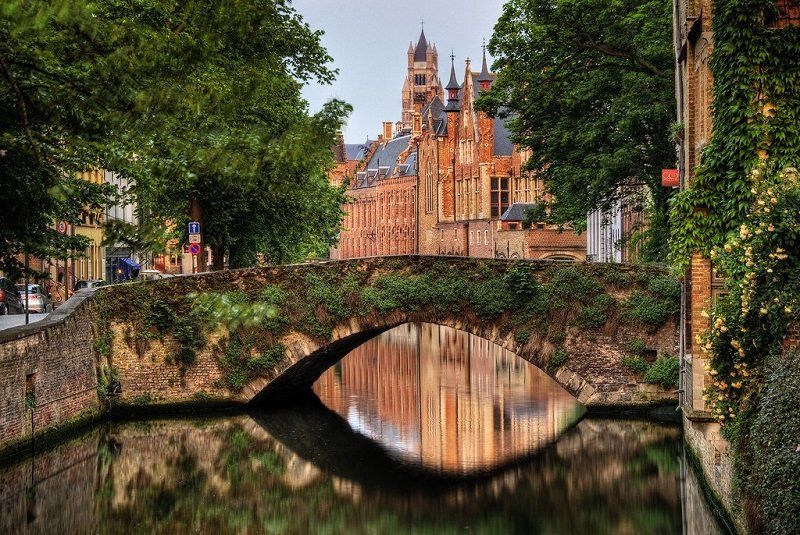
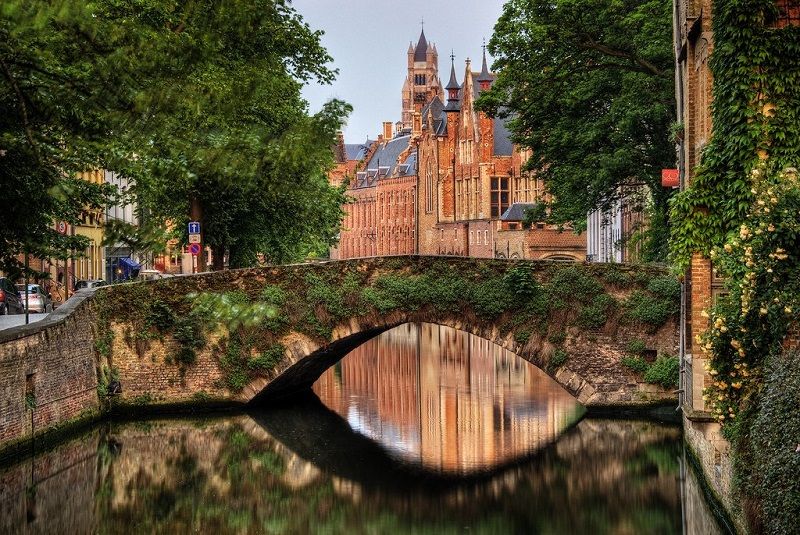
The city lies 17 km from the seashore on a fertile plain, along the state railway line Ghent-Ostend. In the city, three canals join-the Ghent Canal, the Slyce Canal and the Ostend Canal; these canals are so deep that large sea vessels can navigate them. Bruges is sometimes called the “Venice of the North.” In ancient times, people would gather for fairs at the bridge, and the name of the area “Bridge” became a common noun and passed on to the city that formed (Dutch Brugge is traditionally traced to the German Brücke meaning “bridge”). In the modern city, there are 54 bridges: 12 are wooden and movable to allow ships to pass.

The history of Bruges, preserved with the medieval imprint better than any other Belgian city, can be traced back to the 3rd century. In the 7th century, Bruges became the main city of Flanders. Sea trade developed here early. Merchants from Bruges traded with many European countries, especially England, where they founded the London Hanse, which enjoyed great rights and was incredibly powerful.

The city’s wealth in the Middle Ages was enormous, as evidenced by buildings and works of art that have been preserved to this day. In the 14th century, Bruges was a trading centre in Northern Europe. It is believed that the first stock exchange was established here in 1406. However, over time, the two city harbours began to shallow due to silt and waste. The authorities were preoccupied with internal strife, which led to the loss of its former grandeur and wealth. The upheavals of the late 15th century seriously affected trade, and only the monopoly wool trade-of great importance to the English after the loss of Calais (1560)-continued to generate decent profits.

Modern Bruges is an important economic and cultural centre. The main industrial products are linen, wool and cotton fabrics, lace; in addition, there are breweries and distilleries, small-scale shipbuilding and ship repair. Bruges is one of Europe’s oldest centres for diamond cutting (there is a Diamond Museum). One of the main sources of income for modern Bruges is tourism. At the end of the 20th century, a modern seaport, Zeebrugge, was built outside the city, thanks to which Bruges regained its role as a trading seaport city.

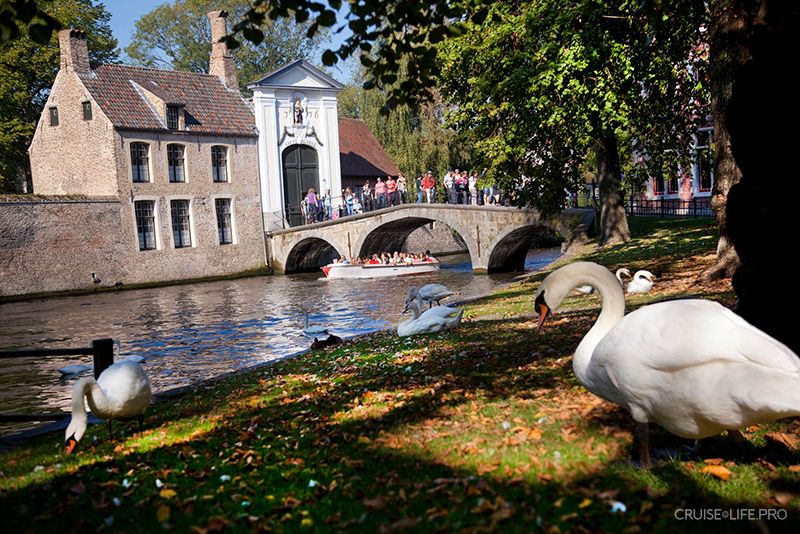
This enchanting medieval little town, as if it had been sealed away in the 15th century-having forgotten such achievements of civilization as skyscrapers, motorways and shopping malls-of course, that’s Bruges. Only in its historic centre, where swans glide calmly and gracefully along the canals, can you forget that the 21st century is right outside, that there are “Instagrams,” “Facebooks” and “Twitters,” and that the world is drowning in a torrent of information and news. In Bruges, nothing changes for centuries. Its houses, churches and chapels still look every bit as quaint, their strict and solemn appearance continues to inspire awe and respect, and the market square, as in days gone by, is full of shoppers, food and wide-eyed onlookers.

Climate

Summers are moderately warm (average July temperature 18°C); winters are short and very mild (average January temperature 3°C); precipitation is 780 mm per year. By Belgium’s weather standards, Bruges has a poor reputation. Compared with other Western European cities such as London or Paris, Bruges is much colder. In July and August, the maximum temperature reaches +21°C; after October it drops fairly quickly and becomes cold. Even in summer, you should always be prepared for rain.

Location on the map

Sights

Market Square

Market Square

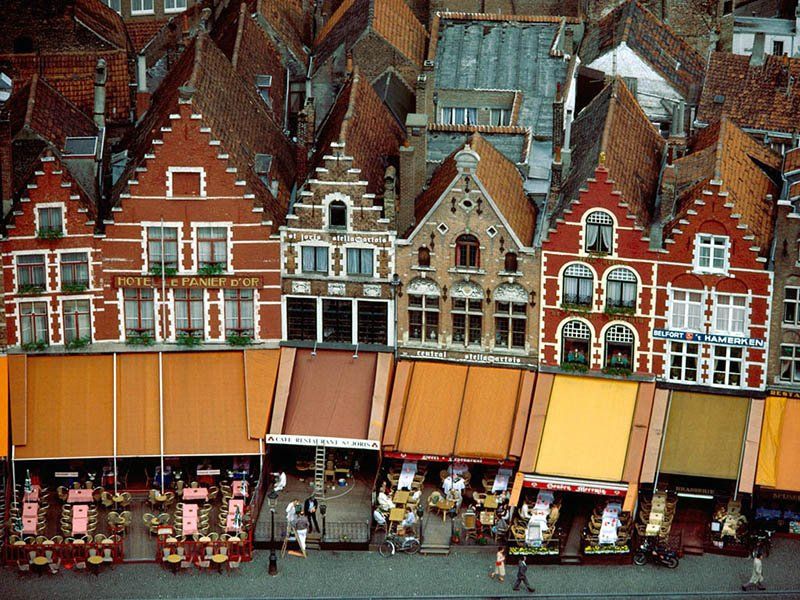
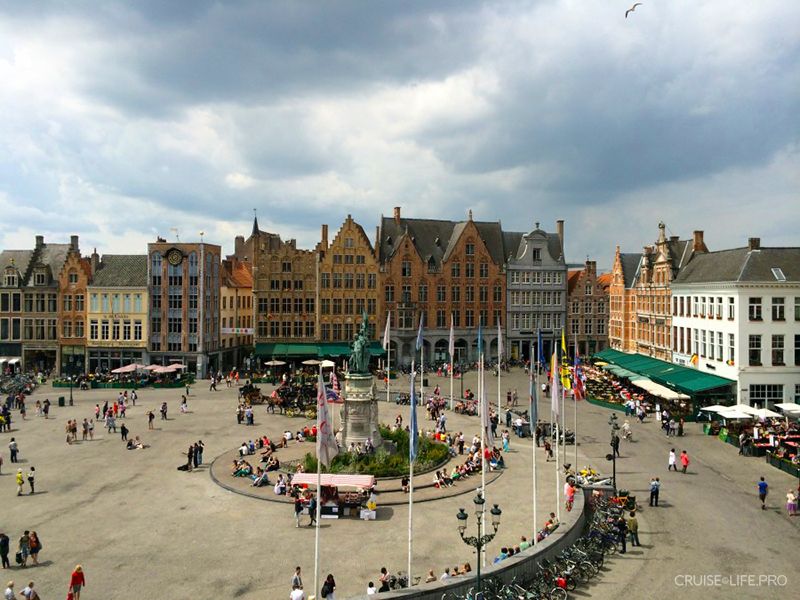
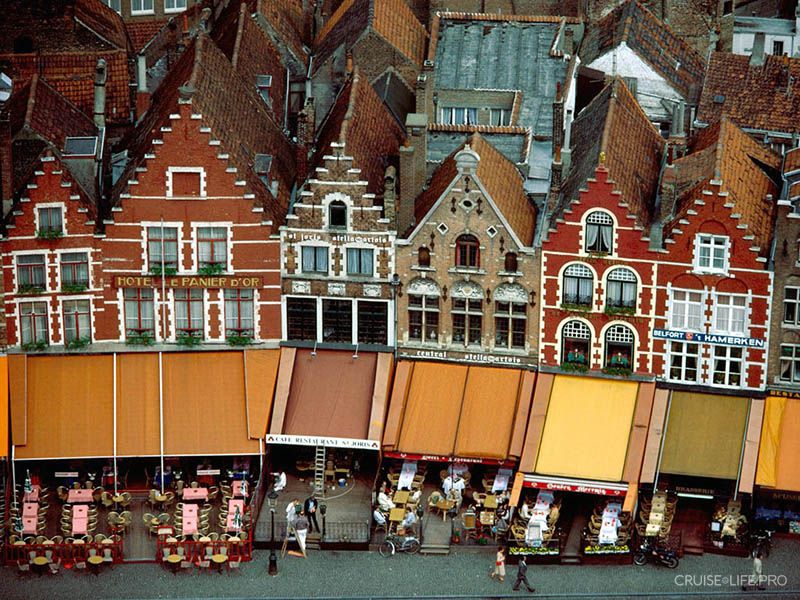
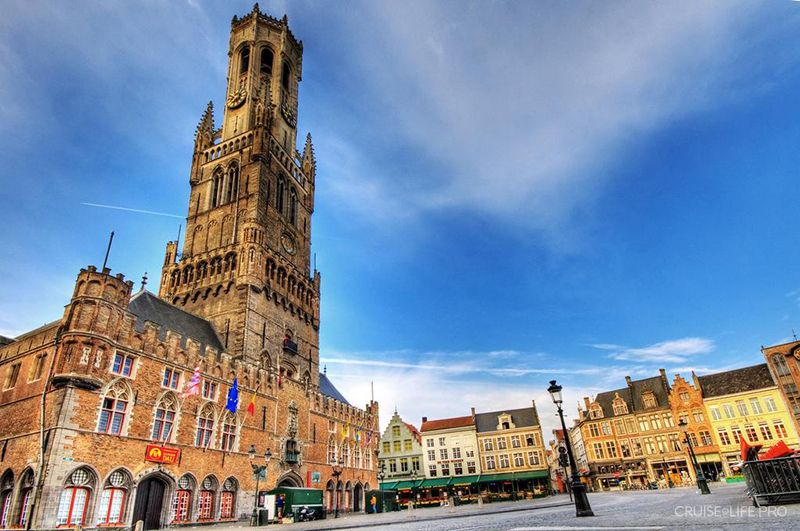
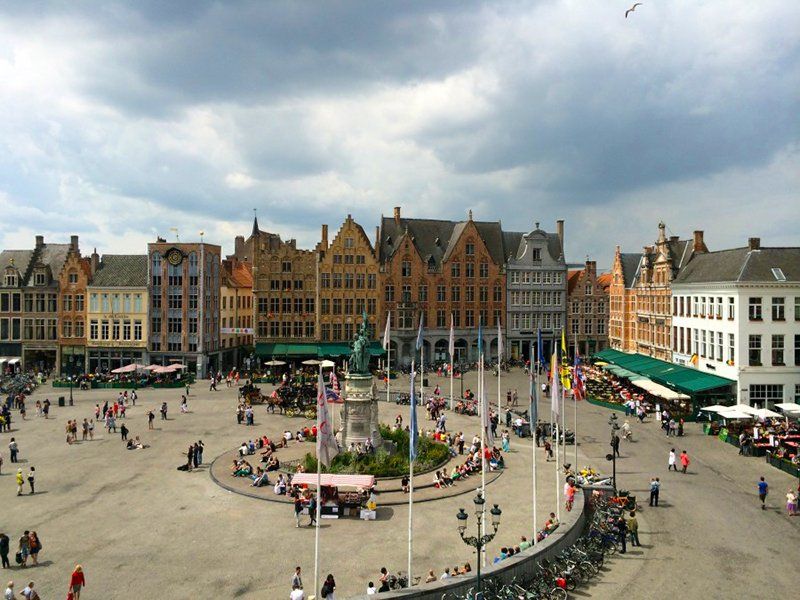
Grote Markt Square (Grote Markt) and its majestic belfry tower, which gained special fame after the film “In Bruges”, is the main attraction for tourists. You can feel like Colin Farrell by climbing the medieval tower, open from Tue to Sun, 9:30 to 17:00. At the top, visitors will find 366 steps (83 meters) and 8 euros (6 euros with the Brugge City card). The market square in Bruges at this very spot has existed since the 10th century. Its main attraction is the Belfry of Bruges (Belfort). On Wednesdays, a market runs on the square from the morning. In winter, a Christmas market is bustling here and brings people in-thanks in part to the ice rink. From here, the guided carriage tour route also sets off. The north side of the square is lined with guild houses.
Town Hall

Town Hall

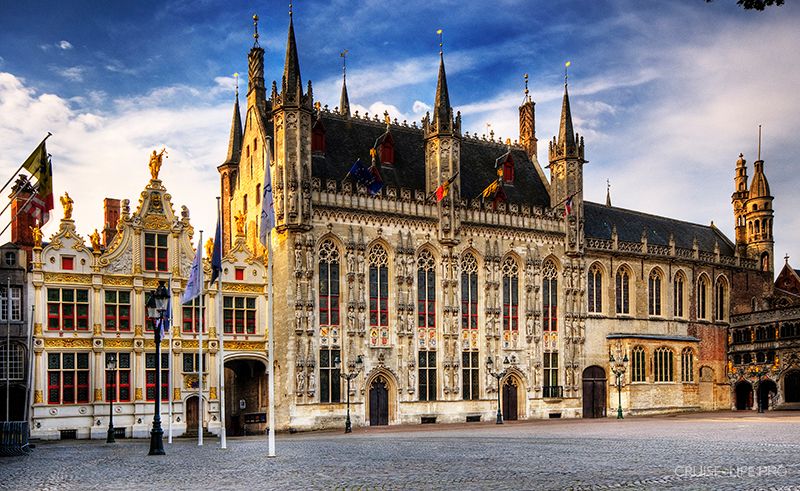
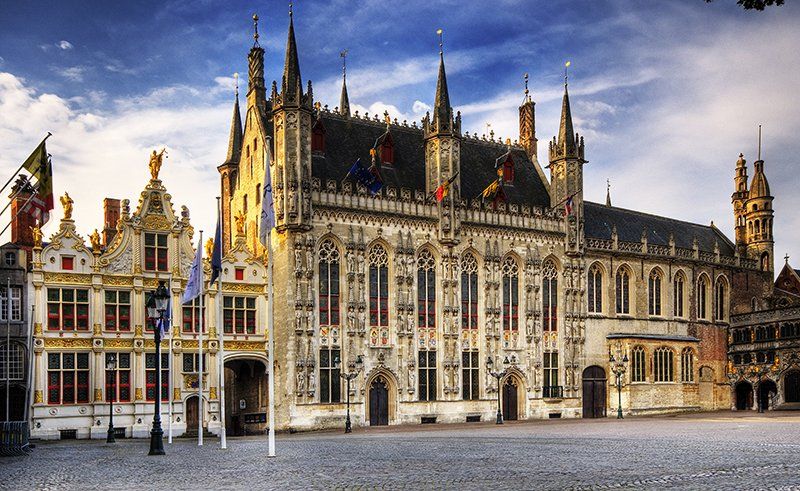
The Bruges city administration building also serves as a local registry office (ZAGS) and is open to tourists as well, though for a modest fee. Inside, a magnificent staircase leads from a spacious hall to a splendid Gothic hall. In the middle of the 15th century, the first session of the Estates General of Flanders was held here. It is adorned with paintings dedicated to historical events. On the carved wooden ceiling are depicted allegorical figures of the four elements and the four seasons.
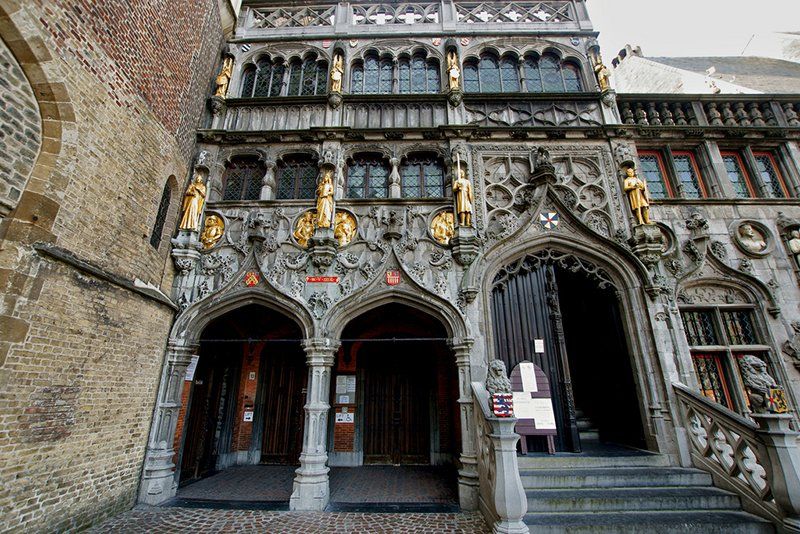
Basilica of the Holy Blood of Christ

Basilica of the Holy Blood of Christ

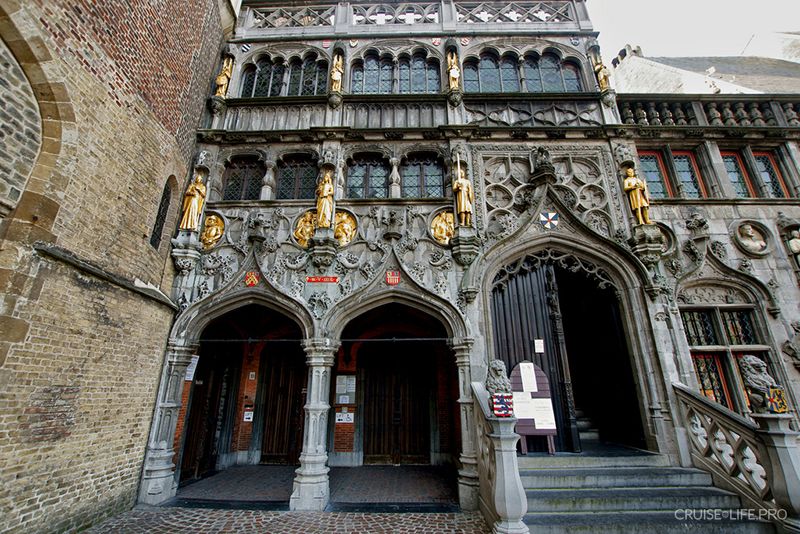
Thierry of Alsace, Count of Flanders, from the Second Crusade brought an amazing relic-a vessel containing drops of the Blood of Christ. This was in 1150. And it was decided to build, along with the small private chapel of the count, an upper chapel to house the relic. Thus the Basilica of the Holy Blood of Christ came into being. The Holy relic, placed in a vessel made of mountain crystal, is available to the faithful on Fridays and on major church holidays, when they may touch the golden cylinder in which the vessel is enclosed. Interestingly, it was found that recent research has proven that the crystal vial is typical of 11th-12th-century Byzantium-a small bottle used to store perfumes. Scientists also claim that the vessel has never been opened since its arrival in Bruges.
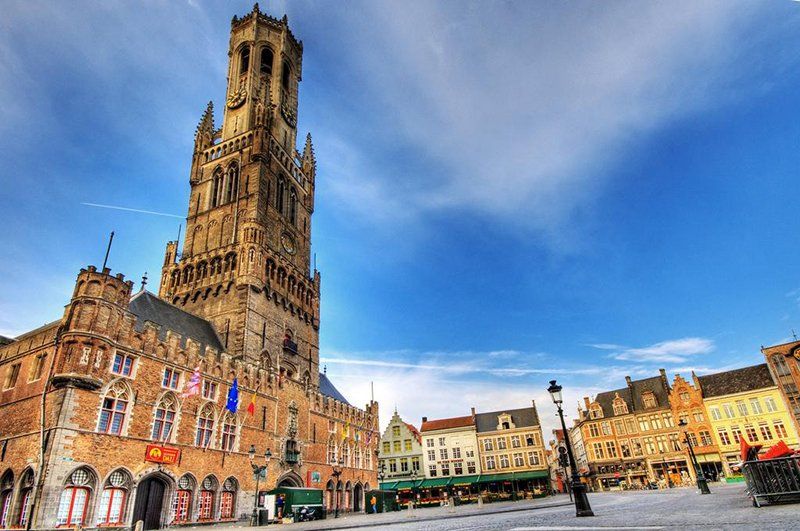
Belfort Tower

Belfort Tower

This tall belfry is one of the city’s main architectural landmarks and one of the most beautiful towers in Flanders. In the past, decrees called the “Hallenn Decrees” were proclaimed from the tower’s balcony-after the Flemish hallen, meaning market. Luxurious cloth halls from the 15th century truly do adjoin it. 366 steps lead to the balcony and viewing platform. Along the way, you will see a set of 47 bells and a special drum that makes the bells play melodies automatically. These melodies change every two years. If you’re lucky, you may be able to catch a bell-music concert (a special keyboard is installed in Beffroi). To enjoy it, you don’t have to stand right by the tower-it's much more pleasant to take in the ringing while sipping coffee on one of the verandas at a nearby café.
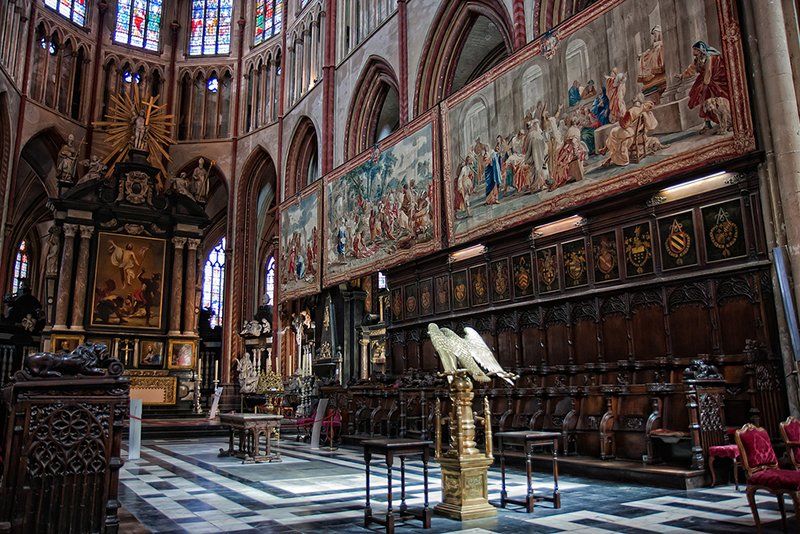
Cathedral of Christ the Saviour

Cathedral of Christ the Saviour

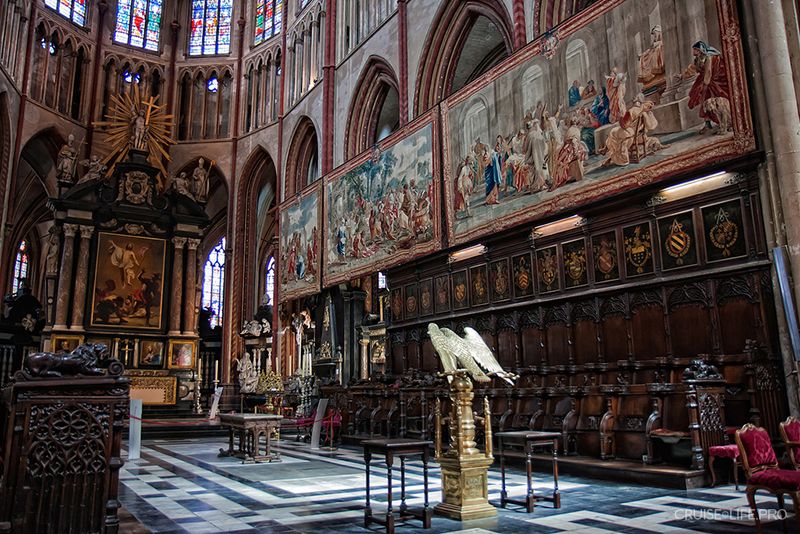
The ancient cathedral dates back to the 12th century, but in reality it is a 19th-century building that was erected on the site of an earlier one, which was badly damaged by a fire. Formally, it is the city’s main church, since it houses the bishop’s seat. The interior is richly decorated: carved wooden choir stalls from the late Gothic period, the preacher’s pulpit in the style of Louis XVI, frescoes from the 14th-16th centuries, and an impressive organ. The furnishings are complemented by multicolored stained-glass windows and ornate tapestries. Behind the altar there are burials of the Bishops of Bruges. The cathedral also has a museum displaying numerous paintings by Flemish masters. Among them is the famous triptych by Dirk Bouts, “The Martyrdom of Saint Hippolytus.”
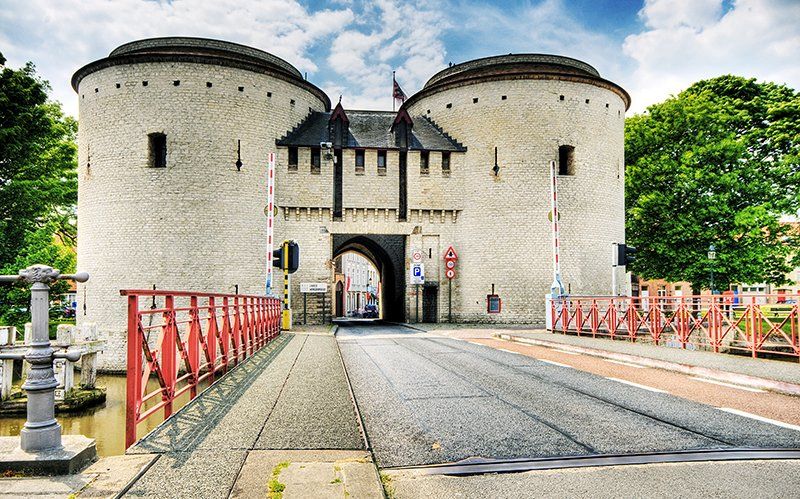
Kruispoort City Gates

Kruispoort City Gates

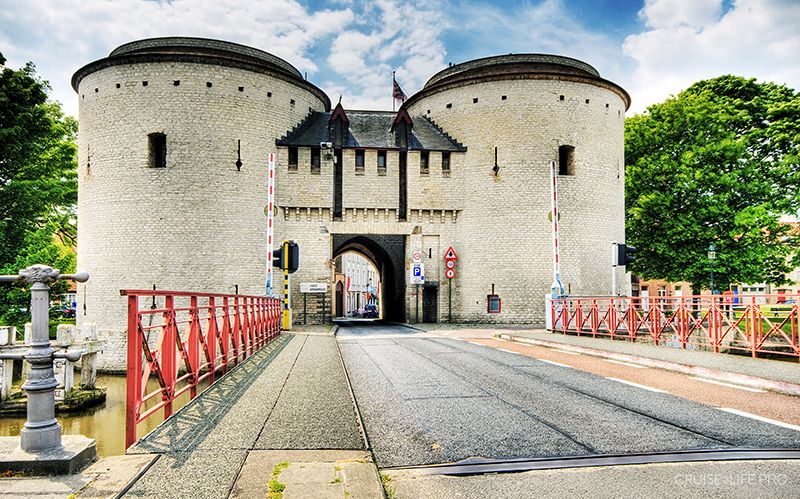
The Kruispoort city gates on Langestraat Street are one of four preserved gates in Bruges. In the first half of the 9th century, the De Burg fortress was surrounded by defensive walls with four gates. The city grew, and in 1127-1128 it was encircled by a new fortress wall with seven city gates. However, none of these structures has survived to the present day. The third ring of fortification walls with 10 city gates was built in 1297. On the outside, the Kruispoort gates feature two massive round towers with numerous loopholes. The earth embankment running from the north marks the location of the city wall. A drawbridge over the canal leads to a broad, vaulted passageway inside the fortification wall.
What to see

Chocolate Museum

Chocolate Museum

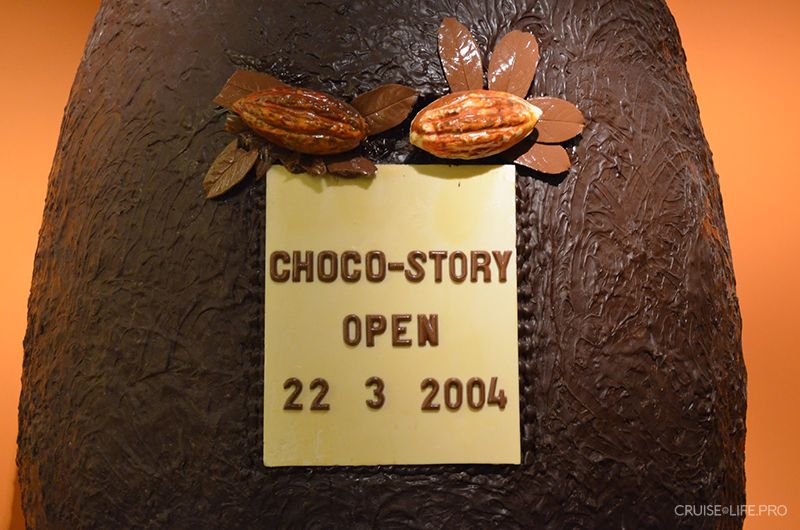
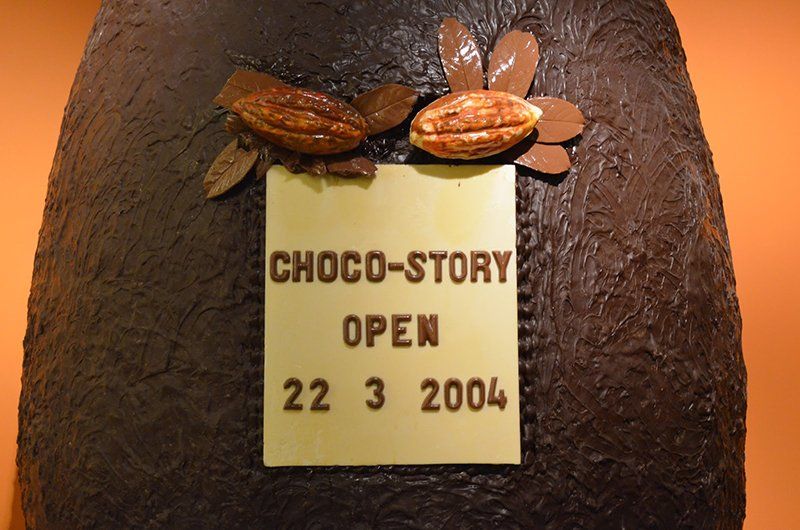
The Chocolate Museum is located in a 15th-century building. Such a tall structure-4 floors-was rare for Bruges at that time. Back then, the house housed a tavern and a wine shop. The exhibition on the first floor introduces visitors to the customs and everyday life of the Maya and Aztecs, who offered cocoa fruits as sacrifices to their gods, and also tells how the Spanish began making a drink from cocoa beans. Next, you can learn everything about the trees on which cocoa beans grow, how chocolate was first made only by hand, and how in the 19th century production shifted to factory-based methods. Dedicated showcases are devoted to the history of Belgian chocolate. On the lower floor, where the visit ends, you can taste the chocolate.

Salvador Dalí Museum

Salvador Dalí Museum

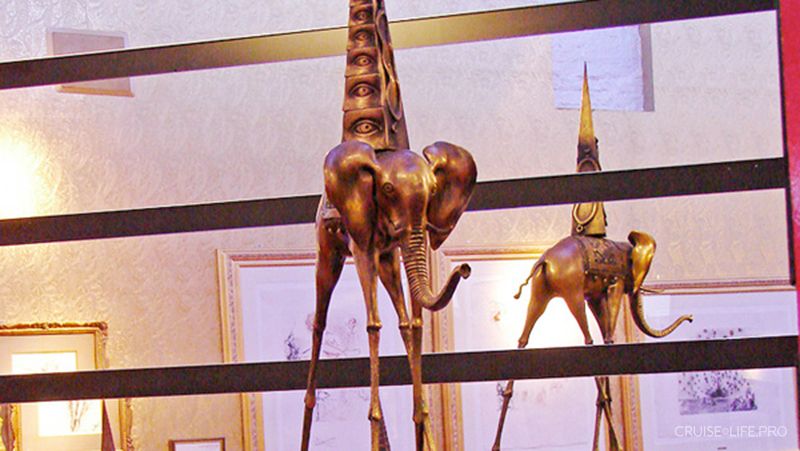
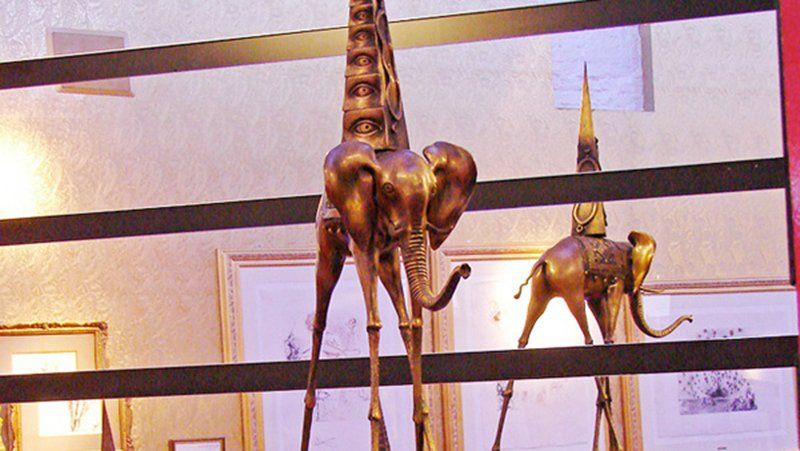
It is hard to imagine what Dalí’s works would have looked like within the walls of medieval Belfort, where the museum is located, if another genius hadn’t taken on the task of transforming the hall: the Grand Opéra interior designer, Baron Saint-Mittelfinger. He turned the gloomy tower walls into a real showroom. Here you can see sculptural portraits of Dalí, and the Master’s engraving press, and drawings about Casanova’s adventures, illustrations for Alice in Wonderland, the famous “space” elephants on stilts… At the museum shop you can buy not only souvenirs, but also Dalí’s works; in the galleries, photography is allowed. And right here, you can also try your favorite sparkling wine from the Great Provocateur.

Groninger Museum

Groninger Museum

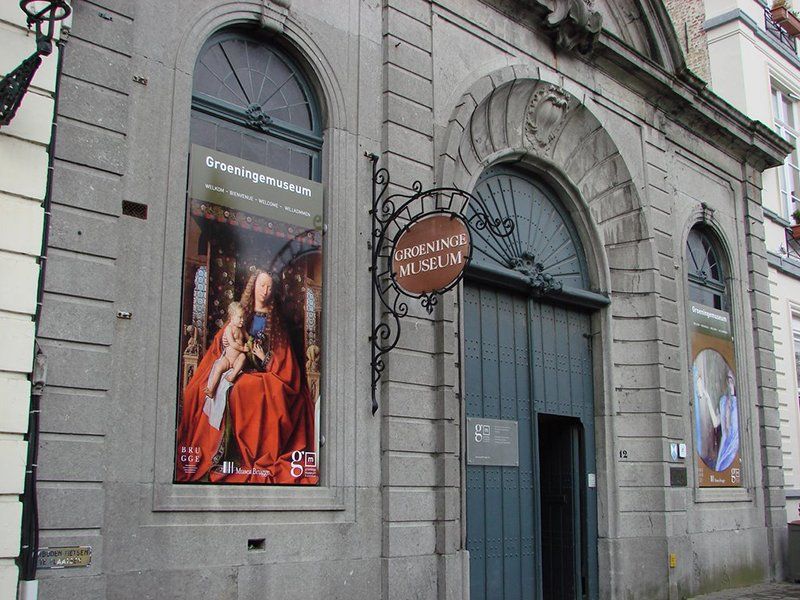
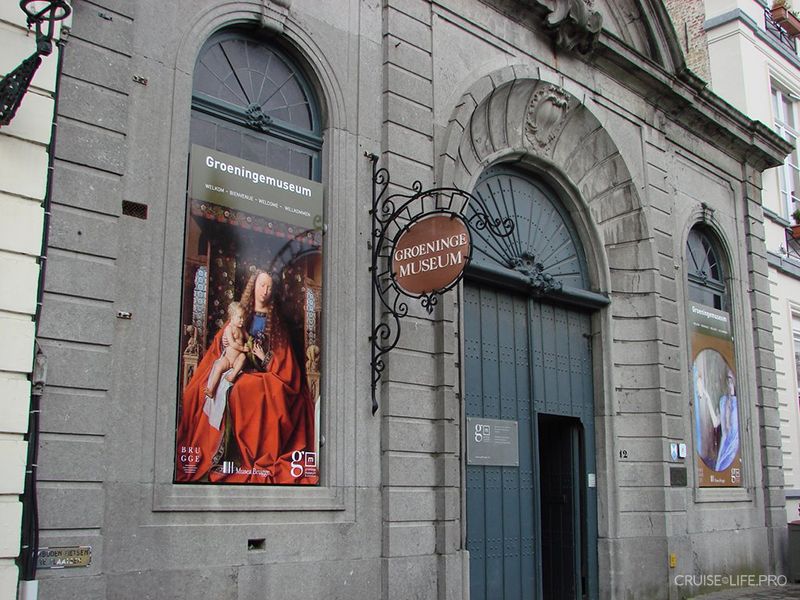
Fans of Early Netherlandish art should definitely visit the Groeninge Museum. Here you can fully enjoy paintings by Jan van Eyck, Rogier van der Weyden, Memling, and Bosch. To be fair, it must be said that the 15th century was a golden age in the art history of this region. The success of this painting school has never been repeated by anyone. Each painting is a combination of artistic mastery with deep attention to and genuine interest in the surrounding variety of the world-its details, objects, and people. That’s why it’s very difficult to move from these halls to the paintings of later periods. Imperfection catches the eye.

Minnesota In-Tolerance Park

Minnesota In-Tolerance Park

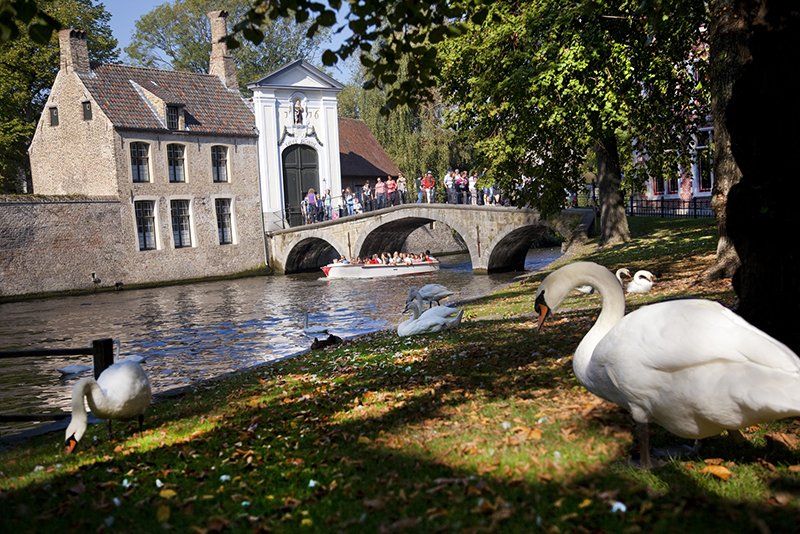
The first mention of the ancient Minnewater Park, located in Bruges, dates back to 1580. The park was long used as a bleaching meadow, after which it was divided into several parts that ended up in the private estates of noblemen. The park was restored in 1979. Here you can find the famous Lake of Love-not only a beautiful body of water, but also a symbol of the medieval city, a place where snow-white swans live. Notably, all the swans in the city have a mark on their beaks with the letter "B" and a birth date, as they are owned by the city. Minnewater Park is often called a fairy-tale place where, according to legend, every lover who makes a vow on the ancient bridge will surely be happy in marriage.

Bergainhof

Bergainhof

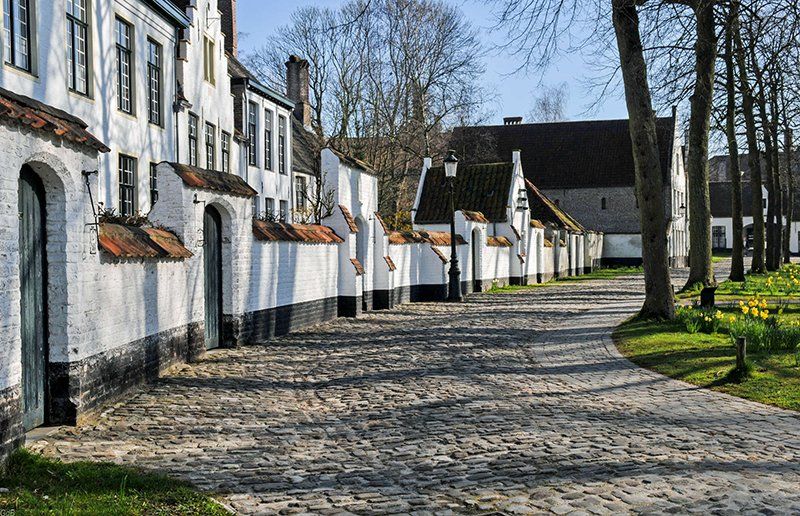
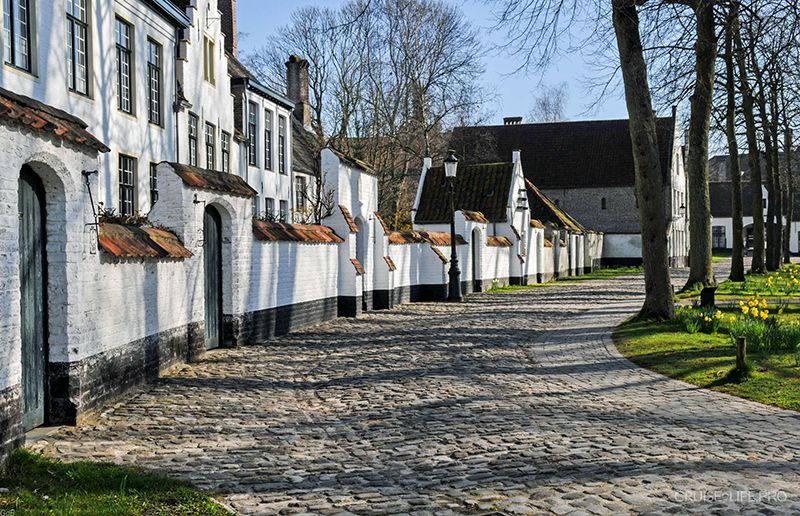
The Beguinage Monastery in Bruges dates back to 1244 and was founded by Countess Margaret of Constantinople. In 1299, it was under the direct patronage of King Philip IV the Fair and received the title of the “Royal Beguinage.” The inscription “Sauve Garde” above the entrance gates indicates the right of sanctuary on this grounds. Beguines are often mistakenly taken for nuns. That’s not entirely true. These women live in seclusion, but do not take monastic vows: they are free at any moment to leave the community, return to life in the secular world and get married, and they may have their own income and property. Today, Benedictine nuns and solitary women live on the grounds of the Beguinage. In 1998, the Beguinage in Bruges was added to the UNESCO list.

Recommended excursions

City sightseeing tour

City sightseeing tour

Bruges is the most romantic city in Flanders and Belgium. A city of canals and bridges, a city of swans and daffodils. A city that has preserved its unique character. No wonder the city center was declared a UNESCO World Heritage Site in 2000. A trip to Bruges is a journey through time!

For a more detailed list of excursions and their prices, you can check it after booking your cruise in your “Client Personal Account”.