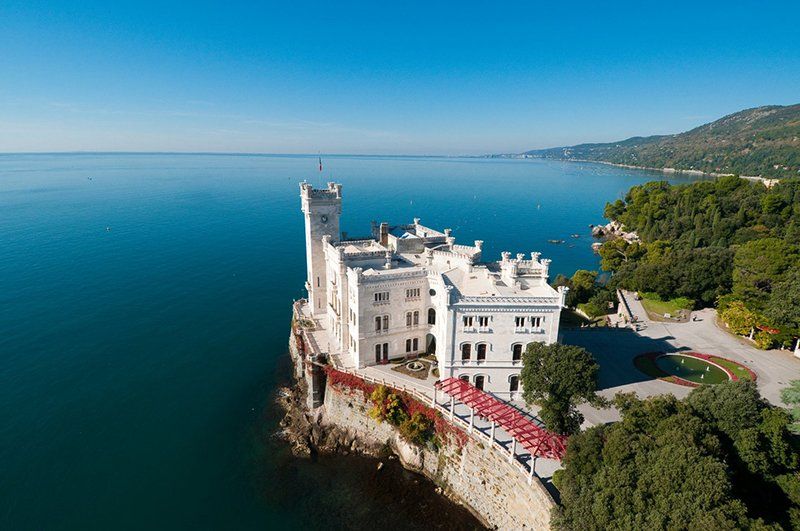
Miramare Castle
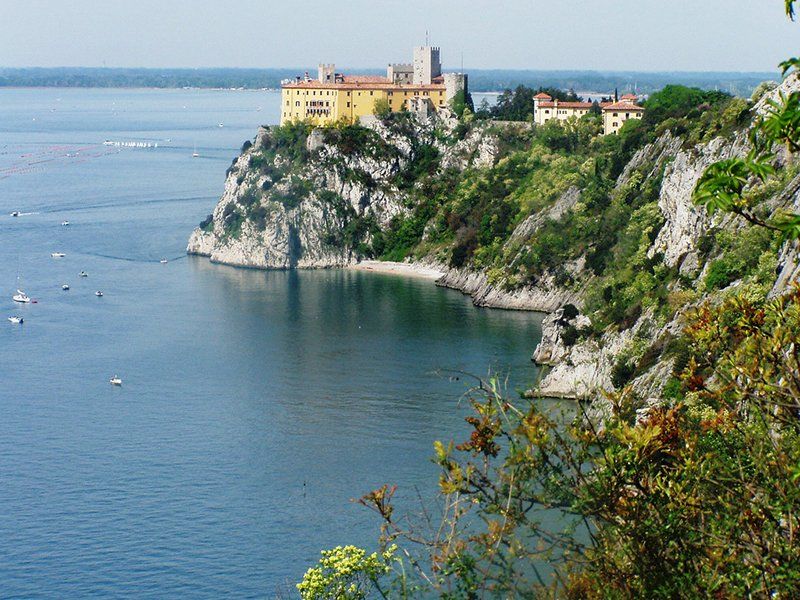
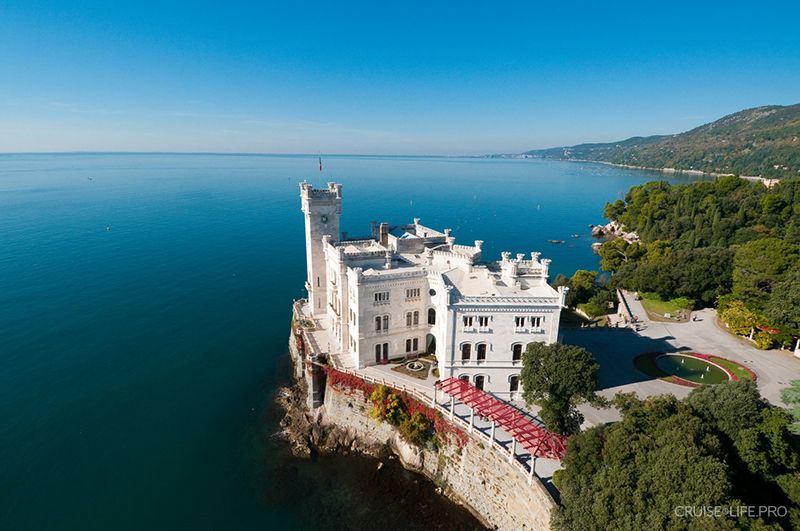
Miramare Castle is a true pearl of the coast. Its name translates as “looking out to sea.” The castle sits on a far-reaching rock jutting into the sea and indeed seems to admire the waves-or wait for someone from a dangerous voyage. The building, in a medieval Scottish style, was erected by order of the Austrian Archduke Maximilian. He had long been looking for a quiet and beautiful spot on the Adriatic coast to build a “golden cage” for his wife Charlotte of Belgium, who was tormented by jealousy-according to rumors, not without good reason. At Miramare Castle, Maximilian’s passion for Gothic architecture and Renaissance art came together. Today, both the castle and its luxurious park are open to visitors.
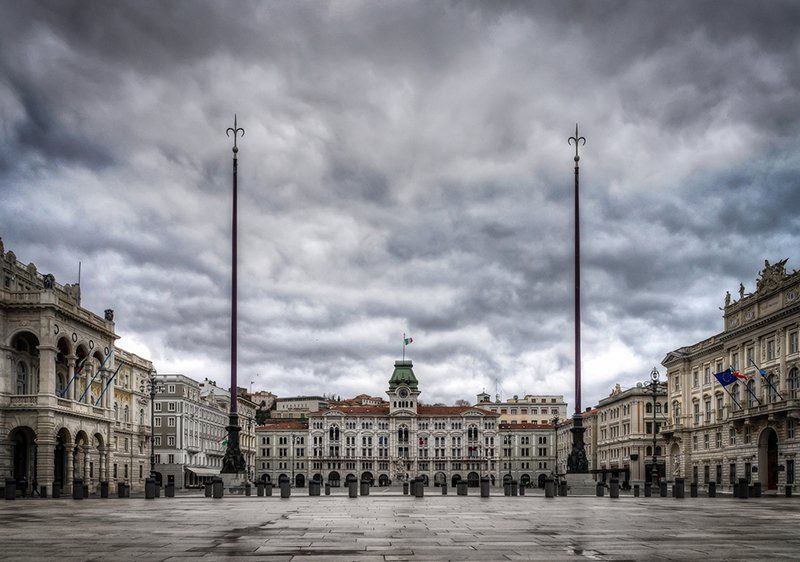
Square of the Unity of Italy
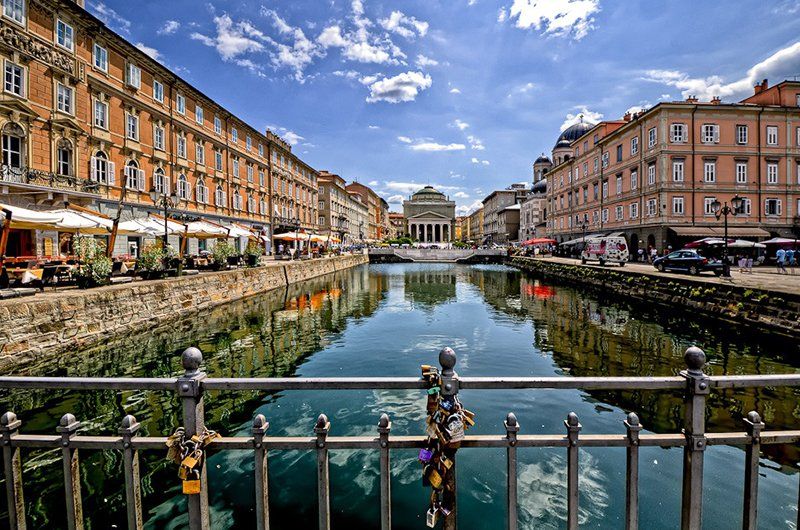
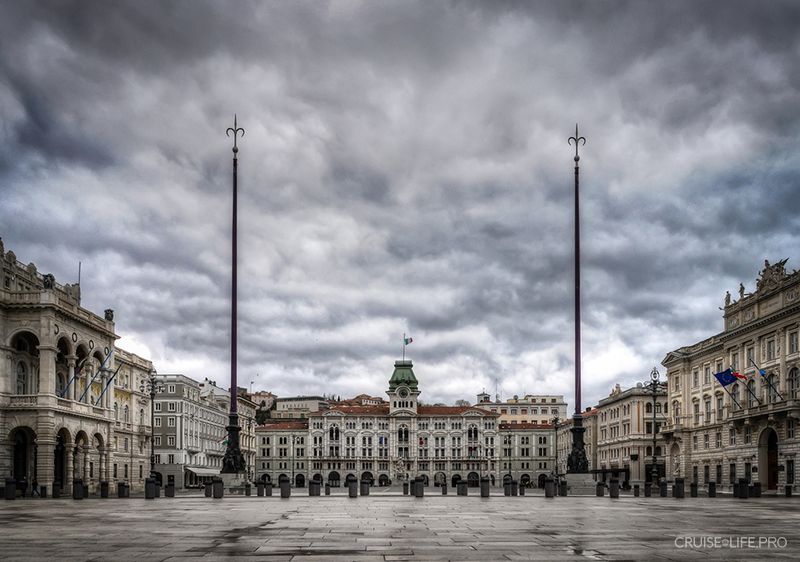
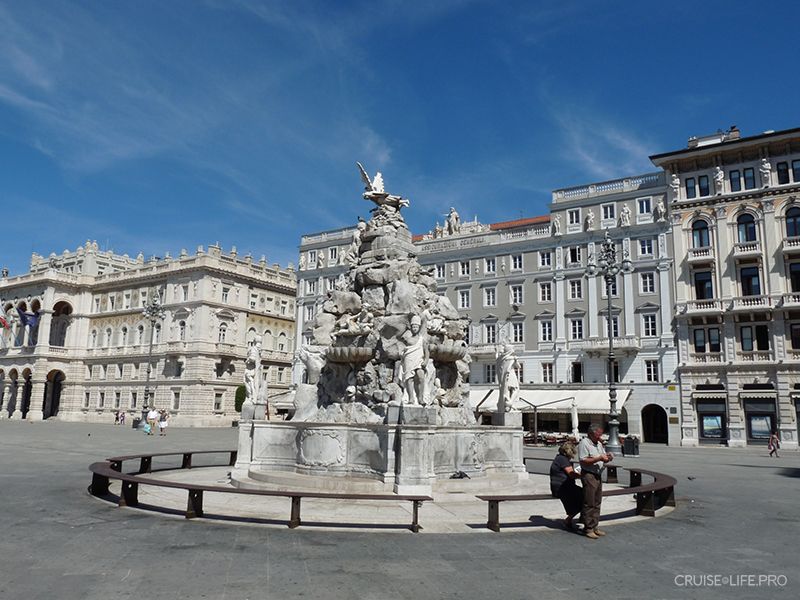
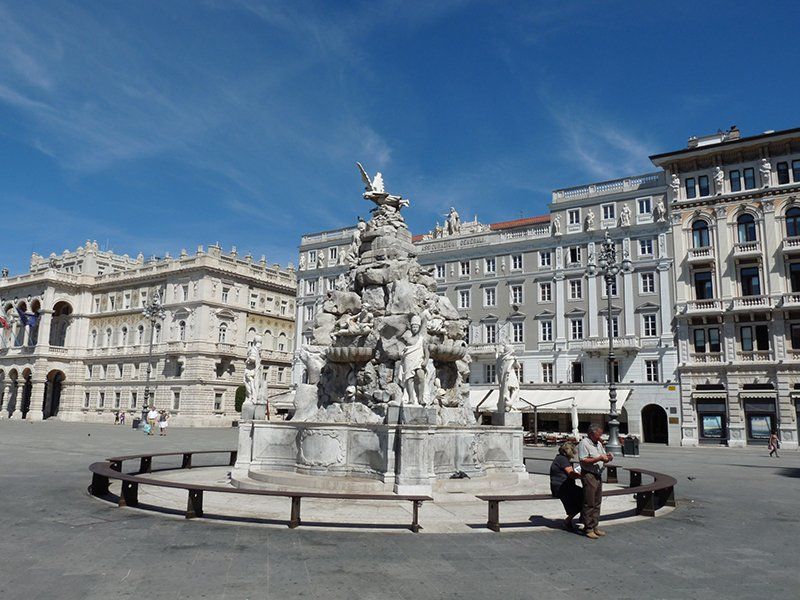
Unity Square of Italy in Trieste - perhaps one of the most beautiful in the world. On three sides it is surrounded by magnificent palaces, and on the fourth it opens directly to the sea. In the very center of the square rises a majestic column with a statue of Emperor Charles VI and the Fountain of the Four Continents, built in 1751. The oldest building on Unity Square is the Pitteri Palace. Nearby stands one of the most expensive and luxurious hotels in Trieste - Grand Hotel Duchi d`Aosta, which appeared in the square in 1873. Another luxurious neo-Renaissance palace called Palazzo della Giunta Regionale once belonged to the insurance and financial giant Lloyds, and now it houses the government of the autonomous region of Friuli-Venezia Giulia.
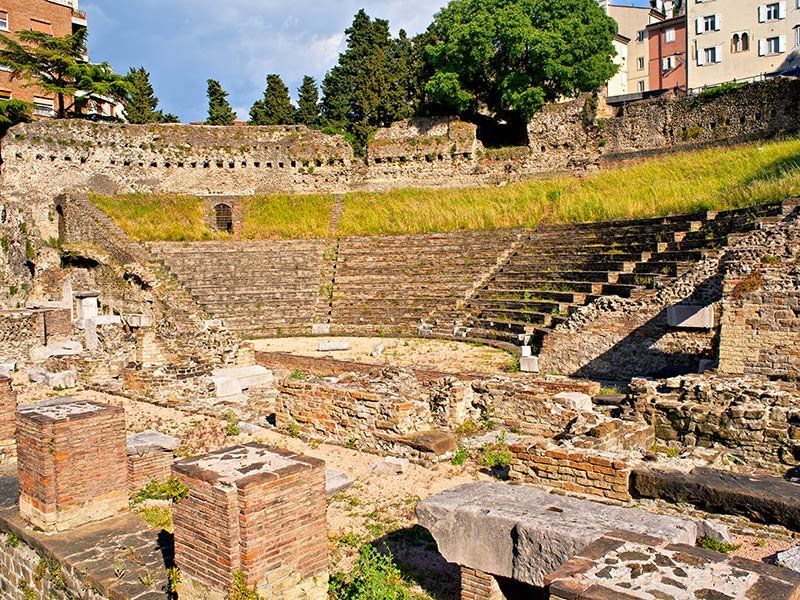
Roman amphitheatre
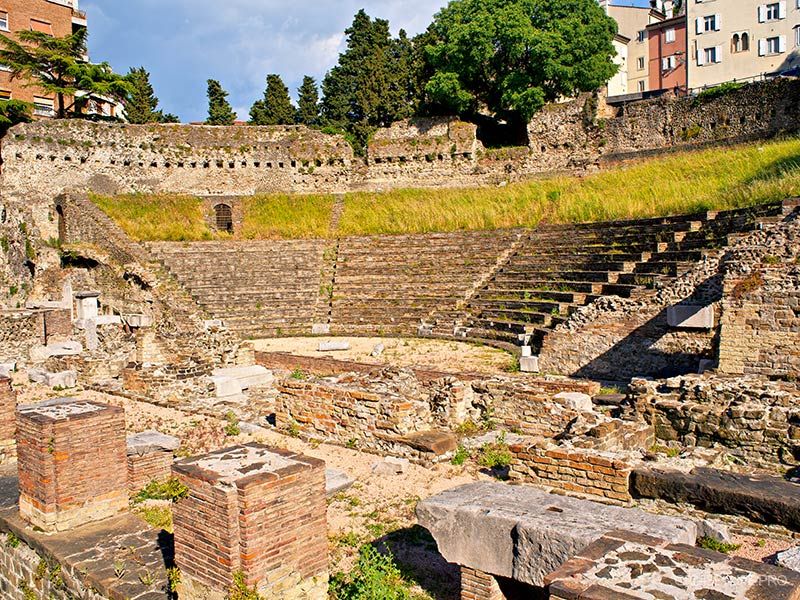
Scientists believe that the amphitheater in Trieste was built approximately in the 1st-2nd century BC, during the reign of Emperor Trajan. Judging by the documents that were found, the theater was gifted to the city by the governor Quintus Petronius Modest. In its best days, the amphitheater could accommodate up to 6,000 spectators, who came to watch gladiator fights and theatrical performances. The theater was richly decorated with fountains, statues, and plaques, some of which are now kept in the Museum of Art History. Finding the Roman amphitheater in Trieste is easy-an eponymous street leads to it. Today, among the picturesque ruins of the ancient amphitheater, an open-air summer theater festival, the Teatro Romano Festival, is held.
Four Continents Fountain
The Fountain of the Four Continents was built in 1754 in Unity Square in Italy. In order to praise the wise reign of Austrian Emperor Charles VI, who in 1719 declared Trieste “porto franco,” and also to emphasize Trieste’s special status as a gateway for ships from all over the world, it was decided to install this symbolic fountain monument. The sculptural composition includes four figures with animals symbolizing the continents known at the time. Thus, the Moor and the lion represent Africa, the Indian and the crocodile - America, the Asian with a camel - Asia, and the European woman in an ancient toga with a horse - Europe. Above them, on uneven blocks of stone used as a pedestal, a female figure flies, symbolizing Trieste, which welcomes everyone equally.
Château Saint-Yuste
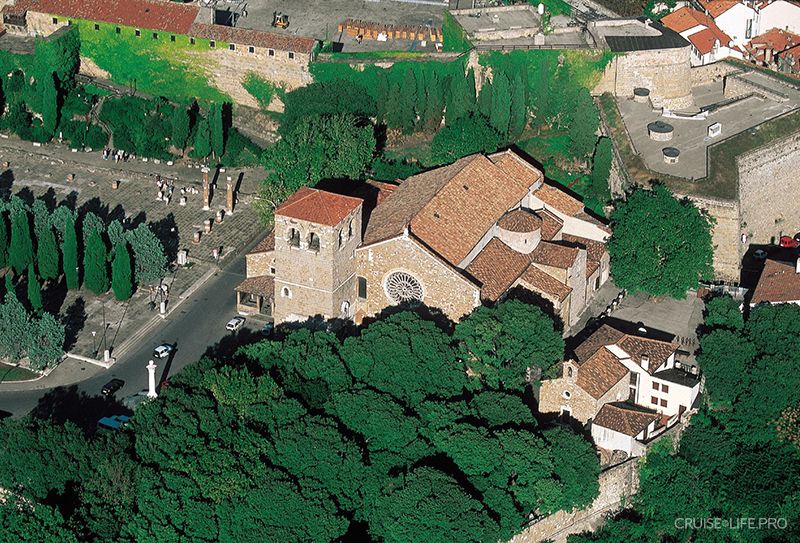
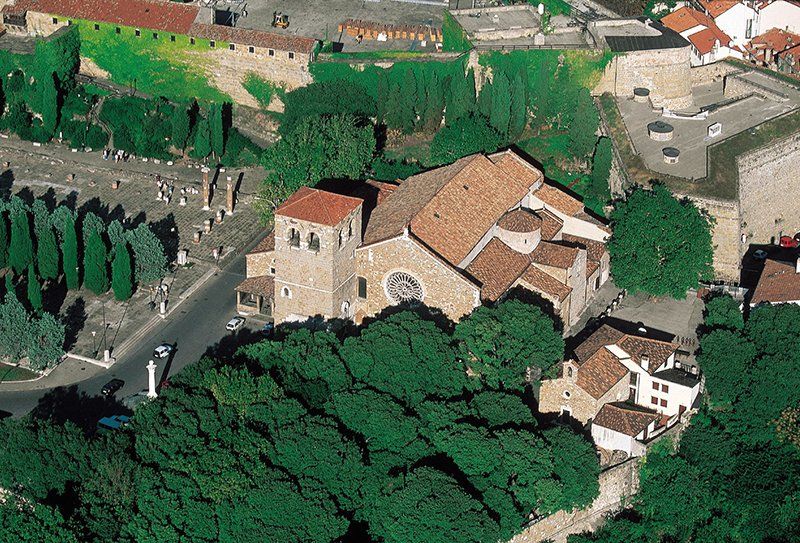
The history of the castle began in 1468, when King Frederick III of the Habsburgs issued an order for its construction. The location chosen for the build was one of the highest points in the city. Previously, ancient Roman and Venetian fortifications stood here; their remains were used in the new structure. Construction of the new castle dragged on for a long time and was completed only in 1636. The fortress was expanded, surrounded by high, impregnable walls, and new earthworks were added around it, replacing the earthen ramparts destroyed by the earthquake of 1511. At various times, the Castle of Saint Just served as both the mayor’s residence and a prison, and today it is a majestic, picturesque open-air museum.