Port of Spain, Trinidad

Port of call

Port of Spain, Trinidad

Description — Port of Spain, Trinidad

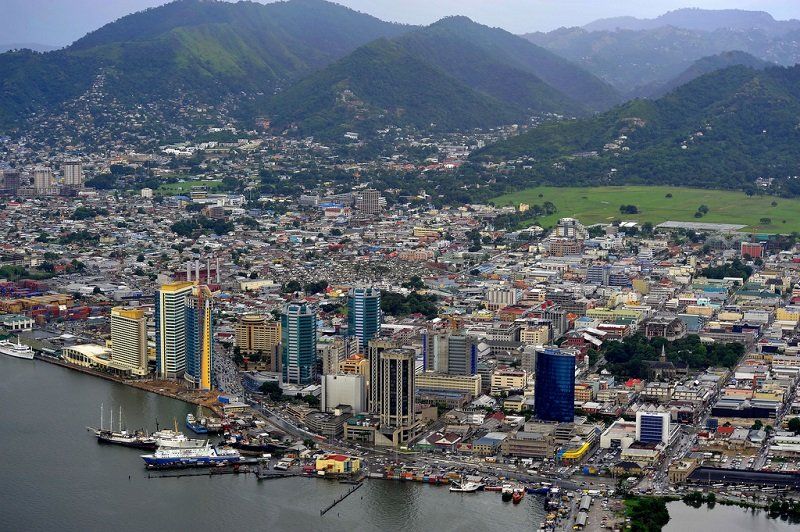
Port-of-Spain - the capital of the Republic of Trinidad and Tobago, its political, economic and cultural center. Port-of-Spain is located in the northwestern part of the island of Trinidad, which belongs to the group of the Lesser Antilles. The city lies on the shores of the Paria Bay in the Caribbean Sea.

Port-of-Spain was founded in the XVI century. Spanish conquerors laid out the city on the site of an ancient indigenous settlement of Conquerabia, leaving it with the same name. The new name - Port-of-Spain (translated from English “Spanish port”) - the city acquired already in 1797, when it was annexed to Britain’s territorial possessions. In August 1976, the country acquired republican status, and Port-of-Spain became the capital of the newly elected Republic of Trinidad and Tobago.

The population of Port-of-Spain is more than 50 thousand people (2010). The ethnic majority of the capital is people of African descent, Creoles and Indo-Pakistanis. Therefore, Port-of-Spain is an example of the harmonious combination of three different cultures and the peaceful coexistence of three different religions: Christianity, Islam and Hinduism. Port-of-Spain is a real exotic highlight. Here, as nowhere else, you can observe the mixing of different cultures: in the streets of the city, traditional Caribbean markets peacefully coexist with modern skyscrapers. And Muslim mosques with majestic minarets are located next to the spires and domes of Christian cathedrals. The entire territory of Port-of-Spain is literally permeated with small parks and squares, which hide residents and guests of the capital from the scorching sun. Unique national reserves, located not far from the city and other attractions, make it increasingly popular among foreigners. Port-of-Spain is perfect for a family vacation with children, who will find many exciting activities in this city.

Climate

The weather conditions of the capital are shaped by the influence of a humid and hot subequatorial climate. The average annual precipitation reaches 1910 mm. In January, the average air temperature is +26 °C, in July - about +27 °C. The dry season lasts from January to May. During this time, the heat is somewhat softened by the impact of cooler air streams brought by the trade winds. In the rainy season (from June to December), the city often experiences heavy tropical downpours and gusty storm winds.

Location on the map

Sights

Red House

Red House

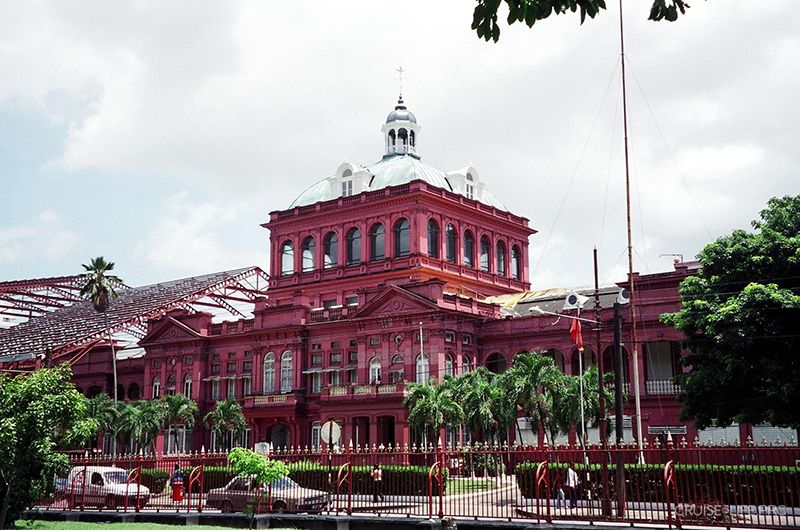
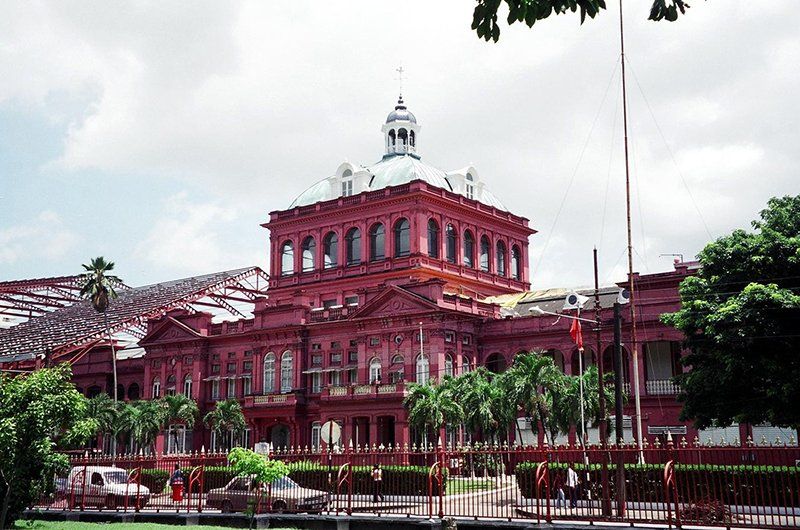
In the heart of Port of Spain, opposite Woodford Square, stands the Red House - the residence of the Parliament of the Republic of Trinidad and Tobago. This building was constructed in the Greek Revival style and is a historic landmark of the country. Construction of the parliament building began as early as 1844. During preparations for the celebration of Queen Victoria’s jubileee in 1897, the façade was painted red, and since then the building has been known as the Red House. Some decorative panels were made especially in England, and an Italian master was brought in to install them on the ceilings. The building’s columns are made of purple wood and coated with yellow paint. Inside, there is a fountain.
Stollmeyer Castle

Stollmeyer Castle

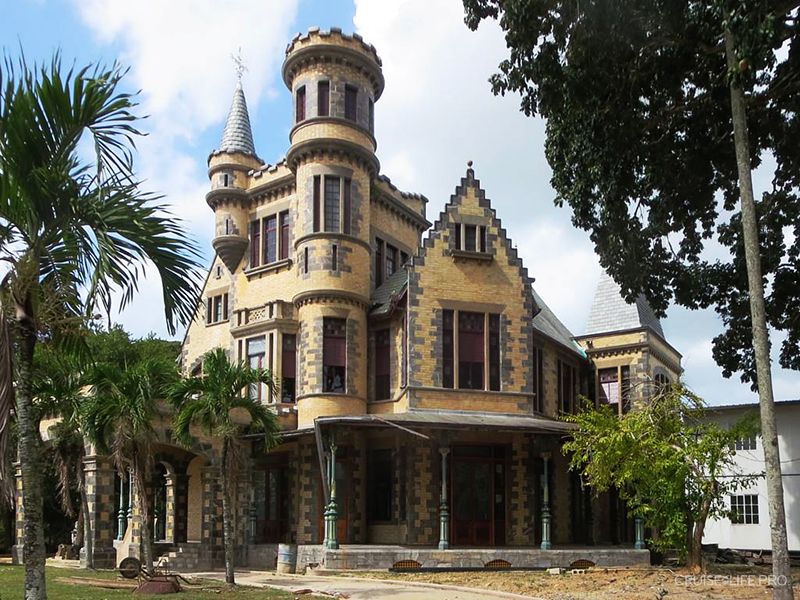
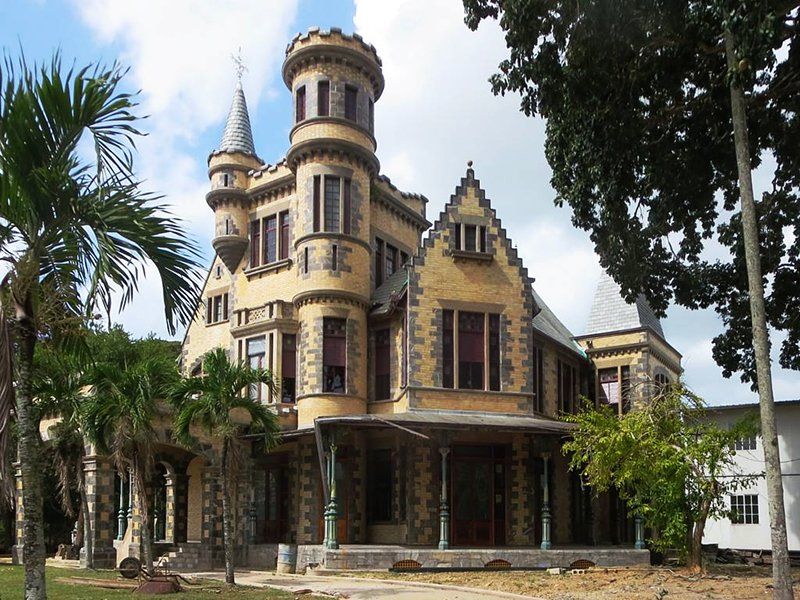
The historic Stollmeyer Castle was built in 1902-1904 based on a design by the well-known Scottish architect Robert Gillisom. The castle is located on the western side of the Savannah Royal Park. The house was designed to look like Balmoral Castle in Scotland. In 1979, the building was purchased by the government of Trinidad and Tobago. The architecture of the castle, built during the country’s period of economic prosperity, is very reminiscent of a fortress. This building is part of the so-called Magnificent Seven-an excellent example of colonial architecture in Port of Spain. The castle’s sturdy stone façades seem unconquerable, however the wooden flooring and roof structure today need restoration.
The Magnificent Seven

The Magnificent Seven

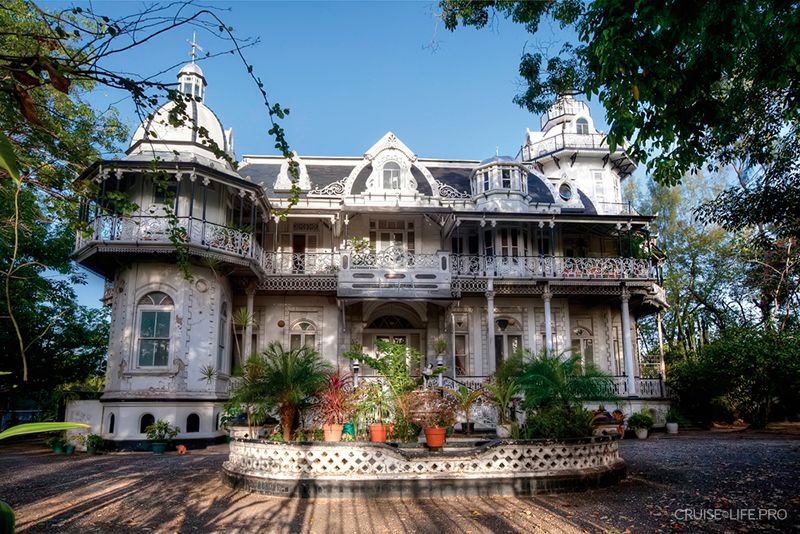
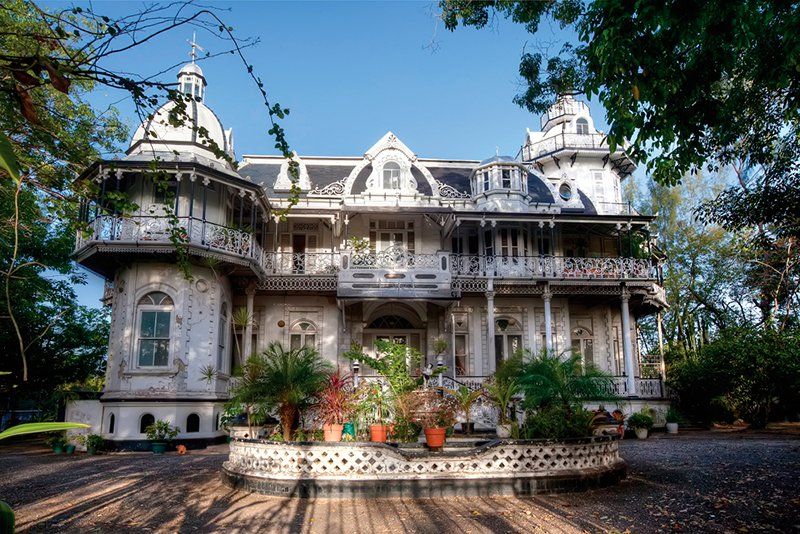
Along the western part of Queen’s Savannah Park, along Maraval Road, there runs a whole line of luxurious old mansions, usually known as the “Magnificent Seven,” among which the most interesting are the utterly fantastic Nousle House (one of the many examples of architect George Brown’s work, who introduced woodcarving into mass construction), the most picturesque Bosseri House, the Queen’s Royal College in the style of German Renaissance, the snow-white Whithall building in Moorish style, as well as the world-famous Killarney, or Stallmeyer Castle-an idyllic imitation of a traditional Bavarian castle, looking absolutely amazing against the tropical skies of Trinidad.
Fort George

Fort George

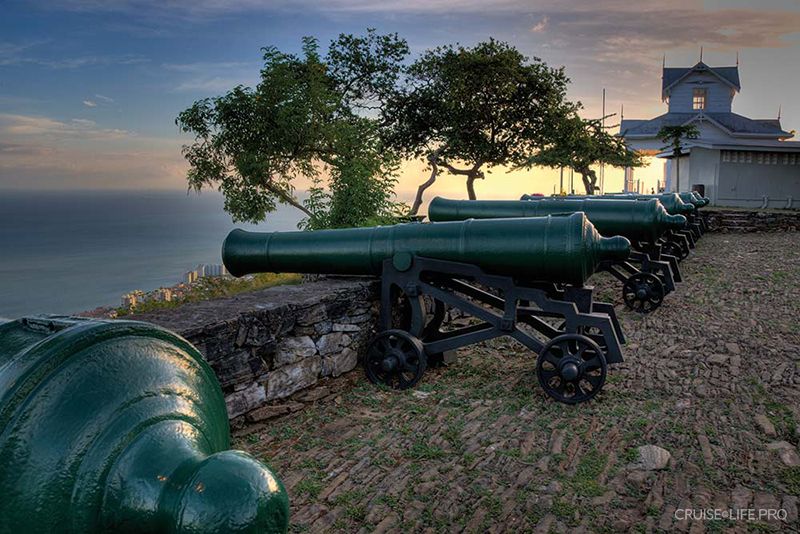
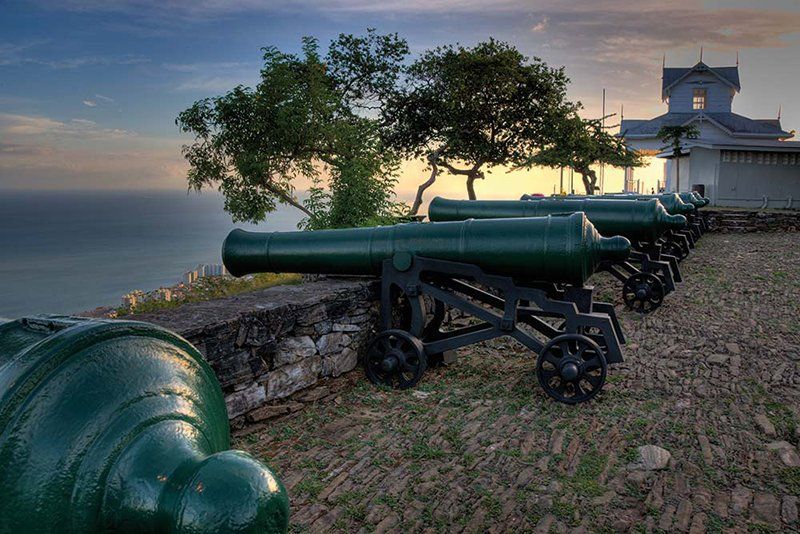
In the suburbs of the city stands the island’s main fortress-Fort George (1804-1826). From its walls, you can enjoy a superb view of Port of Spain and clearly make out the mountains of northern Venezuela. Built by the British in 1804 as part of a series of fortifications that included Fort Abercromby and the defenses on Cumberlands Hill, Fort George was considered the final major line of defense for the Port of Spain harbor.
What to see

Maracas Bay Resort

Maracas Bay Resort

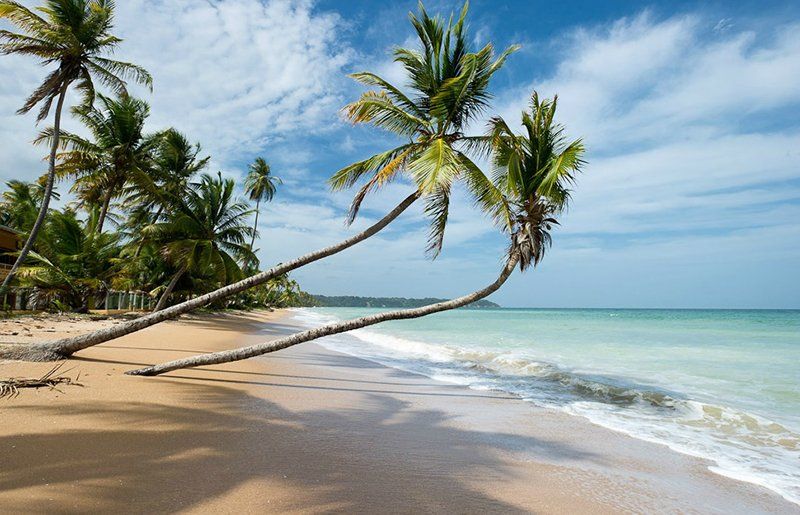
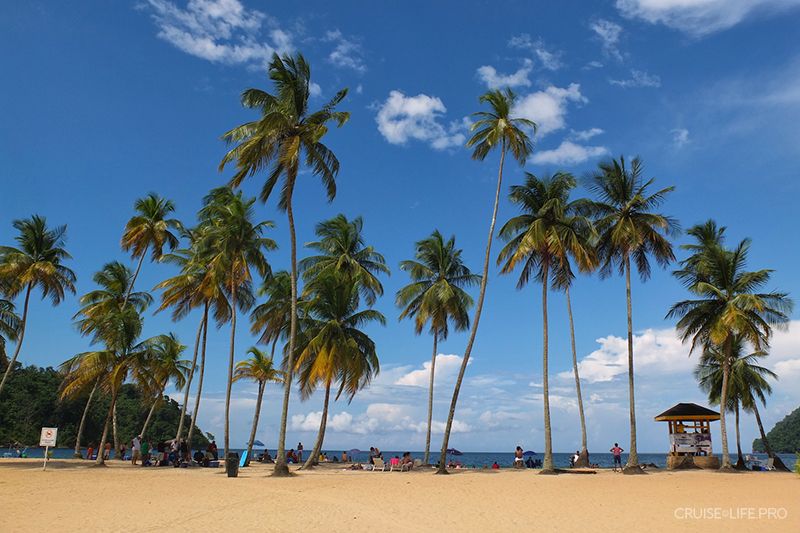
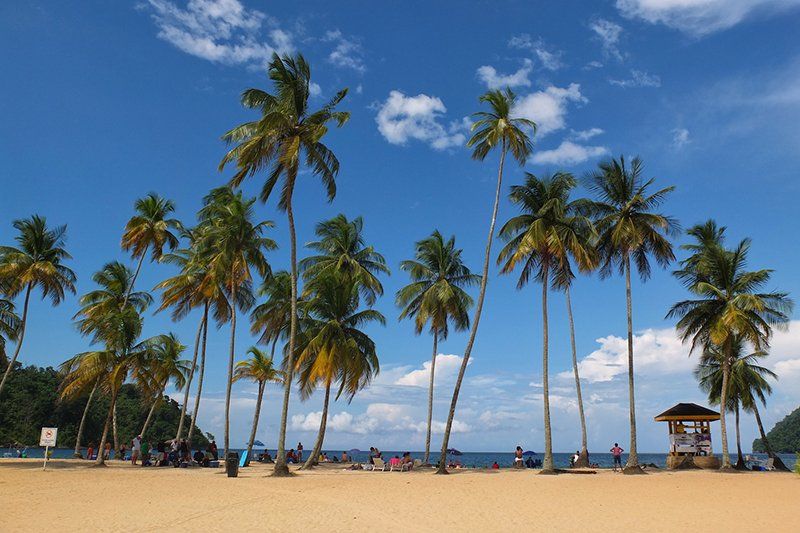
Maracas Bay is one of the most popular resorts in Trinidad. It is located just forty minutes from the country’s capital in the northwest of the island. Maracas Bay is an amazingly beautiful sandy crescent stretching for a good 1850 m, framed by picturesque palm groves. Maracas Bay is the island’s largest beach area, with excellent infrastructure, great service, and wonderful natural conditions for a high-quality holiday. The resort is a great choice both for those craving complete relaxation and for fans of active and sporty recreation. The only drawback of the resort is the flip side of its universal recognition and popularity-crowds and noise.

Pitch Lake

Pitch Lake

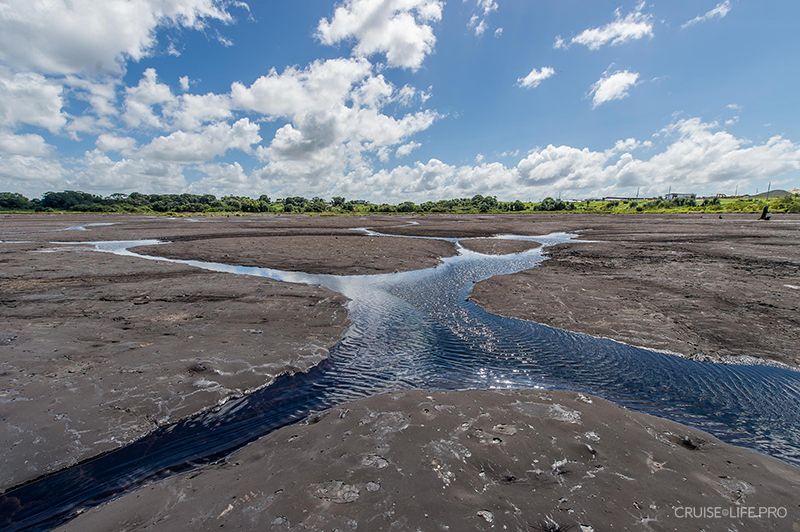
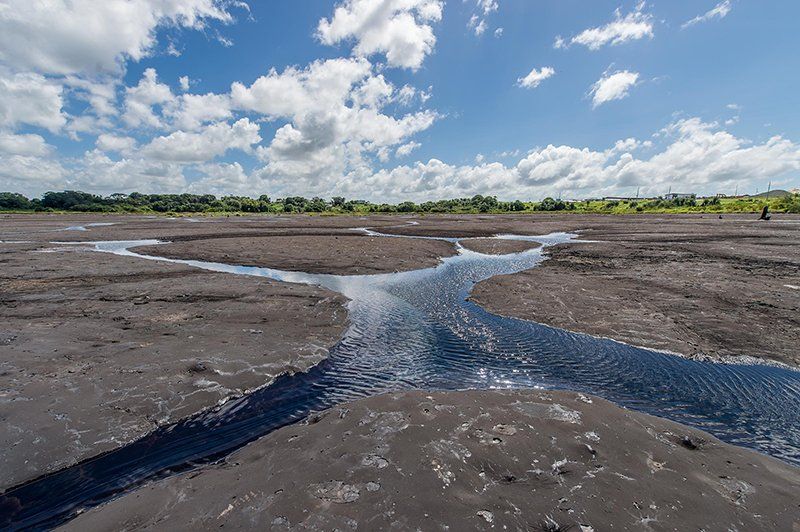
Pitch Lake is an amazing natural phenomenon of Trinidad. Here, due to the influence of tectonic factors, oil-bearing layers communicate through underground faults with the vent of the oldest volcano. And as a result, the contents of the volcanoes, under the effect of temperature and pressure, turn into asphalt. Worldwide, there are only a few such sites, including Venezuela’s Guanuco asphalt basin and Rancho La Brea in Los Angeles. The asphalt extracted from Pitch Lake is used to build the best roads across the globe. For example, the famous Pall Mall street, which leads to Buckingham Palace in London, is paved with this asphalt. Tourists from all over the world come to see the asphalt lake.

Beaches of the island

Beaches of the island

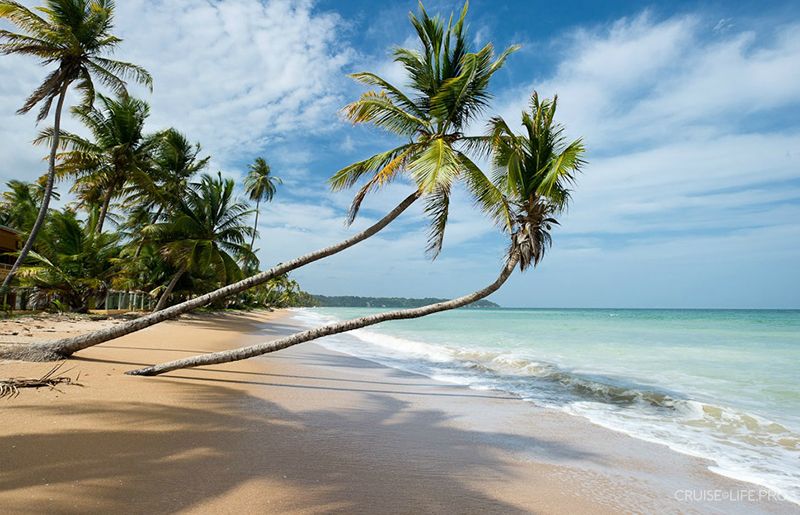
Trinidad is not rich in luxurious shores and miles of white sand, however here you can find practically any marine area suitable for different conditions. The island’s main beach areas usually include the bays of Maracas Bay, Las Cuevas, Blanchisseuse, Grand Rivière and Toco Bay north of Port of Spain; the beaches of Carenage Bay, Mackeripe Beach and Scotland Bay on the northwest coast; the bays of Blanchisseuse? and? Actually, Balanda and Salibia in the northeast and Manzanilla and Mayaro in the southern part of the island. Beach areas are home to a large number of hotels and resorts of all levels, while numerous sailing clubs and sports centers offer everything you need for a great vacation. Excellent snorkeling spots can be found around Chacachacare and near the island of Pigeon d’Or.

Recommended excursions

Caroni National Park

Caroni National Park

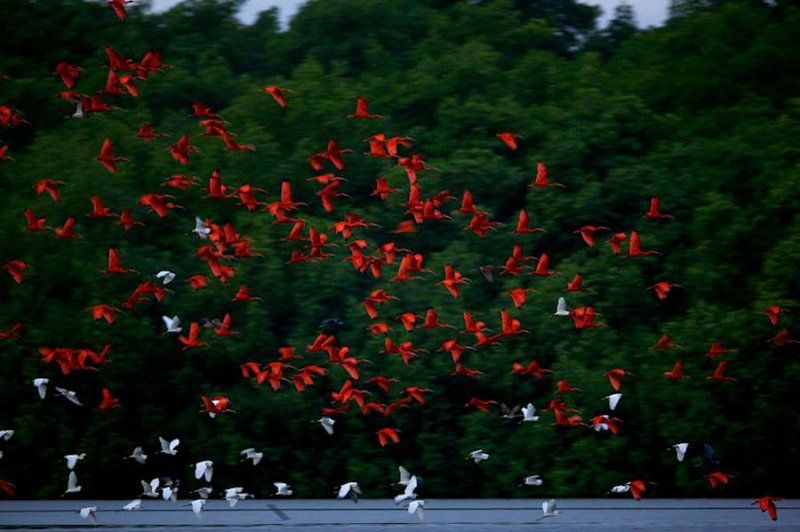
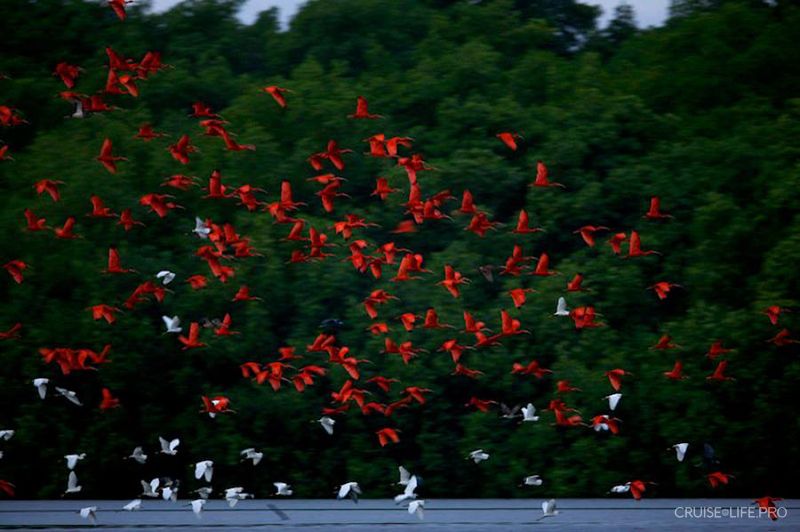
The unique Caroni Wildlife Sanctuary is located just a short distance from the island’s capital, Port-of-Spain, and offers a stretch of coastal territory consisting of wetlands, mangrove groves, and salt lagoons. This area is home to more than 186 bird species, including white herons and ospreys. It is also inhabited by 32 bat species, red howler monkeys, white capuchin monkeys, and several species of caimans. However, tourists come to the park to admire the huge flocks of scarlet ibis, and the thousands of birds that arrive in this region’s wetlands. On the marshy ground, a large number of viewing platforms have been set up, providing a unique opportunity to observe the lives of some of the most beautiful representatives of ornithofauna.

You can find a more detailed list of excursions and their prices after booking your cruise in your “Client Personal Account”.