Palermo, Sicily, Italy

Port of call

Palermo, Sicily, Italy

Description — Palermo, Sicily, Italy

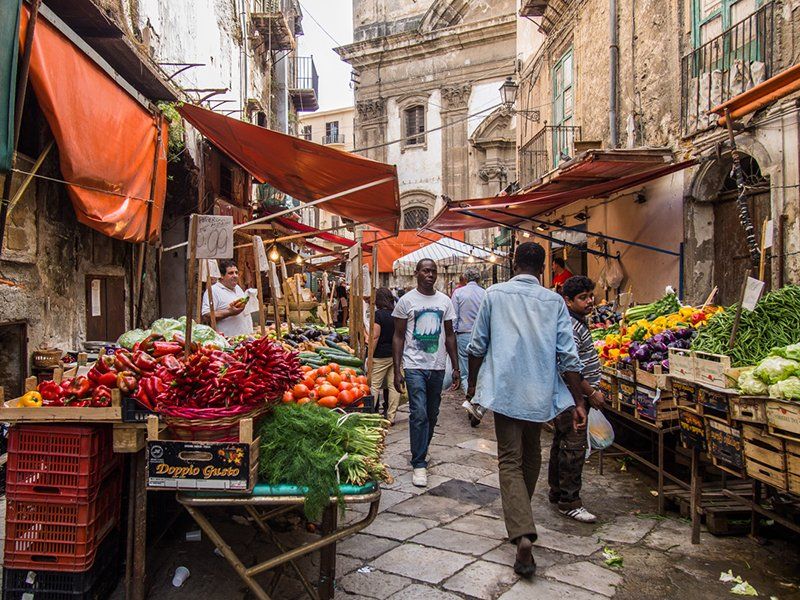
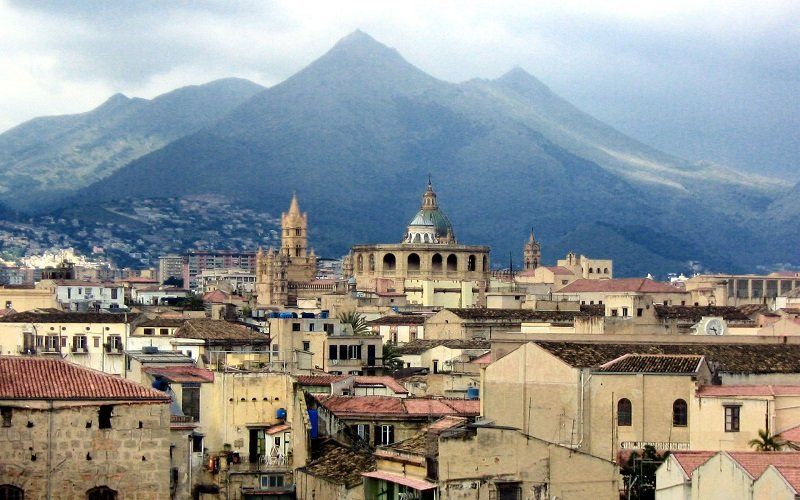
Palermo is the main city of Italy’s island region of Sicily. Modern Palermo is the largest port and the fifth-largest city in Italy by population, after Rome, Milan, Naples and Turin. It is a colorful, noisy and chaotic city, with an indescribable atmosphere-loud and friendly people, delicious food and excellent wine.

Unlike other cities, Palermo was founded not by the Greeks, but by the Phoenicians (Carthaginians) in the 8th century BC at the foot of Mount Pellegrino on the shores of the Tyrrhenian Sea, which is where the name Palermo comes from-from “panormus,” meaning port (in Greek). Its convenient location contributed to the city’s rapid development as a center of trade and politics. Foreign rule gave the capital its unmistakable character. Eras changed-progressive rulers came in place of tyrants. And only their “frozen trace”-architectural masterpieces-told later generations about the divine harmony that, seemingly, could not be combined in stone… The best rulers for Palermo were the Arabs: during this period, the city experienced a true golden age. Examples include the majestic Cappella Palatina or the cathedral in Monreale. In any case, each era contributed to the shaping of Palermo, leaving behind historical monuments that make it worth overcoming any distance.

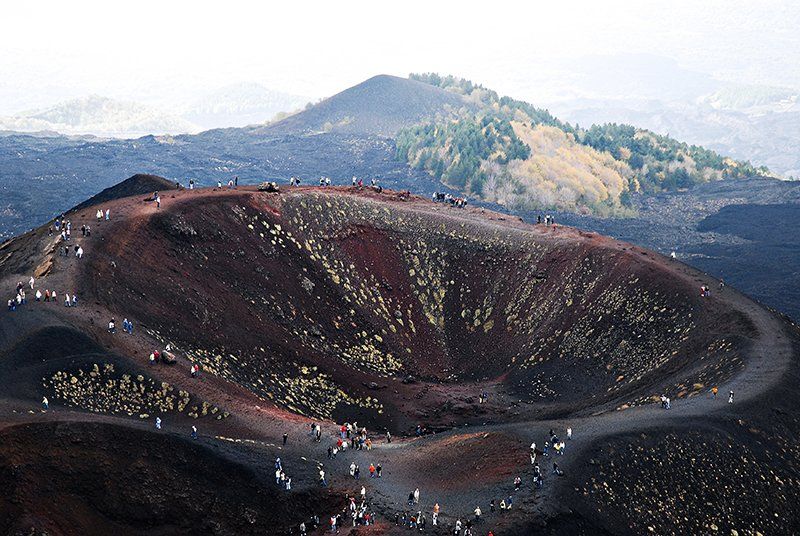
Sicily is the largest region in Italy by area. Its entire territory consists of islands, with 98% accounted for by the island of Sicily, which is separated from mainland Italy by the Strait of Messina. On the island of Sicily stands the active volcano Mount Etna, about 3329 meters high. There are also several inactive volcanoes on the same island. On the nearby Aeolian Islands, located to the north-east of Sicily, there is the active volcano Stromboli.

On the island of Sicily, a mountainous and hilly landscape predominates; there are several mountain ranges, the largest of which are the Sicilian Apennines. Plateaus and plains make up just 14% of the island’s total area. The coastline of Sicily-mostly rocky to the north and sandy to the south-stretches for about 1000 km. The central part of Sicily, meanwhile, is characterized by hilly terrain.

Climate

The climate of Palermo is Mediterranean: it features a mild winter and hot summer. High temperatures are easy to tolerate here due to the close proximity of the sea. In summer, the average temperature is usually above +30°C. In winter, the average fluctuates around +15°C; autumn is hotter than spring. In May, Palermo already begins the swimming season, which lasts until the end of October. Summer is a dry period-rain is almost nonexistent. The maximum rainfall falls in autumn.

Location on the map

Sights

Cathedral of Santa Maria Assunta

Cathedral of Santa Maria Assunta

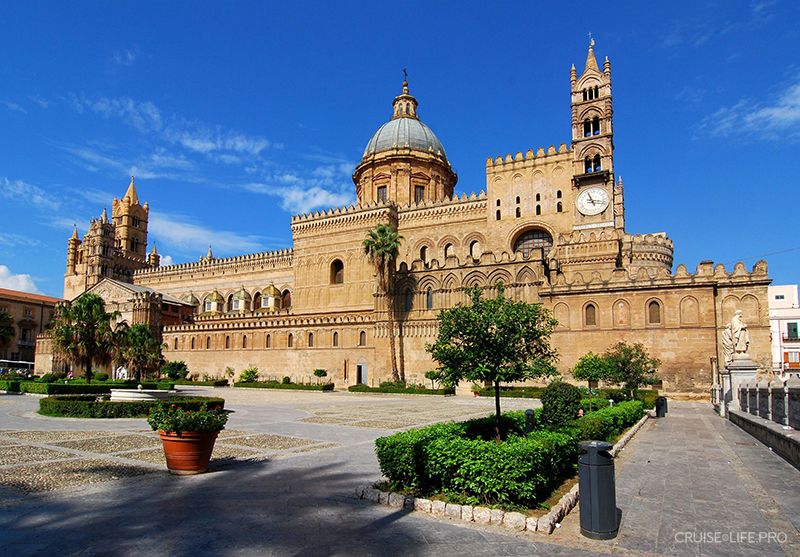
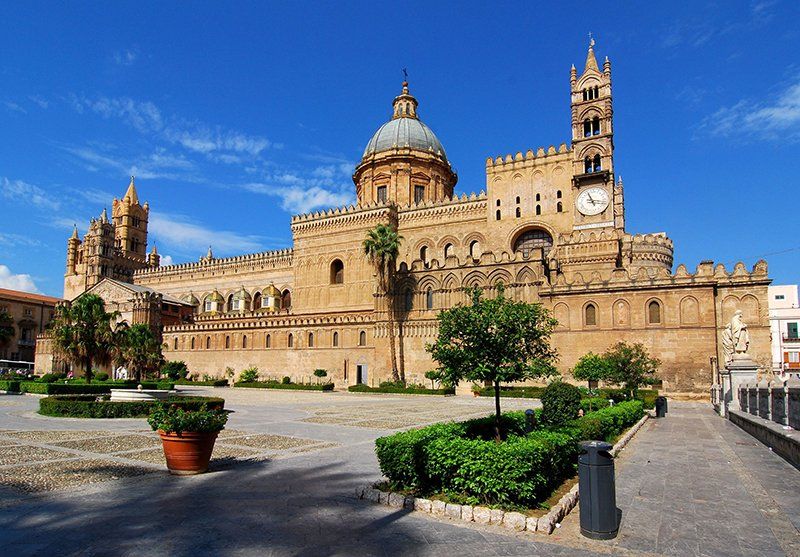
Santa Maria Assunta Cathedral was built at the end of the 12th century on a sacred site: once, a Byzantine Orthodox church stood here, later it became a mosque, and then-again-a Christian church. The architecture of the cathedral-like most historic buildings in the capital-was repeatedly rebuilt over time, blending Arab and Norman styles, as well as Gothic and Baroque influences. Inside the cathedral is a mausoleum: here rest the rulers of Sicily-Norman kings (including the great reformer Roger II) and German emperors. The treasury holds church treasures, including the precious diadem of Constance of Aragon, Queen of Sicily. But for pilgrims, the cathedral’s greatest value lies in the miraculous relics of Saint Rosalia, patroness of Palermo and of the whole Sicilian island.
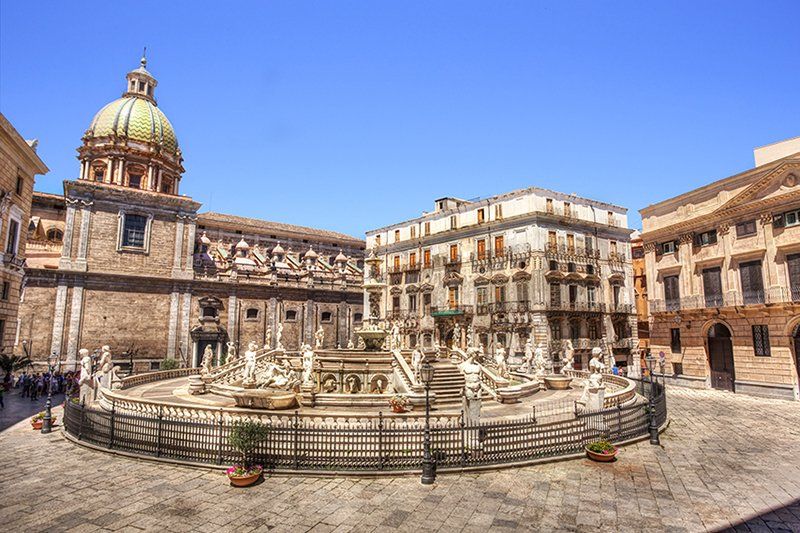
Pretoria Square

Pretoria Square

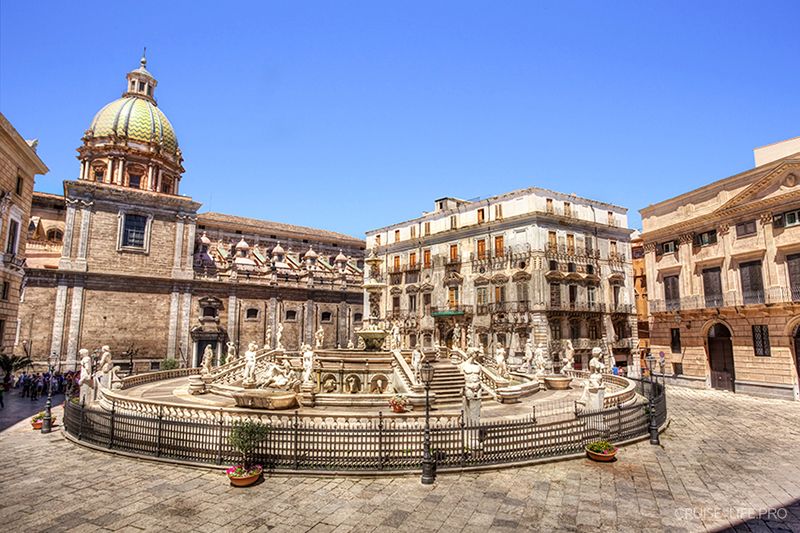
This square, framed by architectural landmarks with a monumental fountain in the middle, is considered a kind of administrative center of Palermo. It is here, in a magnificent palace (Palazzo delle Aqule), built in the 15th century, that the city council meets (the building, in Sicilian Baroque style, gave the square its name). Nearby, no less ancient churches rise: Santa Catarina and San Giuseppedei Teatini from the 17th century. And crowns this architectural ensemble the grand Pretoria Fountain, popularly nicknamed the “fountain of shame.” All because the fountain is adorned with dozens of nude mythical heroes and allegories, which goes against the piety of the local residents.
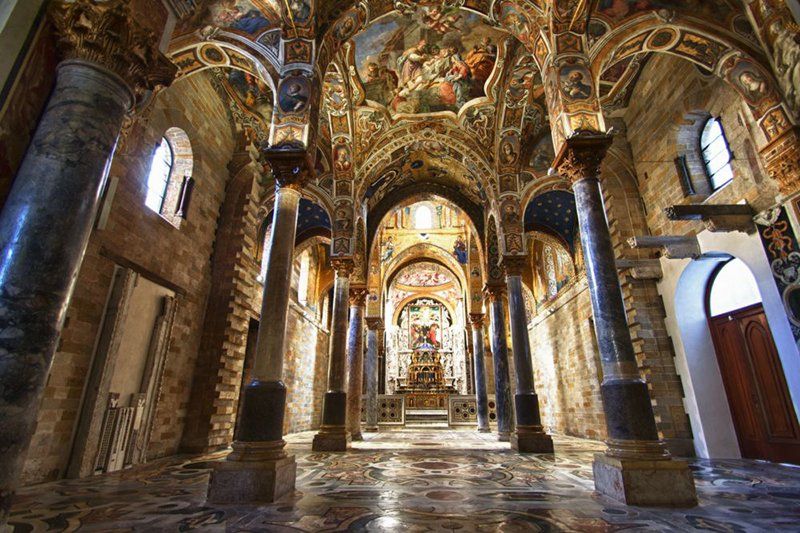
La Martherana Church

La Martherana Church

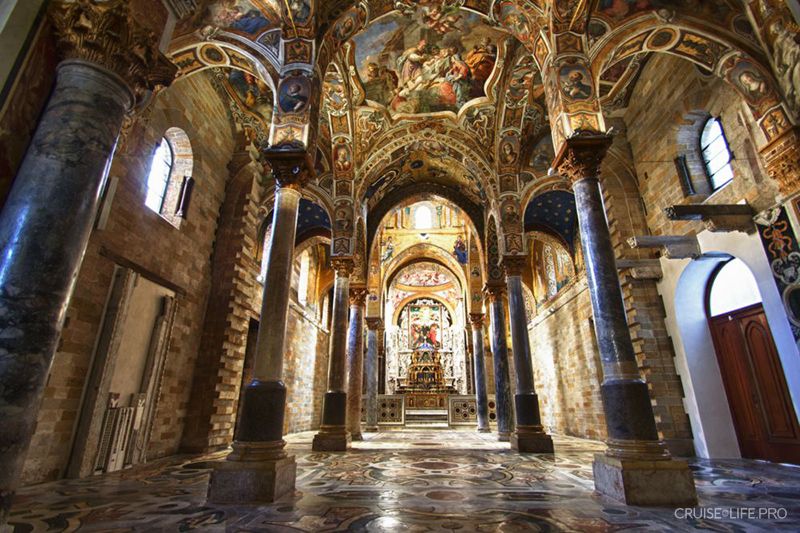
The La-Martorana Church on Piazza Bellini is easily recognizable by its four-tier bell tower, which today looks just as it did in the 12th century. The church itself has been rebuilt and reshaped many times, evolving from Norman style to a more ornate Sicilian Baroque. What has remained unchanged is the interior decor: the La-Martorana church has preserved its magnificent Norman-Byzantine mosaics, which adorn the walls and the church’s dome. Remarkably, over the course of several centuries, the images of Christ and King Roger II have not lost their vividness. Locals call it a true miracle and compare the beauty of La-Martorana with the grandeur of the Palatine Chapel.
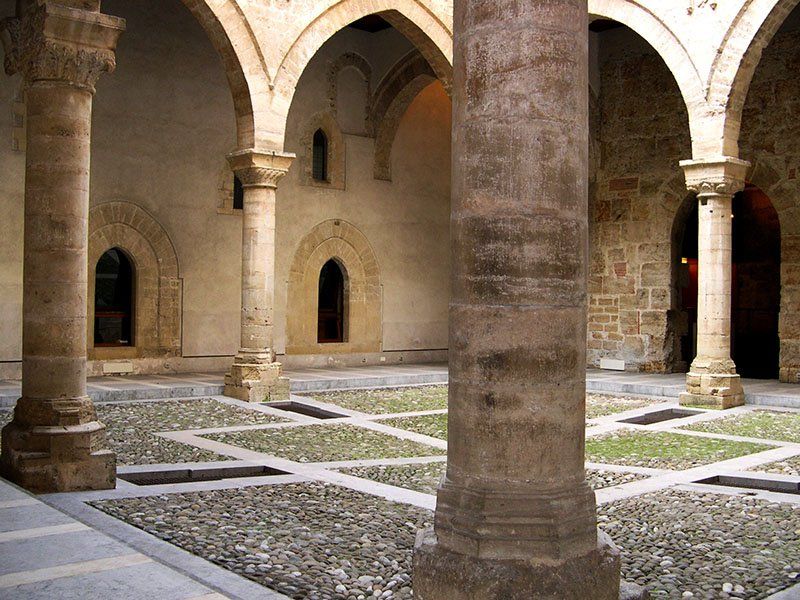
Palazzo Steri

Palazzo Steri

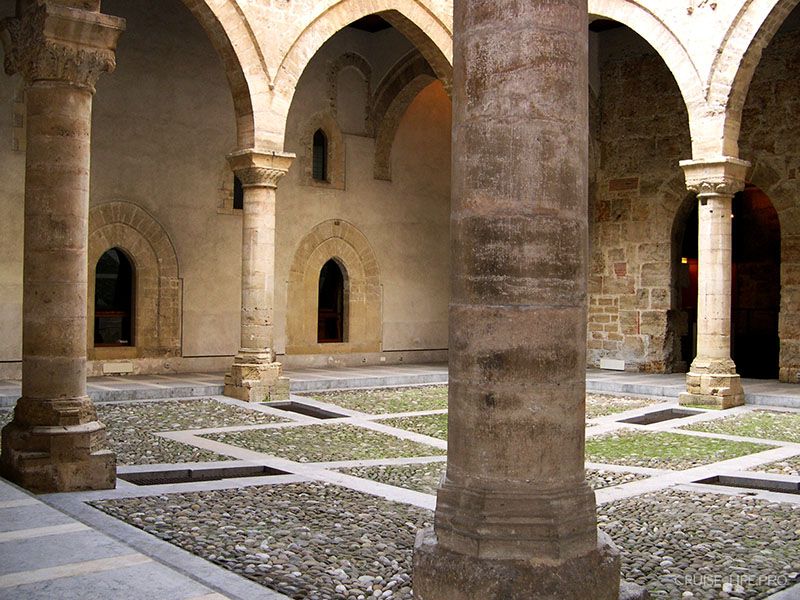
A medieval castle erected at the beginning of the 14th century by order of Count Andrea Chiaramonte. The unfortunate owner of the palazzo was later beheaded by the Sicilian king right in the inner courtyard, and the castle became the residence of a cruel ruler. In the 17th-18th centuries, the fortress served as a prison, a torture chamber, and a meeting place for the island’s chief inquisitor. Today, the halls of this historic palazzo house the University of Palermo, but some of the rooms are open to visitors. For example, the Hall of Nobles, whose wooden ceiling is painted with biblical, historical, and mythological themes.
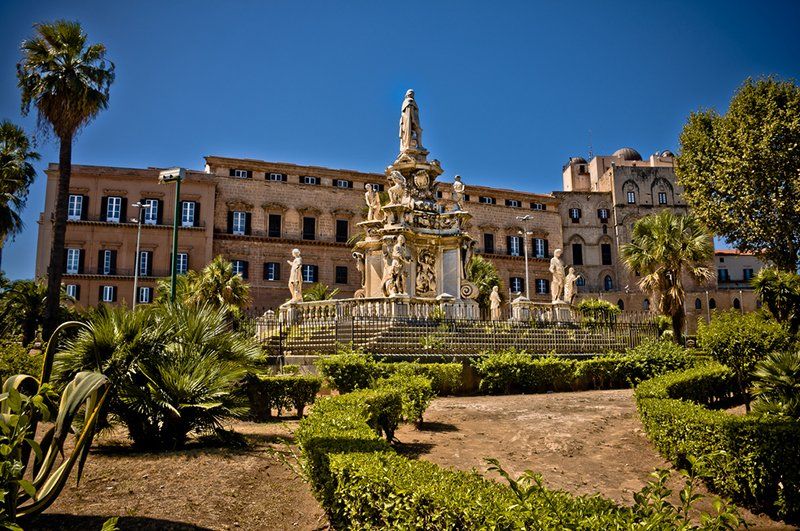
What to see

Norman Palace

Norman Palace

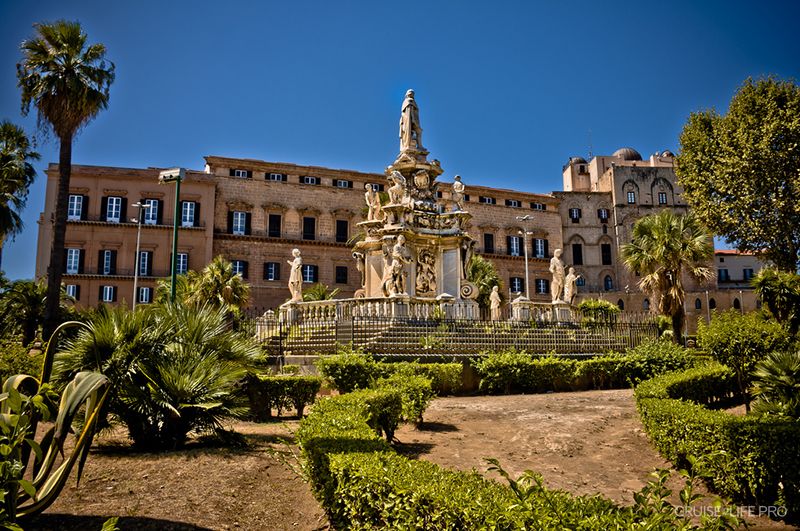
This strange building, at first glance, seems like the joint work of Eastern and Western architects. In essence, that’s exactly what it is, only with the difference that their work took place in different centuries: long ago, a Phoenician fortress stood on this site; then an ancient Roman fort; and later, the Arabs conquered Sicily, demolished the bastion, and built the Palace of the emirs on the cleared grounds. A couple of centuries later, the Normans arrived in Palermo and reshaped the Arab structure to suit their needs: they added towers and a chapel-the Palatine Chapel. And later still, other Europeans- the Spanish-decorated the palace with fountains, staircases, and luxurious rooms. That’s why it now looks, on one side, like an ornamental creation of Moorish architects, and on the other, like a strict and official residence of those in power.

Quattro Canti Square

Quattro Canti Square

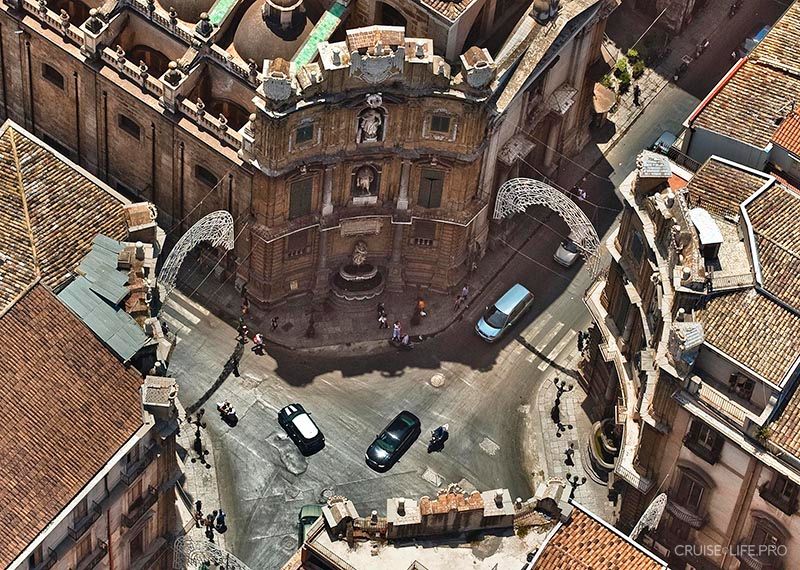
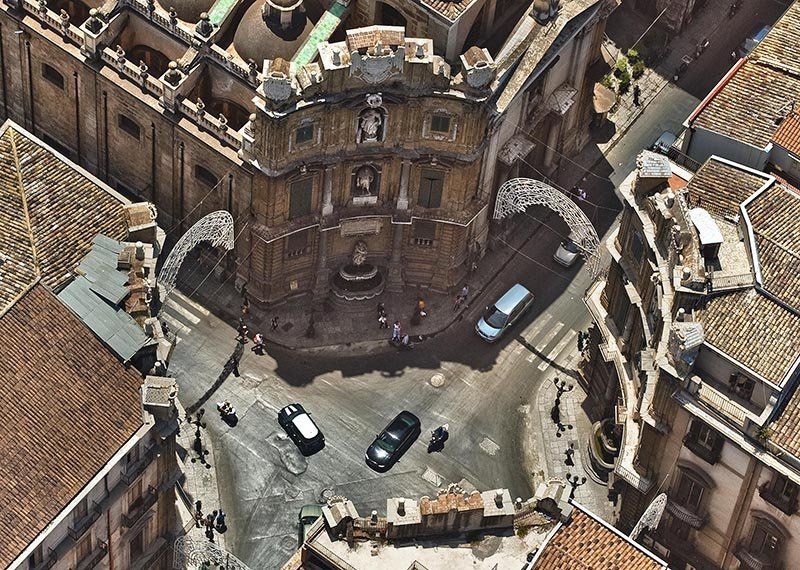
The “Square of Four Corners” got its name from the unusual angles of the buildings that frame this truly architectural masterpiece. They are cut off and, in essence, serve as complete facades decorated with fountains-allegories on the theme of the four seasons. In the niches, statues of four kings are installed, as well as saints, martyr patrons of the districts of Palermo. Piazza Quattro Canti was designed at the beginning of the 17th century, and after four centuries it still remains a true work of art. In this area of Palermo, you can perfectly combine a pleasant walk through the city center with easy, unburdening shopping. All of the city’s most fashionable boutiques are located here.

Capuchin Catacombs

Capuchin Catacombs

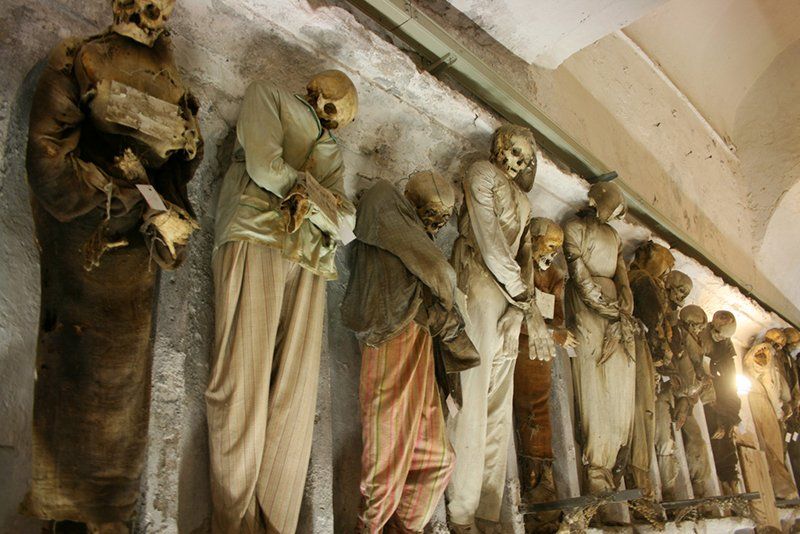
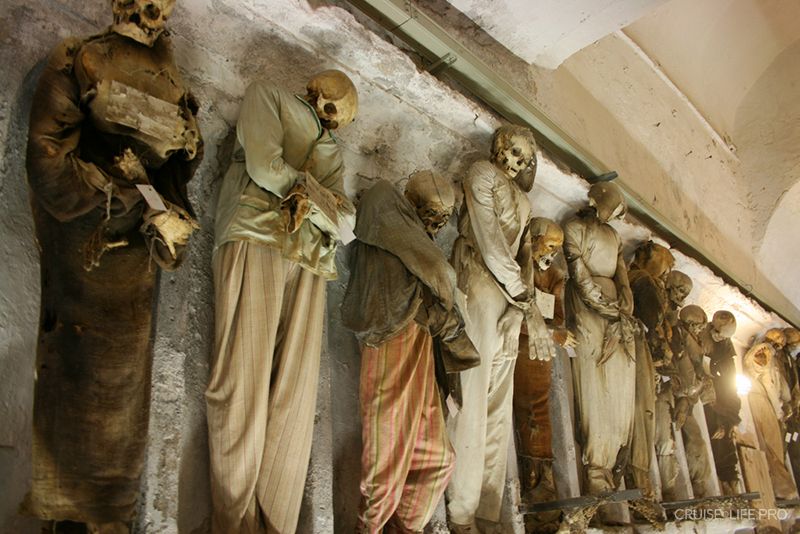
Under an unremarkable building of the Capuchin order monastery, there is a cold crypt in the form of a multitude of corridors. Here, bodies lie, stand, and even hang from hooks-dressed in the clothes they were brought in wearing a few centuries ago. A terrible sight. The history of this strange cemetery began in the 16th century, when the Capuchin monastic order arrived in Sicily. The monks did not want to be buried far from their home monastery and set up a cemetery right under their church. After some time, it became clear that the strange air in the catacombs prevents the bodies from decomposing. And then, the local elite began to be buried here. The cemetery operated until the end of the 19th century.

Marionette Museum

Marionette Museum

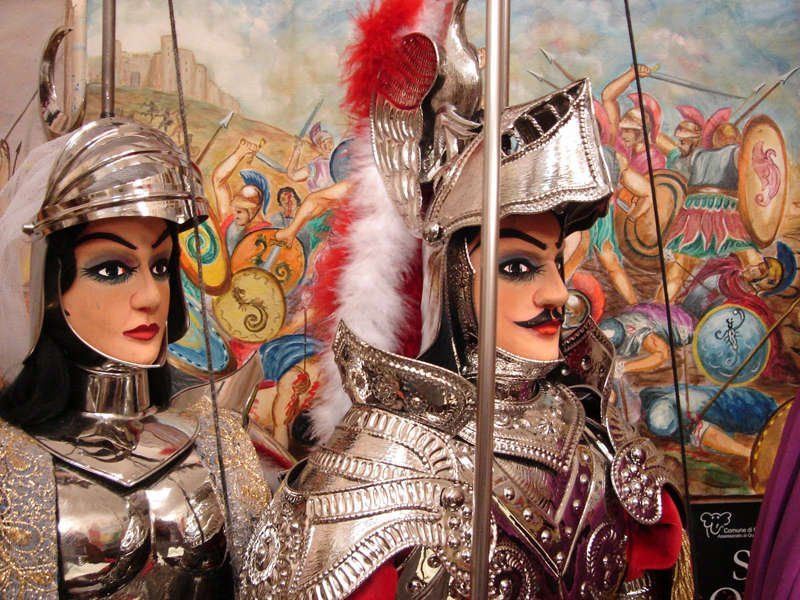
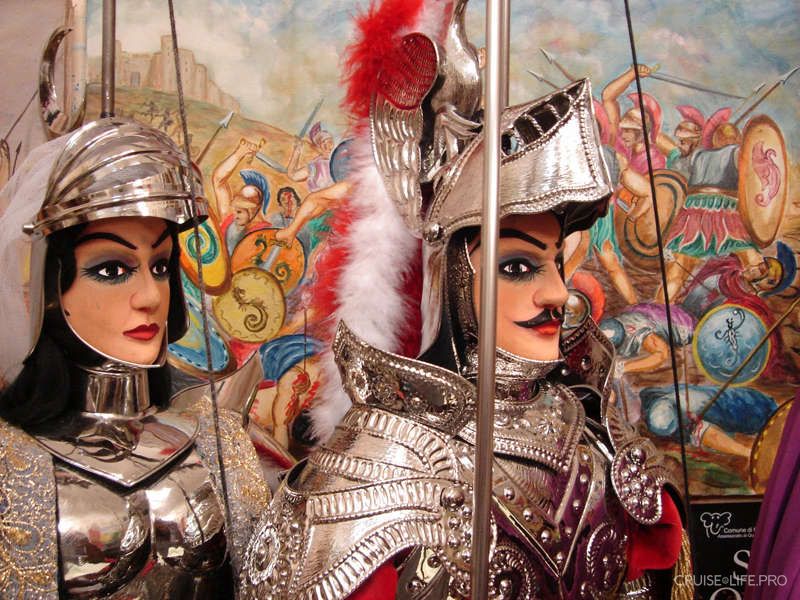
Traditional Sicilian rope dolls-marionettes or pupi (pupi)-come to life in the skilled hands of their owner-actor and are one of the brightest and funniest symbols of Sicily. At the Antonio Pasqualino Museum, there are more than three and a half thousand of them, and every one is different. These are Sicilian, Italian, Chinese, Burmese, Vietnamese, Cambodian, Indian, Turkish, Greek, Congolese, and other dolls. The Museum of Puppets was opened in 1975 by a successful surgeon and, in his spare time, an anthropologist from Palermo-Antonio Pasqualino. Together with his wife and friends, he founded an association dedicated to preserving folk Sicilian culture, assembled an enormous collection of puppets from around the world, and even created a special puppet-theatre celebration-the Morgana Festival-which has been held every year in November for more than 35 years.

Villa Patagonia

Villa Patagonia

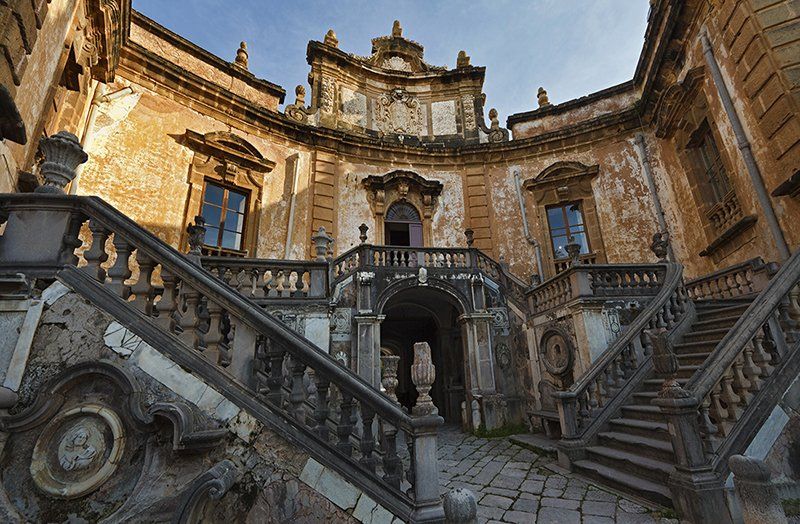
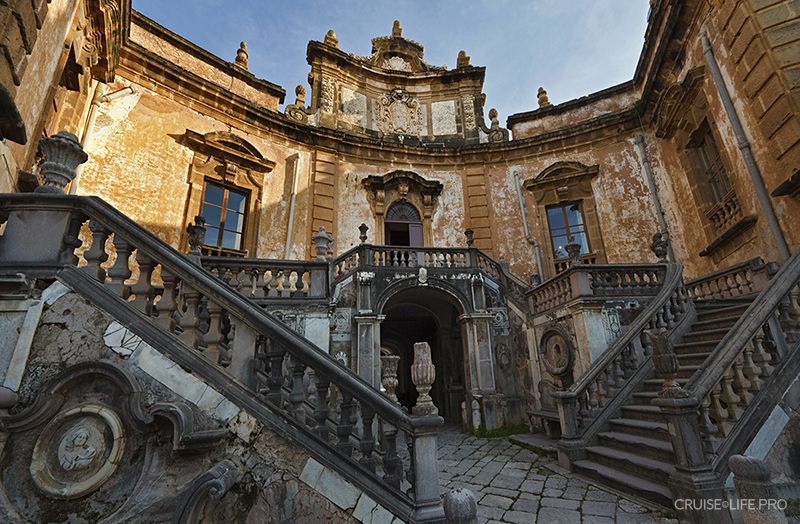
Not far from Palermo, in the town of Bagheria, there is the famous Palagonia Villa, a 18th-century estate throughout Sicily. At first glance, it seems like an unremarkable, albeit historic, Baroque-style building, but if you look closely, you can see dozens of small sculptures of human-like monsters crowning the high walls and resting in the garden. In the local vernacular, this place is known as the Villa of Monsters. To this day, out of 600 bizarre creatures only 63 have survived, but they still delight and frighten guests just as they did several centuries ago. Within the estate itself, you should definitely take a look at the vestibule, adorned with frescoes on ancient themes, and visit the mirror hall, finished with marble and complemented by paintings and bas-reliefs.

Botanical Garden

Botanical Garden

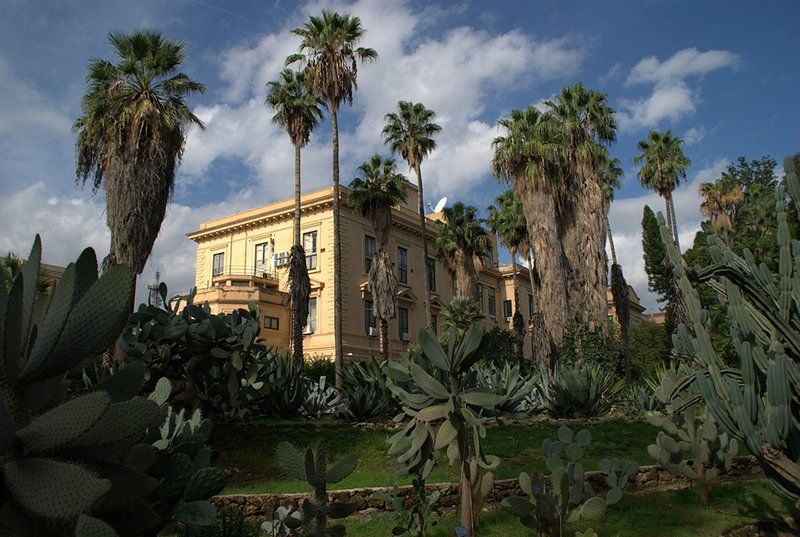
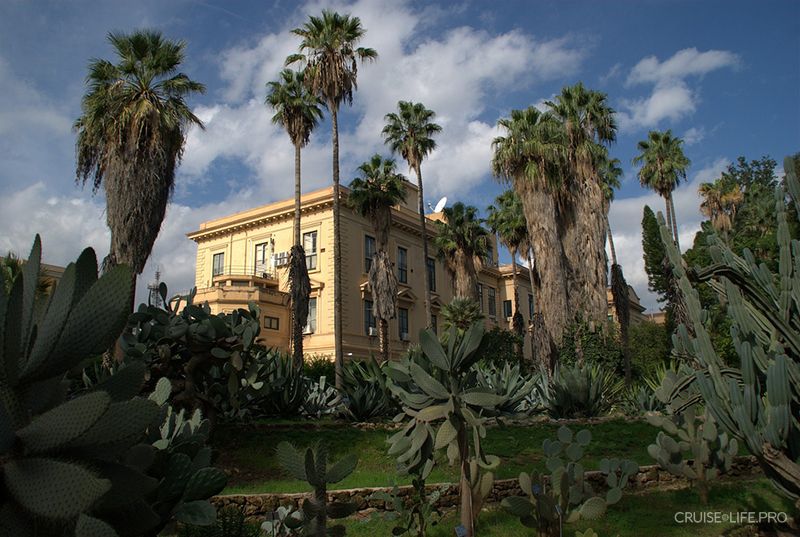
A huge botanical garden covering more than 10 hectares of the Sant’Erasmo plain once began with a tiny bed for medicinal plants. Since the garden opened in 1795, it has grown to incredible proportions. Over time, greenhouses, pools for aquatic plants, and heated glasshouses were constantly added-designed and embellished by the finest Italian architects and craftsmen. Today, this garden is part of the University of Palermo, and its collection of plants and flowers exceeds 12,000 species. On the spacious pathways of the park, tall tropical trees stand alongside small groves of cacti, while in the artificial ponds yellow, pink, and blue lilies bloom.

Recommended excursions

Panoramic Tour of Palermo

Panoramic Tour of Palermo

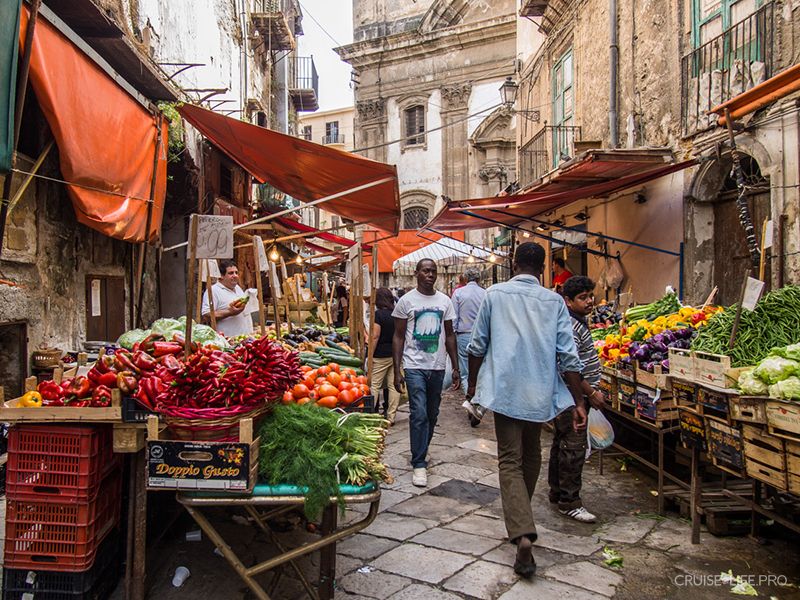
This city is a mystery even to the Sicilians themselves. The history and architecture of the city are so rich and varied that it feels like you are traveling the entire world in just a few hours. A great legacy from all eras and civilizations has preserved its unique character. What is this city like: like an ancient Arab bazaar, where you can grab a delicious bite and try heavenly delicacies; or perhaps it is the regal capital of culture and prosperity of the Norman period, which was so admired by the Arab traveler of the 12th century, Al Idrisi? As you explore this city with its magnificent historic buildings, you are transported through time and space.

Trip to Mount Etna

Trip to Mount Etna

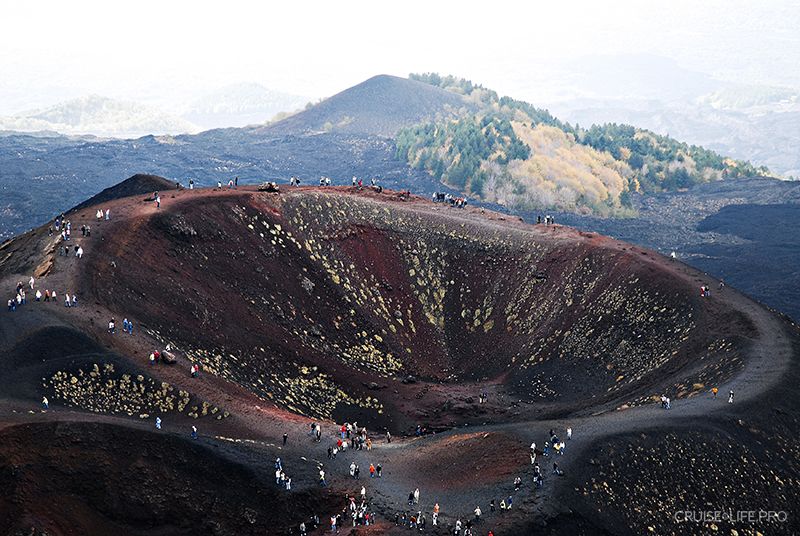
Mount Etna on the island of Sicily is the largest of Europe’s active volcanoes. Climbing along the winding road to a height of 2000 meters is real adrenaline. And this is only the third of the entire route to Etna. The air temperature at the first tourist stop is +13, and at the very summit there is snow, and the cold gets right through to the bones, so be sure to pack warm clothes. The funicular will take you to an altitude of 2500 m, and then, if there is no fog, you can reach the crater area (3350 m) by a special jeep.

You can view the more detailed list of excursions and their prices after booking the cruise in your “Customer Personal Account”.

Cruises calling at this port

MSC Meraviglia
MSC Cruises
MSC Meraviglia
Mediterranean/Europe
15.10.2026 · 5 nights Port of departure: La Goulette, Tunisia ALL (NO DRINKS)

La Goulette, Tunisia, Palermo, Sicily, Italy, Naples, Italy, Livorno, Italy, Marseille, Provence, France, Barcelona, Spain

from €889
I Interior €889
O Ocean View €1,198
B Balcony €1,099

Press "Details" button to see an actual price. Price per cabin.

Details
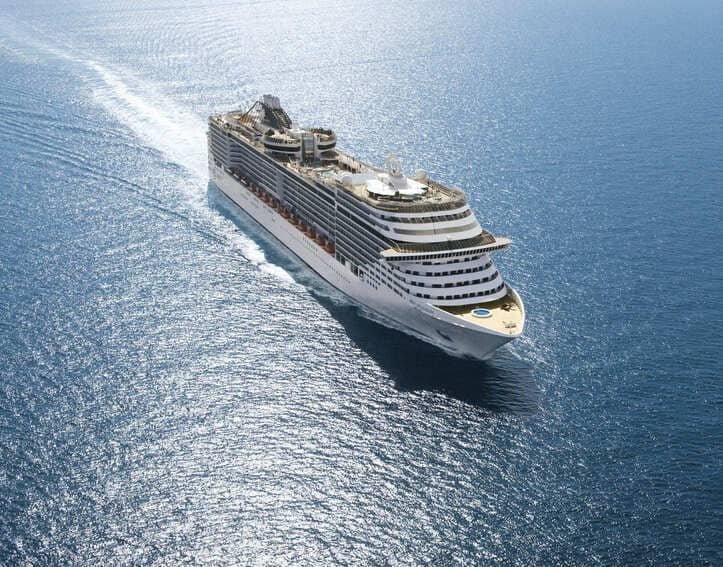
MSC Splendida
MSC Cruises
MSC Splendida
Mediterranean/Europe
15.10.2026 · 7 nights Port of departure: Palermo, Sicily, Italy ALL (NO DRINKS)

Palermo, Sicily, Italy, Valetta, Malta, At Sea, Barcelona, Spain, Marseille, Provence, France, Livorno, Italy, Cagliari, Cerdeña, Palermo, Sicily, Italy

from €2,106
I Interior €2,106
O Ocean View €2,286
B Balcony €2,806
S Suite €3,706

Press "Details" button to see an actual price. Price per cabin.

Details
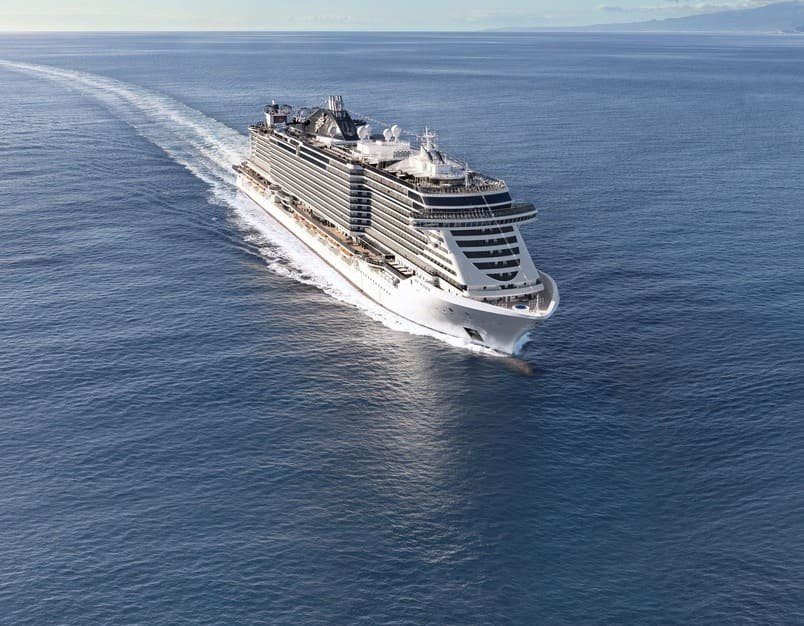
MSC Seaview
MSC Cruises
MSC Seaview
Mediterranean/Europe
15.10.2026 · 7 nights Port of departure: Barcelona, Spain ALL (NO DRINKS)

Barcelona, Spain, Marseille, Provence, France, Genoa, Italy, Civitavecchia, Italy, Palermo, Sicily, Italy, At Sea, Ibiza, Spain, Barcelona, Spain

from €1,646
I Interior €1,646
O Ocean View €1,946
B Balcony €2,286

Press "Details" button to see an actual price. Price per cabin.

Details
Costa Smeralda
Costa Cruises
Costa Smeralda
Mediterranean/Europe
16.10.2026 · 7 nights Port of departure: Civitavecchia, Italy ALL (NO DRINKS)

Civitavecchia, Italy, Savona, Marseille, Provence, France, Barcelona, Spain, Balearic Sea, Balearic Sea, Cagliari, Cerdeña, Palermo, Sicily, Italy, Civitavecchia, Italy

from €898
I Interior €898
O Ocean View €1,538
B Balcony €1,198

Press "Details" button to see an actual price. Price per cabin.

Details
MSC Meraviglia
MSC Cruises
MSC Meraviglia
Mediterranean/Europe
16.10.2026 · 4 nights Port of departure: Palermo, Sicily, Italy ALL (NO DRINKS)

Palermo, Sicily, Italy, Naples, Italy, Livorno, Italy, Marseille, Provence, France, Barcelona, Spain

from €614
I Interior €614
O Ocean View €794
B Balcony €805

Press "Details" button to see an actual price. Price per cabin.

Details
MSC Seaview
MSC Cruises
MSC Seaview
Mediterranean/Europe
16.10.2026 · 7 nights Port of departure: Marseille, Provence, France ALL (NO DRINKS)

Marseille, Provence, France, Genoa, Italy, Civitavecchia, Italy, Palermo, Sicily, Italy, At Sea, Ibiza, Spain, Barcelona, Spain, Marseille, Provence, France

from €1,726
I Interior €1,726
O Ocean View €2,006
B Balcony €2,166

Press "Details" button to see an actual price. Price per cabin.

Details
MSC Meraviglia
MSC Cruises
MSC Meraviglia
Mediterranean/Europe
16.10.2026 · 23 nights Port of departure: Palermo, Sicily, Italy ALL (NO DRINKS)

Palermo, Sicily, Italy, Naples, Italy, Livorno, Italy, Marseille, Provence, France, Barcelona, Spain, Alicante, Spain, Gibraltar, United Kingdom, Seville (Cadiz), Spain, Casablanca, Morocco, At Sea, Las Palmas, Gran Canaria, Spain, Madeira (Funchal), Portugal, At Sea, Ponta Delgada, Azores, Ponta Delgada, Azores, At Sea, At Sea, At Sea, At Sea, At Sea, Boston, Massachusetts, Boston, Massachusetts, At Sea, New York, New York

from €3,681
I Interior €3,681
O Ocean View €4,830
B Balcony €4,251

Press "Details" button to see an actual price. Price per cabin.

Details
MSC Splendida
MSC Cruises
MSC Splendida
Mediterranean/Europe
16.10.2026 · 7 nights Port of departure: Valetta, Malta ALL (NO DRINKS)

Valetta, Malta, At Sea, Barcelona, Spain, Marseille, Provence, France, Livorno, Italy, Cagliari, Cerdeña, Palermo, Sicily, Italy, Valetta, Malta

from €1,806
I Interior €1,806
O Ocean View €2,026
B Balcony €2,326
S Suite €3,226

Press "Details" button to see an actual price. Price per cabin.

Details