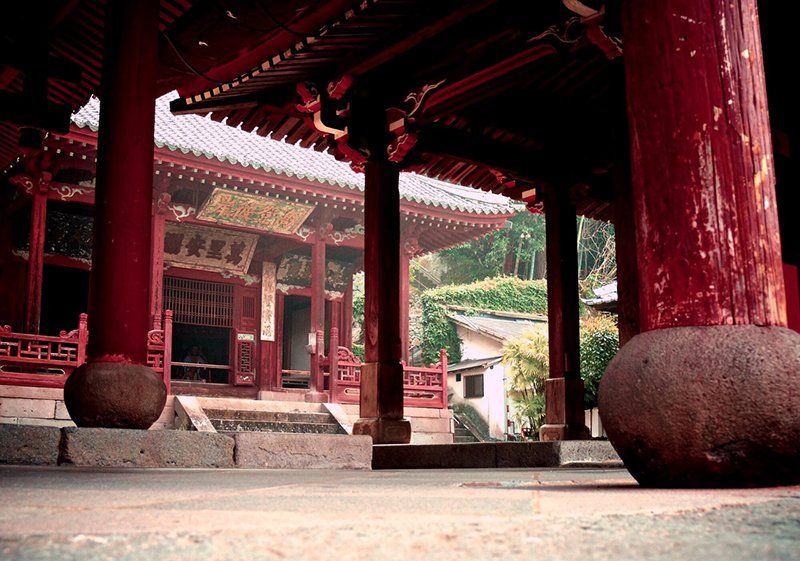
Seofukudji Temple
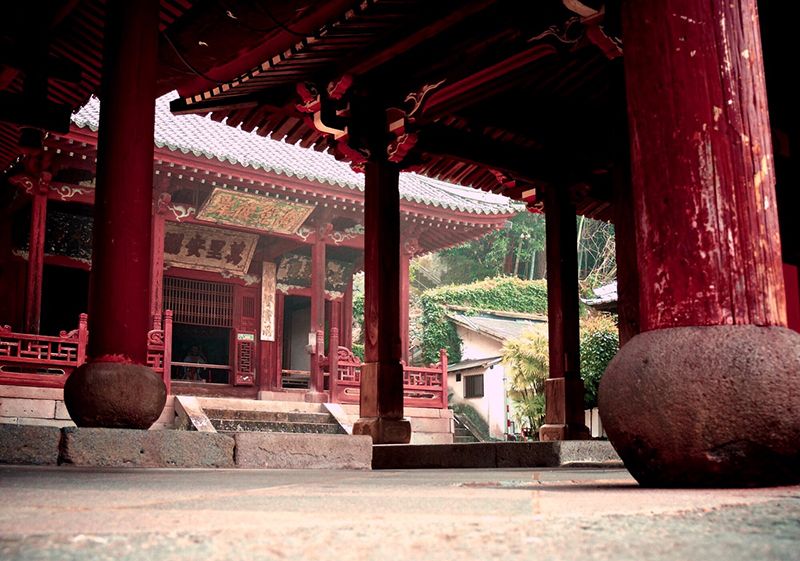
In 1677, the Buddhist temple complex of Sofukuji was founded in Nagasaki, becoming the oldest structure in the city. It belongs to Zen Buddhism and is part of the four Buddhist “temples of happiness.” The founder of the temple complex was the Chinese monk Teeusin Dohan- the grandson of the famous poet and monk Ingen. The architecture of the entire complex is in the style of the Tang dynasty. In 1715, the main building of the monastery was reconstructed. This small structure with a double roof is also designed in the style of China. The temple is home to the largest bell in the city. It is used only during the Buddhist New Year, has become famous throughout Japan, and is included among the architectural landmarks.
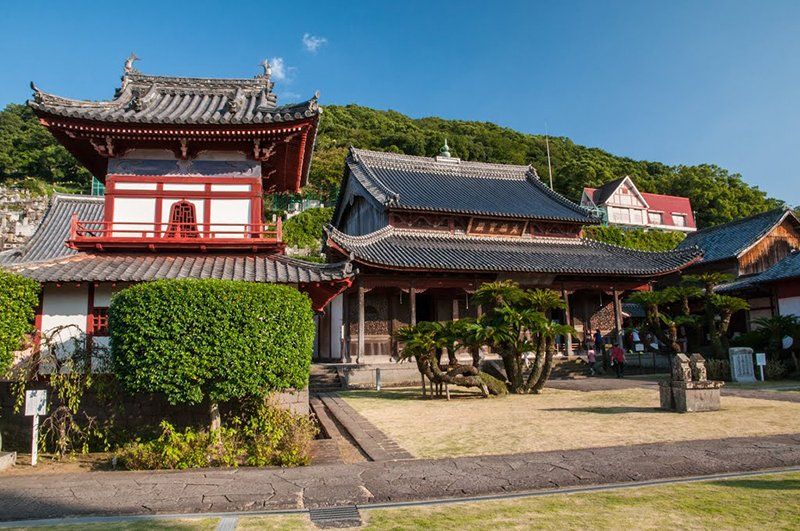
Kofuku-ji Temple
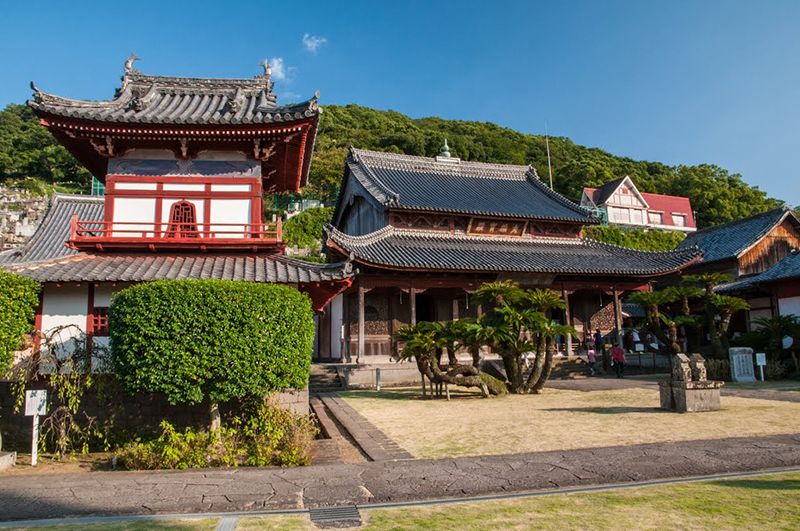
In 1624, the Buddhist temple complex of Kofuku-ji was founded. It became the oldest Buddhist monastery built by the Chinese diaspora in Nagasaki. Kofuku-ji belongs to Zen Buddhism, is part of the Obaku school, and is included among the city’s four Buddhist “temples of happiness.” The temple complex was established because, in 1620, Chinese merchants asked the mayor of Nagasaki to build a small temple on his territory for prayers. They wanted to seek the protection of the gods in their sea voyages. These events took place during a time when the Japanese government opposed Christianity and supported Buddhism and Shinto. The Kofuku-ji monastery was built in the traditional Chinese style of the Ming dynasty.
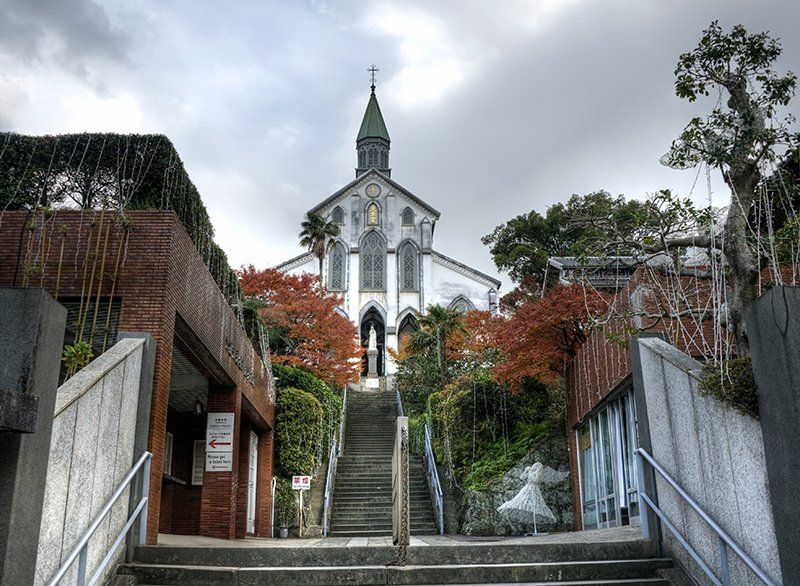
Oura Church
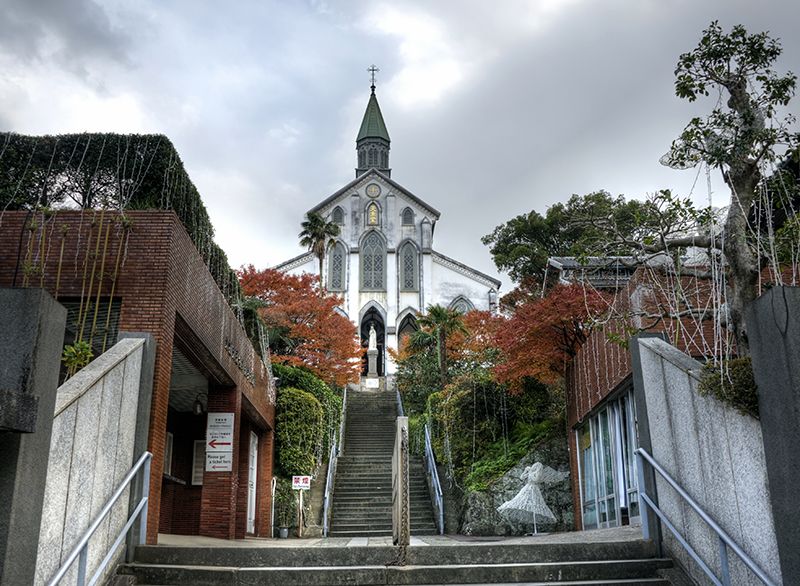
In December 1864, the construction of Oura Church was completed in the city of Nagasaki. This is a Roman Catholic temple, also known as the Church of the 26 Japanese Martyrs. The building combines Baroque and Neo-Gothic styles and is included among Japan’s National Treasures. The snow-white structure has a triangular roof, topped by a tower with a cross. In front of the temple lies Mount Nishizaka. In 1597, 26 Japanese people who held to the Christian faith were crucified there. In memory of the Christians from Japan, a white marble statue of the Virgin Mary was placed at the entrance. In the church courtyard, a bronze relief was installed. Its history is connected with a group of peasants from Urakami, who secretly preserved their faith despite all the persecutions from the authorities.
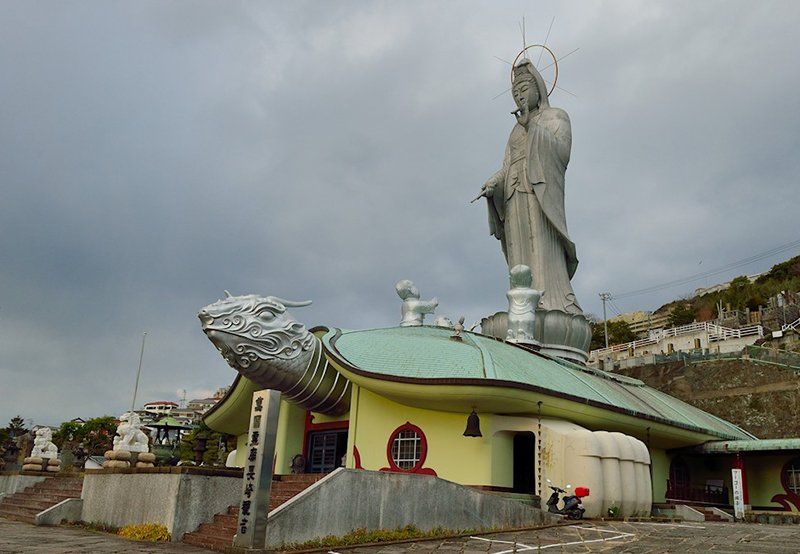
Fukusai-ji Temple Complex
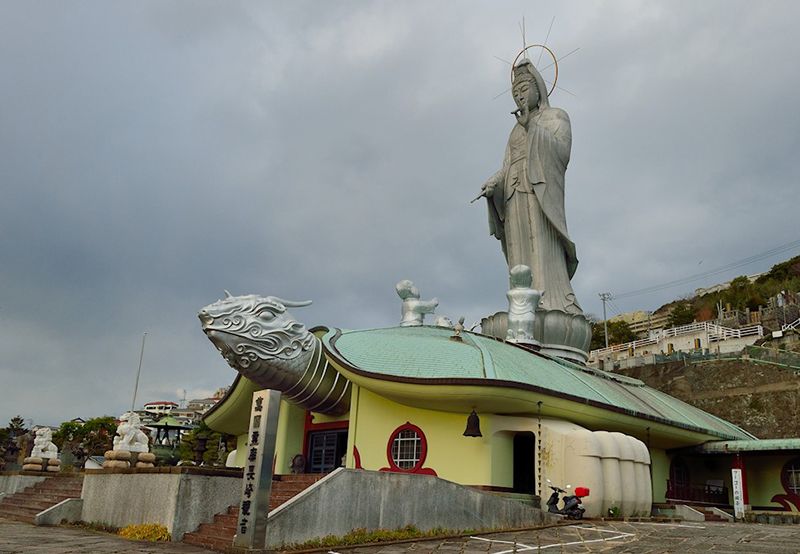
Fukusajiji is a Buddhist temple complex; it belongs to the Obaku school, a Zen current, and is one of the 4 Buddhist “monasteries of happiness” in Nagasaki. Fukusajiji was founded in 1628 by monks from China. On August 9, 1945, the temple complex was destroyed by the atomic bombing, but in 1979 the monastery was restored. A new temple was built in memory of the victims of the city’s atomic bombing. Every morning, at 11:02-the exact time of the bomb’s explosion-the temple bell rings. The mausoleum is shaped like a giant turtle, with a large white statue of the Bodhisattva on its back. Inside, the Bodhisattva Kannon houses the Foucault pendulum, which is 25 meters high; it moves above the remains of 16 500 victims who died during the Second World War.