St. Sophia Church
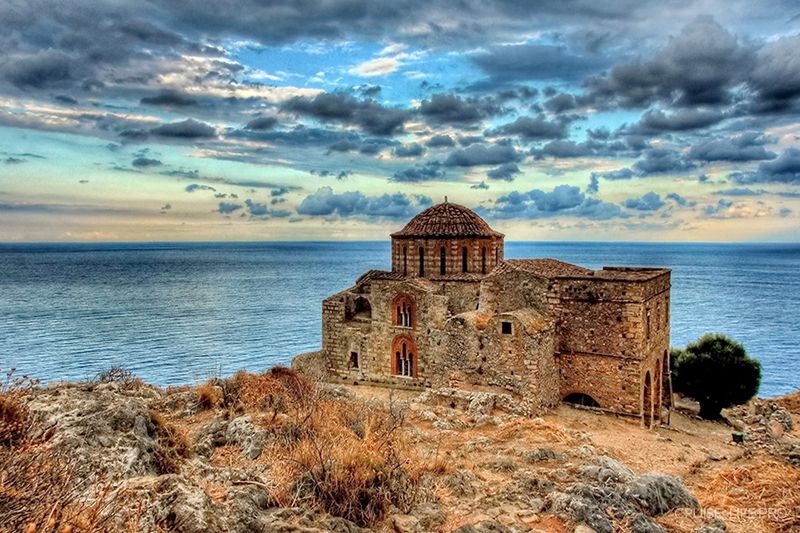
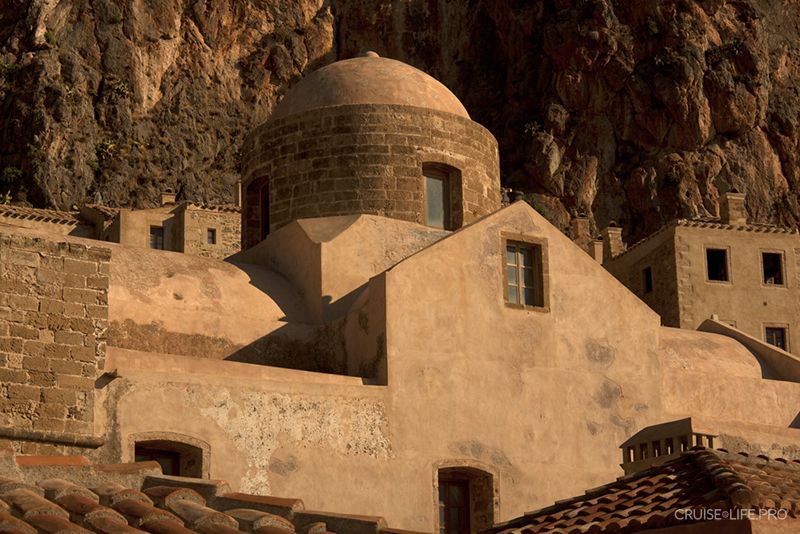
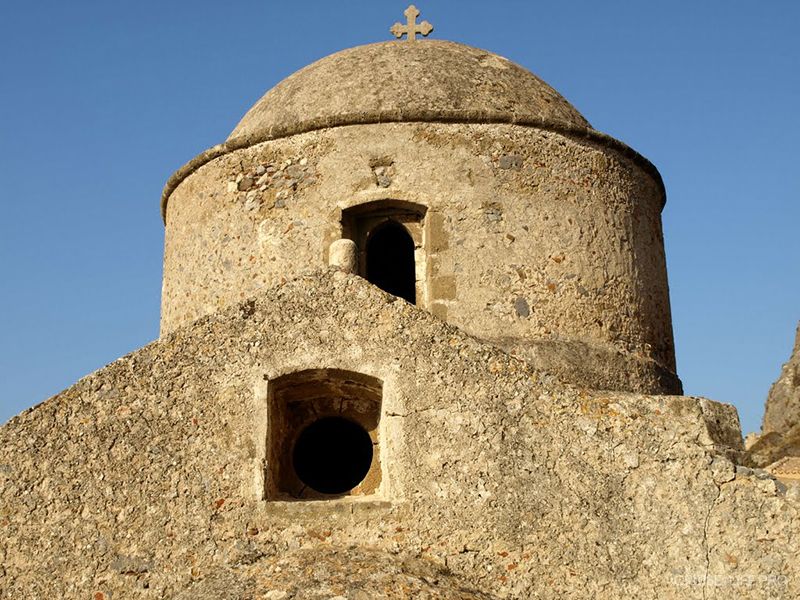
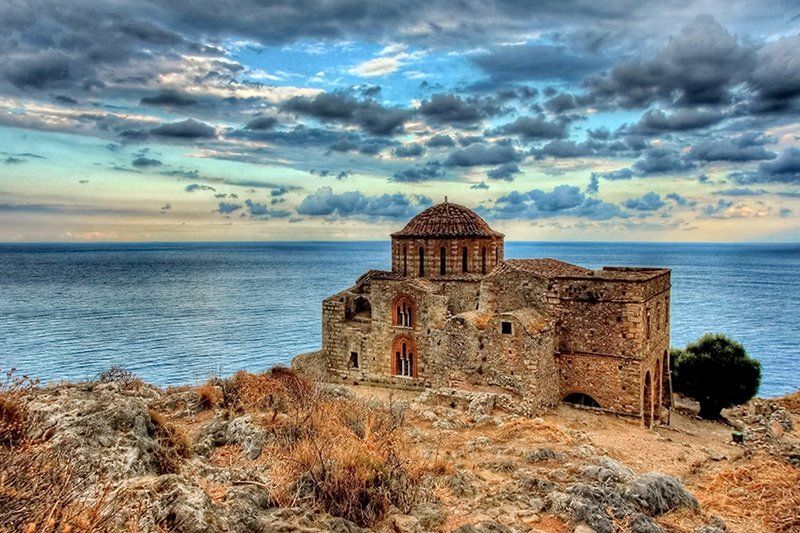
One of the most significant sights of Monemvasia is the Byzantine Church of Saint Sophia. Built in the 12th century by Emperor Andronikos, the temple stands on the edge of a cliff, at a height of over 2.5 thousand meters. During Turkish rule, the church building was used as a mosque, and the bell tower was converted into a minaret. And it was only in 1821 that the church became an Orthodox place of worship. In 1938, extensive restoration work began. The church has an octagonal dome, and the building is richly decorated with sculptures and frescoes from the 12th-13th centuries. The temple is considered a replica of the Constantinople church of Hagia Sophia.
Cathedral of Elcomenos-Christos
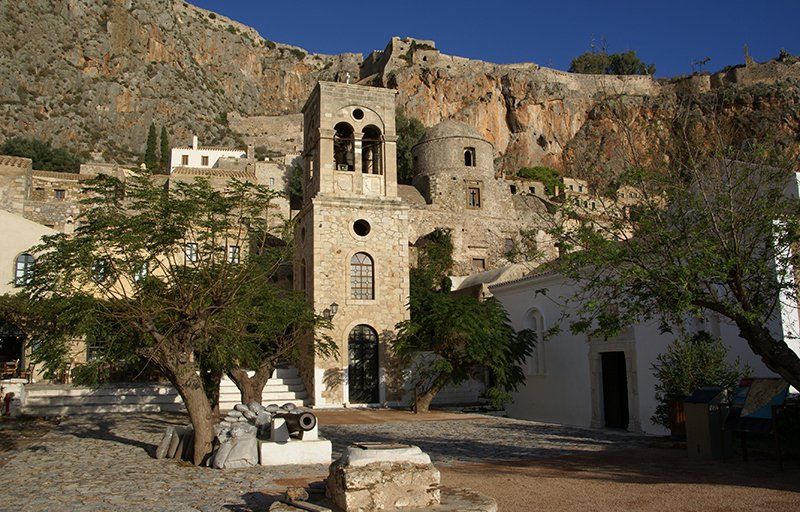
This small church in the Kato Poli district is the city’s best-known place of worship. It is here that the Great Maundy Thursday is celebrated. The carved inscription above the entrance indicates that the building was constructed in 1697, probably on the site of an earlier church founded in the 6th-7th century. On the left and right sides of the entrance there are two thrones dedicated to the Byzantine emperor and empress. Inside the church, you can find rare Byzantine and post-Byzantine icons. This temple was damaged due to frequent invasions by enemies and pirates, and many icons, unfortunately, were stolen or transferred to a safe place on the orders of the Byzantine emperor.
St Nicholas Church
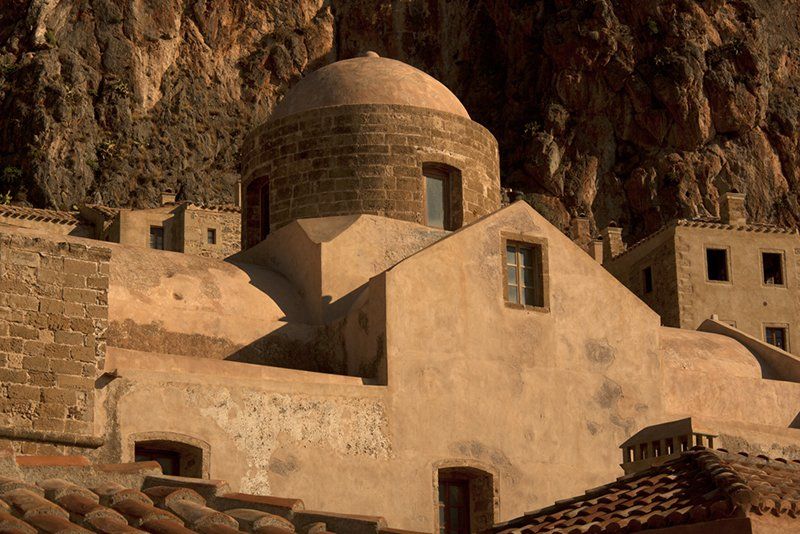
St. Nicholas Church is a cross-shaped church with a dome, built in 1703 during Venetian rule on the ruins of two Byzantine churches. The inscription on the pediment above the entrance states that the temple was erected through the efforts of Monemvasian physician and philosopher Andreas Licinius. The coat of arms with the double-headed eagle belongs to the founder’s family. According to historians, this monument was never used as a church. During Ottoman rule, it was used as an armory. From the time of Kapodistrias (1829) until the middle of the 20th century, the building housed the city’s primary school, where the Greek poet Yiannis Ritsos studied.
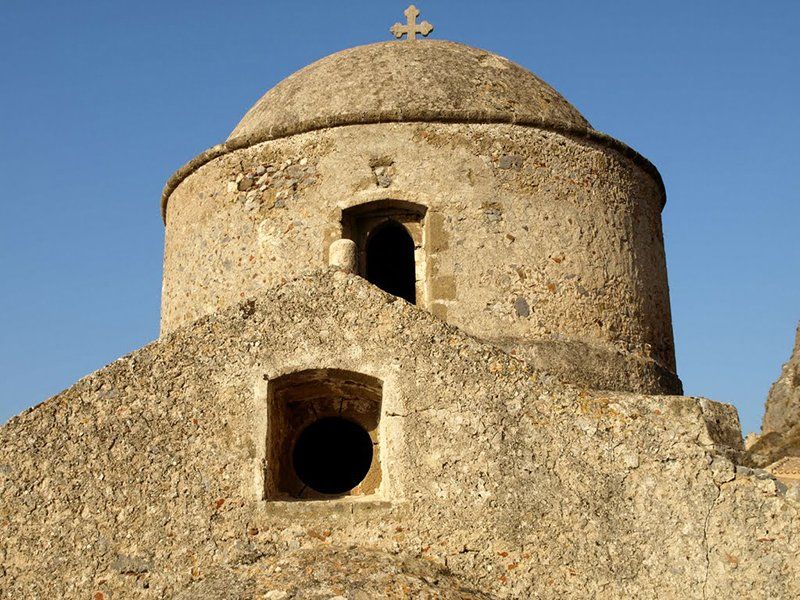
Church of Our Lady of Mirtidiotissa
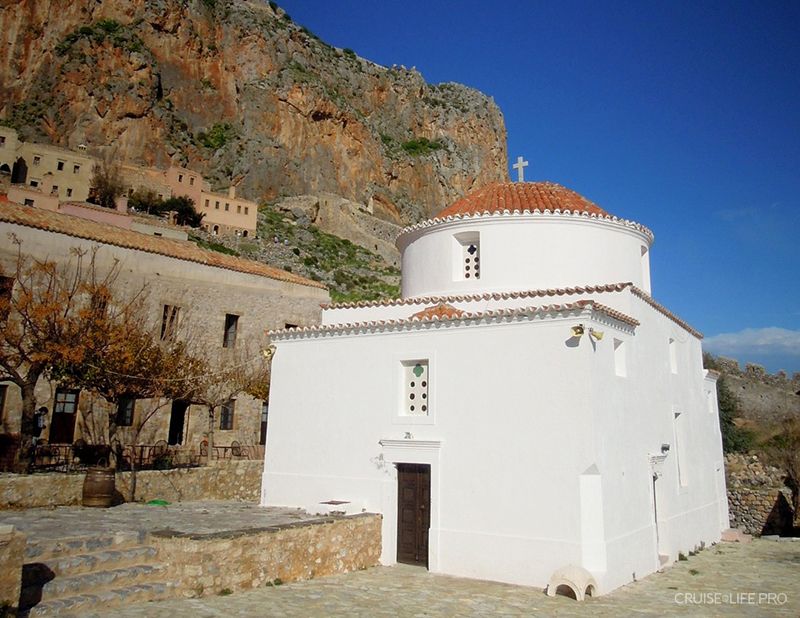
The basilica with a dome was built during the second Venetian occupation and dedicated to the Virgin Mary-Myrtidiotissa, revered on the island of Kythira, which had well-established commercial and cultural ties with Monemvasia. According to the chronicle, the church was founded in the 17th century by the bishop of Kythira-Filotheos Darmarios. The church is also known as Panagia Kritikia because of the large number of refugees from the island of Crete. Architectural features of the church, such as the round lanterns, the door design, the façade with the pediment, and other details, indicate the influence of Western architecture. The gilded carved altar, which bears the characteristics of the Renaissance era (16th century), originally belonged to the church of Christ Elkomenos.
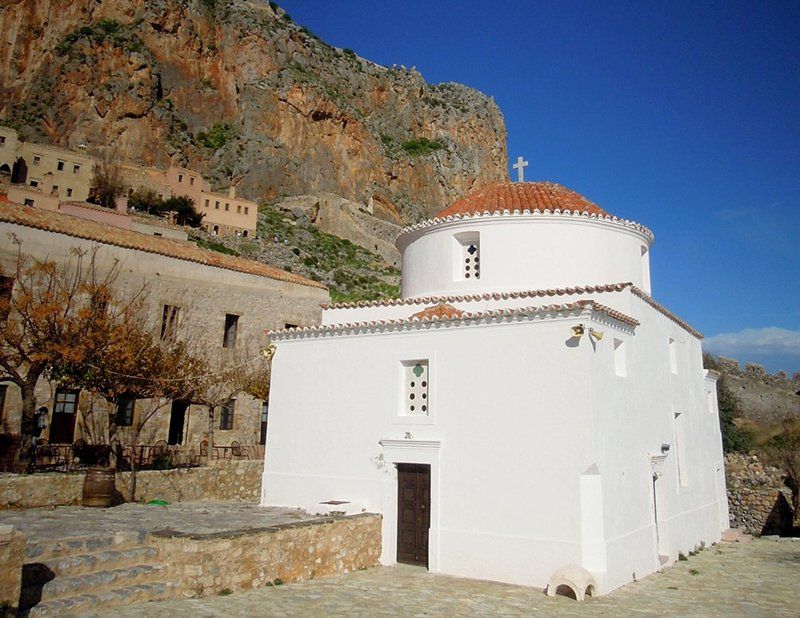
Church of Panagia Chrysafitissa
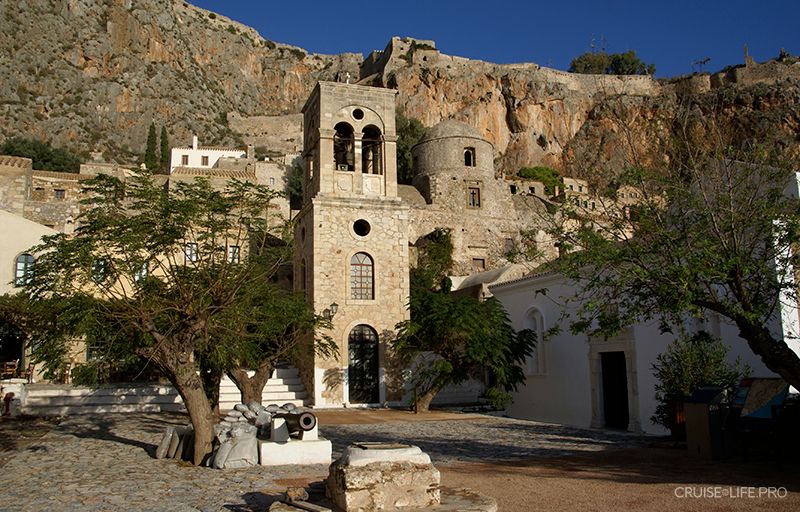
The church was built in the 15th century on the site of an older temple. It is famous for its icon of the Virgin Mary of Hrisafitissa, which gave the church its name. The name of the icon itself comes from the name of the settlement in Laconia-Hrisafa-where it was located before it appeared in Monemvasia. Beneath the church there is the only miraculous spring in the city; according to legends, its water helps with conception. During Turkish rule, the temple was looted and turned into a warehouse for wheat. On the site of one of the buildings, a bathhouse was erected. During the second Venetian occupation, the church served as a Catholic parish church. The church is located in the Lower Town, on the central square (with a cannon).