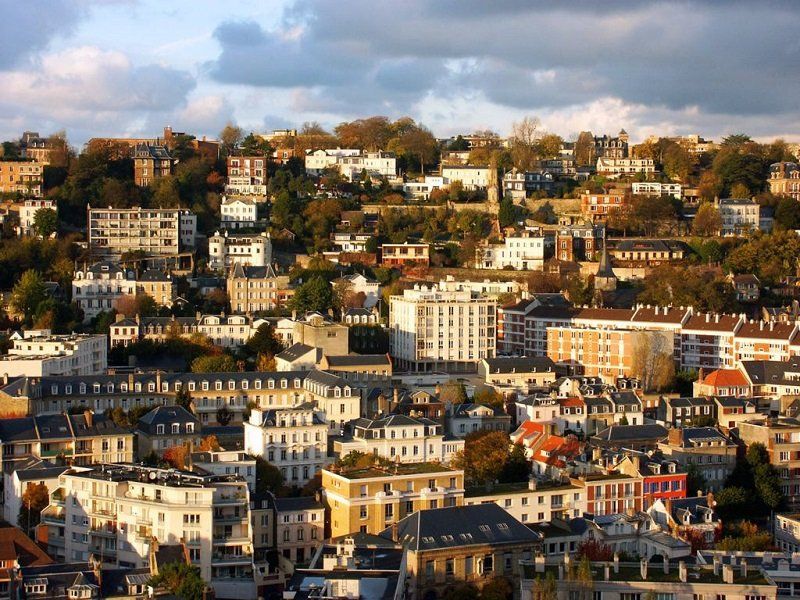
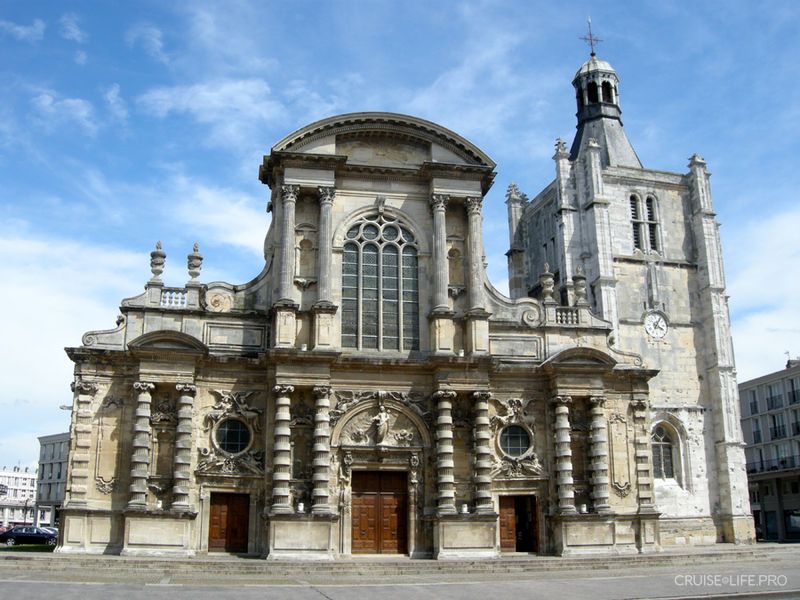
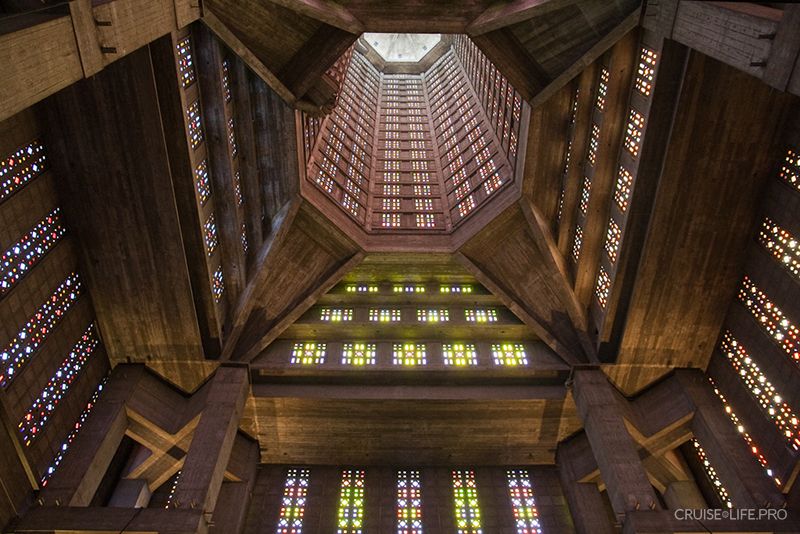
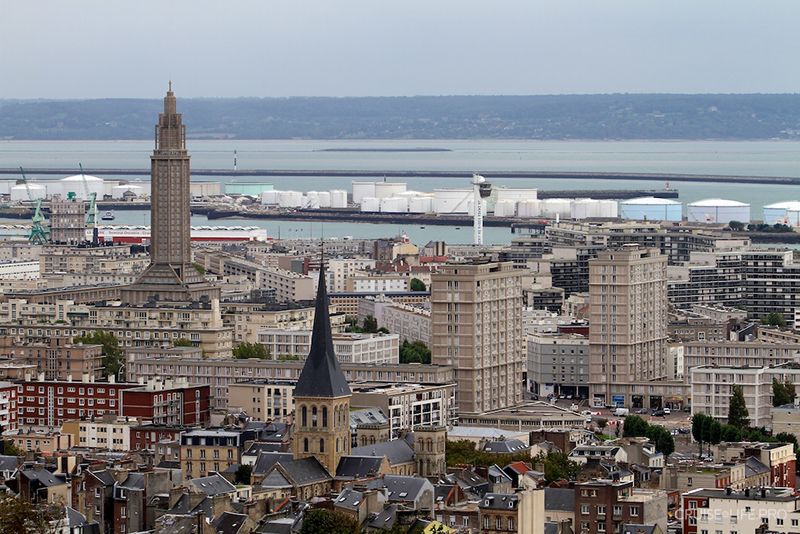
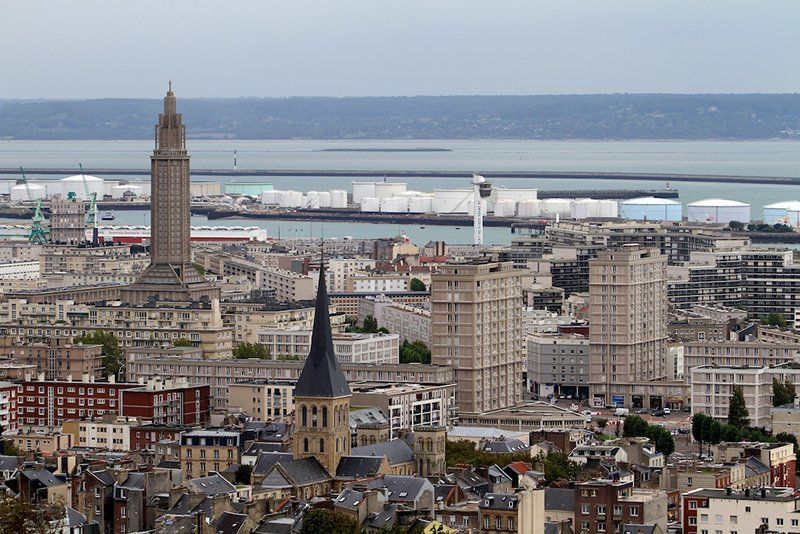
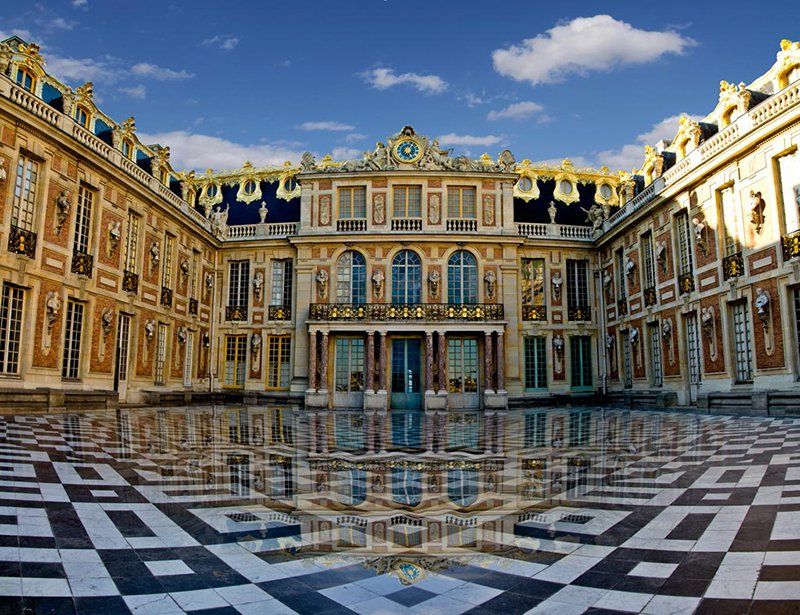
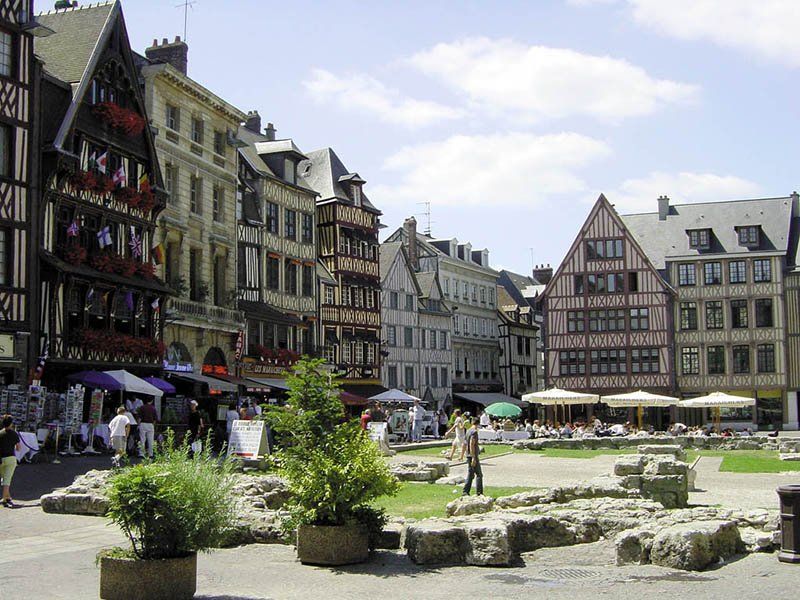
Le Havre is a city and a commune in northern France, in the region of Upper Normandy, a subprefecture in the department of Seine-Maritime. The port of Le Havre is one of the largest in France. Le Havre is located on the right bank of the Seine, near its estuary. The city has direct access to the sea and to the English Channel. The Seine separates Le Havre from the region of Lower Normandy and the neighboring town of Honfleur. To the north and west of Le Havre lies the coastline of the Pas-de-Calais Strait.
The city is divided into two parts: Upper Town and Lower Town. The boundary runs along the rocks located between Félix Faure Street and Avenue de l’Œillet, between 329th streets and Rue Maréchal Joffre, between Salvador Allende and Aristide Briand, between Pablo Neruda and Vélodrome. To the east, the rock boundary runs along the railway line of Le Havre station.
Nearly all of the Lower Town is surrounded by water and is carved up into basins. In the center (Lower Town): Bassin Vauban, Bassin de Commerce, Bassin du Roi, Bassin de la Bar, Bassin de la Citadelle. In the port there are basins (harbors): English Channel, Bailleau, Ehre, Vatine, Fluviale, Théophile Ducrocq, René Coty, du Pacifique, Vétillars, Hubert Raoul-Duval, as well as Marseille Despo(u)el and the Downstream Basin (on the eastern boundary of Le Havre). The largest of all Le Havre’s basins is Hubert Raoul-Duval. It is located on the young boundary of Le Havre itself and the port of Le Havre; it is separated from the Bay of the Seine by a dam.
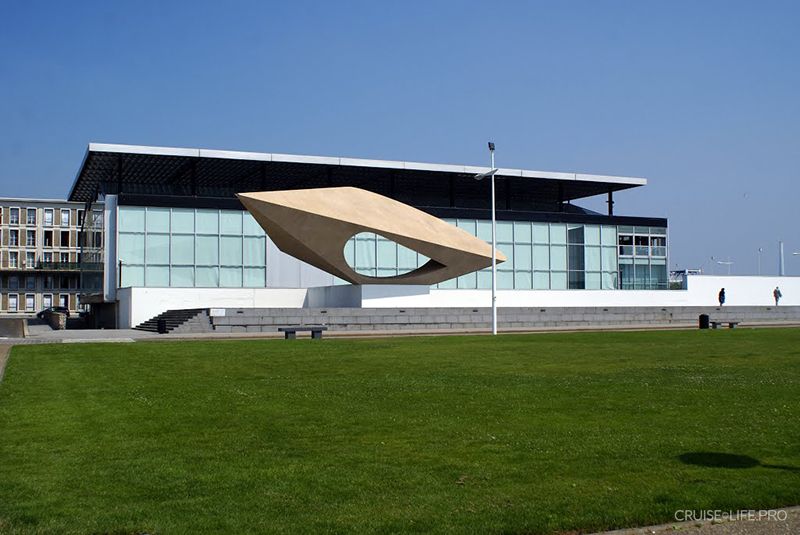
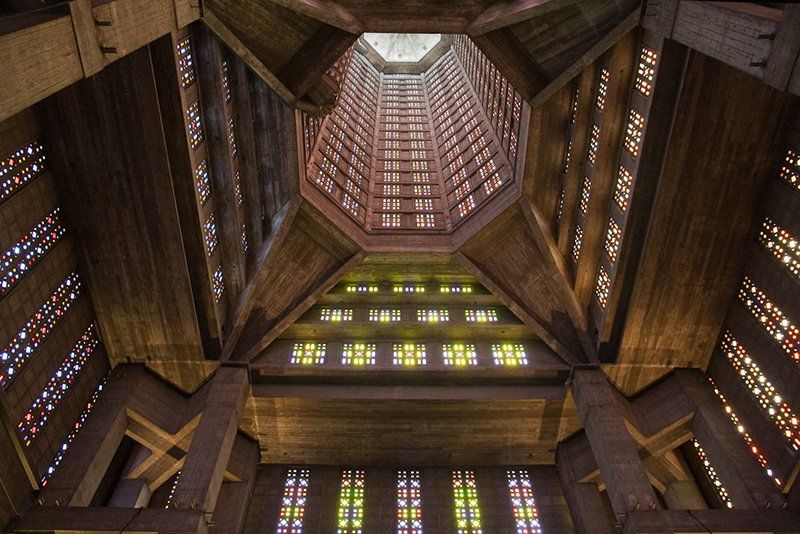
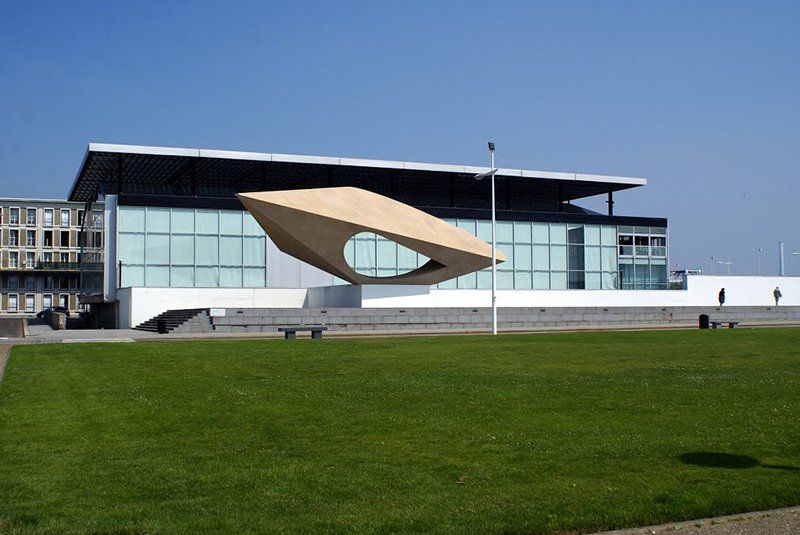
Practically entirely bombed during World War II, the “harbor” (this is what the city’s name translates to) has grown over with restored concrete structures in full keeping with the spirit of that time: the starkness of straight lines, austere and pompous grand scale without all those half-naked caryatids, puffy fruit stucco and bourgeois ornamental scrollwork on the façades. Once you find yourself in the heart of Le Havre, you involuntarily push away the image of the Avenue Koutouzovsky with its row of Stalinist buildings and the dominant presence of the “Ukraine” hotel. Nevertheless, this is no reason to neglect the capital of Normandy-at the Musée Malraux there is the second-largest collection of Impressionists; here you can taste the most delicious apple cider and stroll along the “shore of empty waves,” lost in thought.
ClimateThe climate of Le Havre is a moderate oceanic (maritime) one. For a long time, the English Channel has influenced the weather in the Le Havre area. Precipitation occurs evenly throughout the year, increasing slightly in autumn. The strait strongly affects the climate. The weather is very changeable. Storms and thunderstorms are characteristic of Le Havre (more often in winter). The city’s climate in France-Le Havre-is relatively moderate and maritime in one and the same place. In different seasons, it is comfortable in summer-not very hot, and in winter it is not cold. In summer, due to the city’s location, a light cool breeze is constantly blowing. In summer, the average temperature in Le Havre stays around 30 degrees Celsius, and in winter it rarely falls below zero on the thermometer.