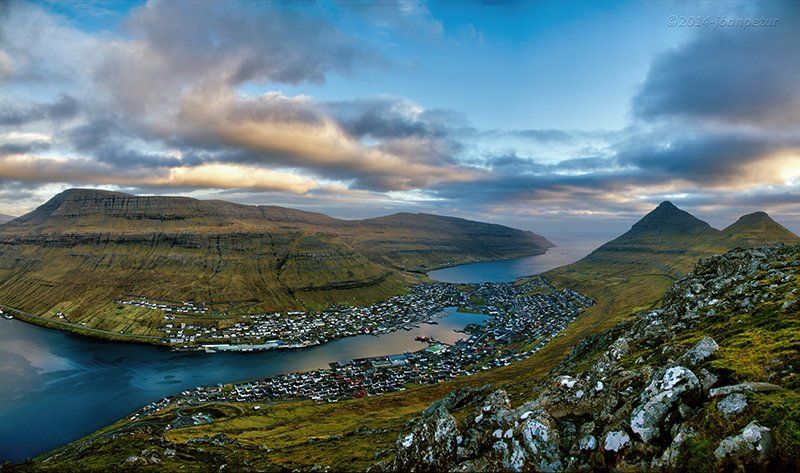
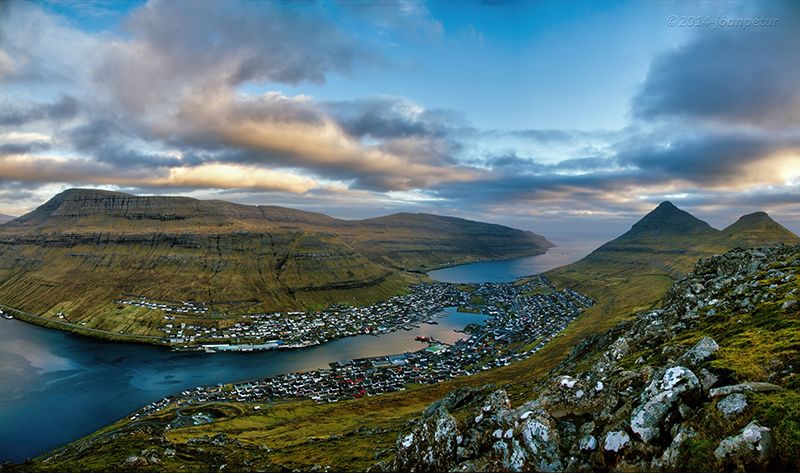
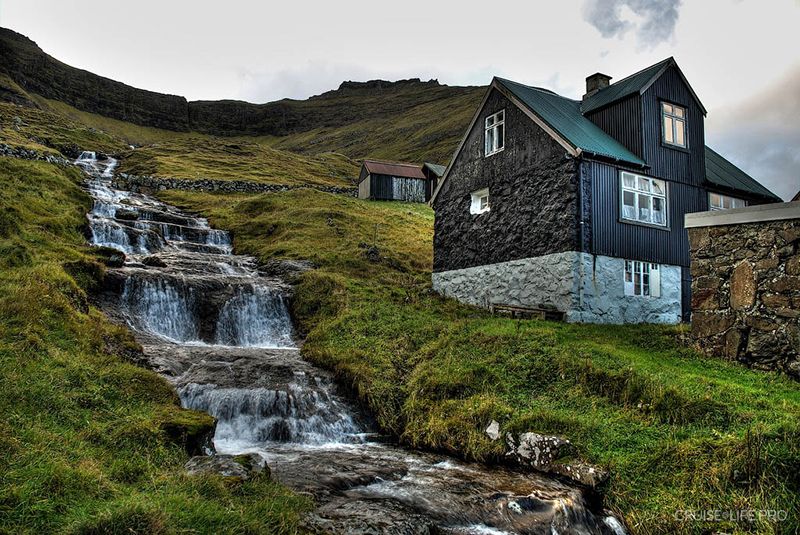
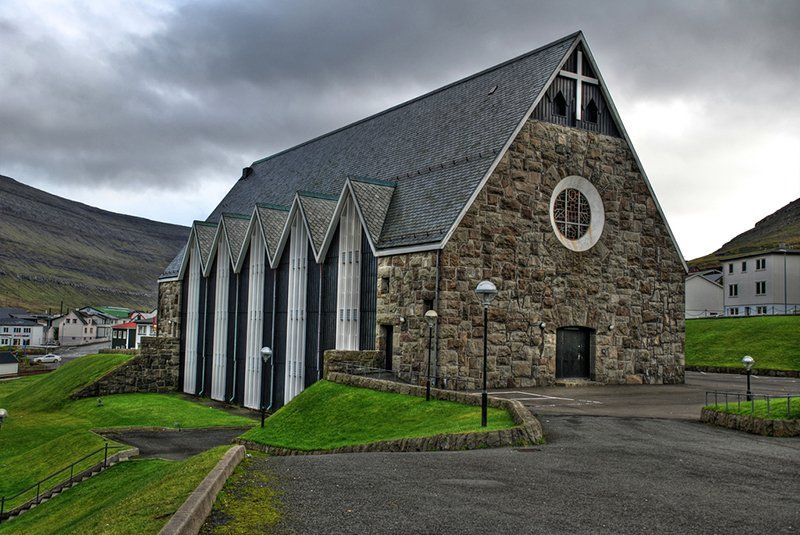
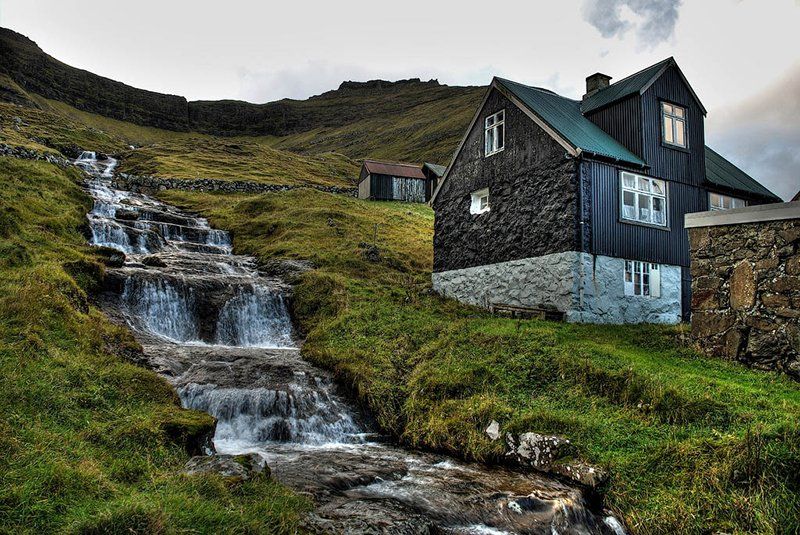
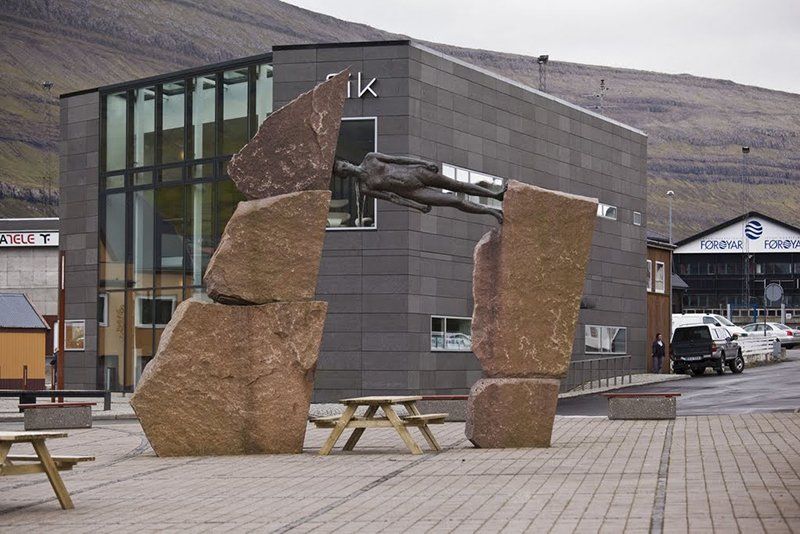
Klaksvík (Klaksvik) is the second-largest city and harbor in the Faroe Islands (Denmark). It is located on the island of Borðoy, at the end of two bays surrounded by dramatic mountain peaks- the highest in the Faroes. Borðoy is the largest of the sparsely populated and most beautiful north-eastern islands of the Faroe archipelago. The harbor of this city is always full of fishing vessels. The city’s population, according to the latest census, is 4,664 people.
Approximately 10% of the country’s population lives in this city, which accounts for more than 30% of the national fish exports. This is a very important industry because 98% of Faroese imports come from its fishing. In addition, Klaksvík is home to fish processing facilities, as well as one of the largest salmon farms.
The first settlement in this area dates back to Viking times, but a major town only formed in the 20th century, becoming a cultural and economic hub not only for Borðoy, but for the entire Faroe archipelago as well. Klaksvík as a city was formed from four fishing villages in 1938. Today, it is a major industrial port and a popular cruise port.
The main attraction of Klaksvík, besides its nature, is authentic buildings once owned by the Vikings.
The Faroe Islands are a group of islands in the northern part of the Atlantic Ocean between Scotland (the Shetland Islands) and Iceland. They are part of the Kingdom of Denmark, but since 1948 they have independently handled practically all state matters, with the exception of defense and foreign policy.
The Faroe archipelago consists of 18 islands, 17 of which are inhabited. Main islands: Streymoy, Eysturoy, Suðuroy, Vågoy, Sandoy, Borðoy. The largest island is Streymoy (373.5 km²). The total area of all the islands is 1,395.74 km². The capital of the archipelago is the city of Tórshavn.
Climate
The climate of the Faroe Islands is temperate maritime, with a warm winter and a cool, humid summer. The coldest month is January, with temperatures from 0 °C to +4 °C, and the warmest month is July, with temperatures from +11 °C to +17 °C. Annual precipitation is 1,600-2,000 mm; precipitation (mostly as rain) occurs for approximately 280 days per year, with most of it falling from September to January. Fog is common. Thanks to the Gulf Stream, the water around the islands has a temperature of about +10 °C year-round, which softens the climate conditions and provides ideal conditions for the life of fish and plankton.