
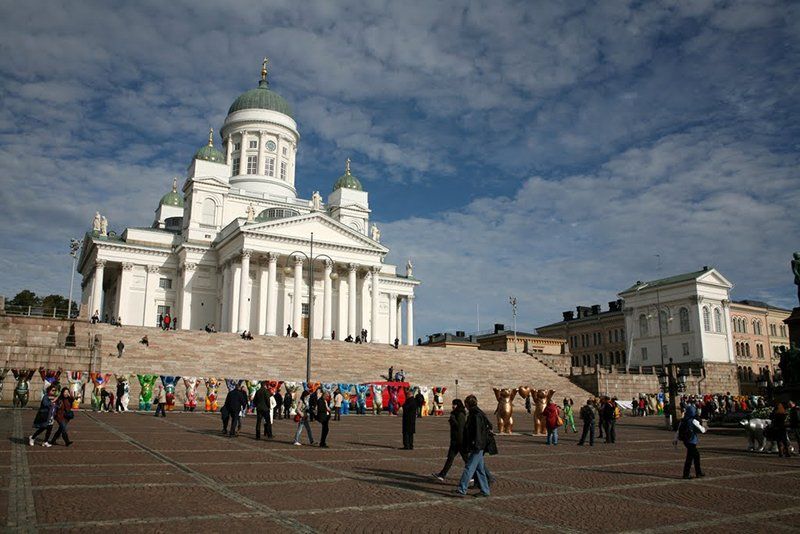
Senate Square
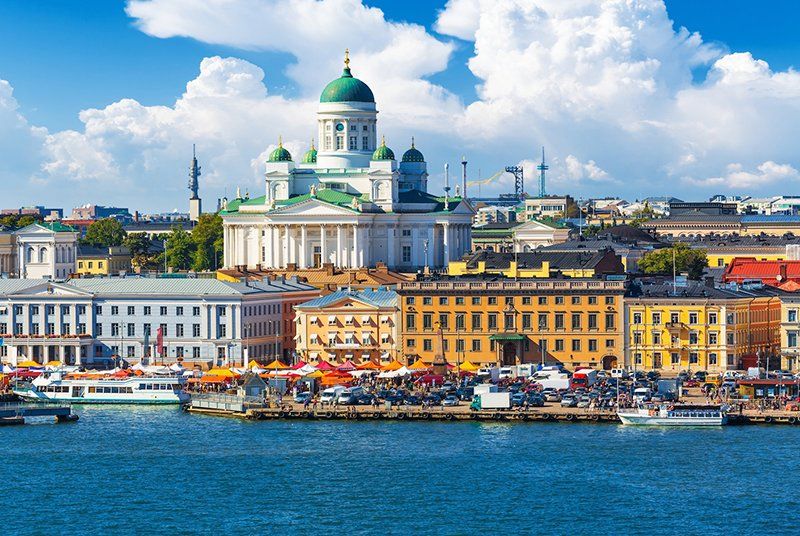
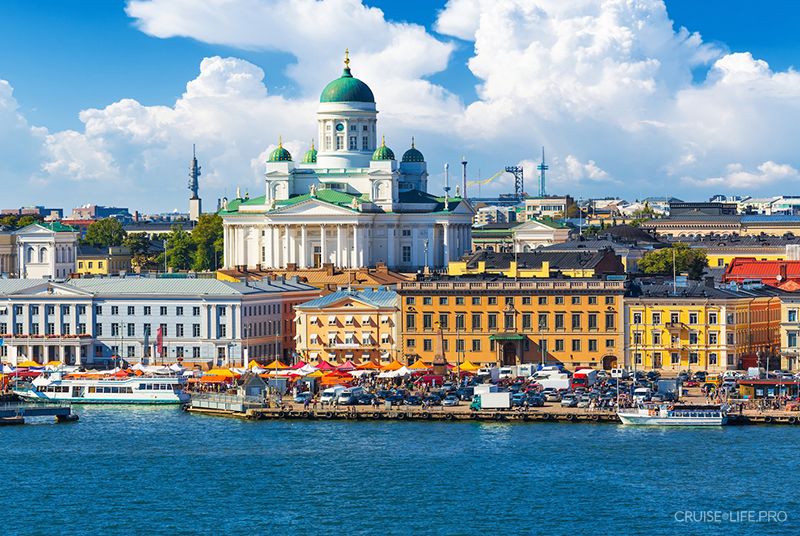
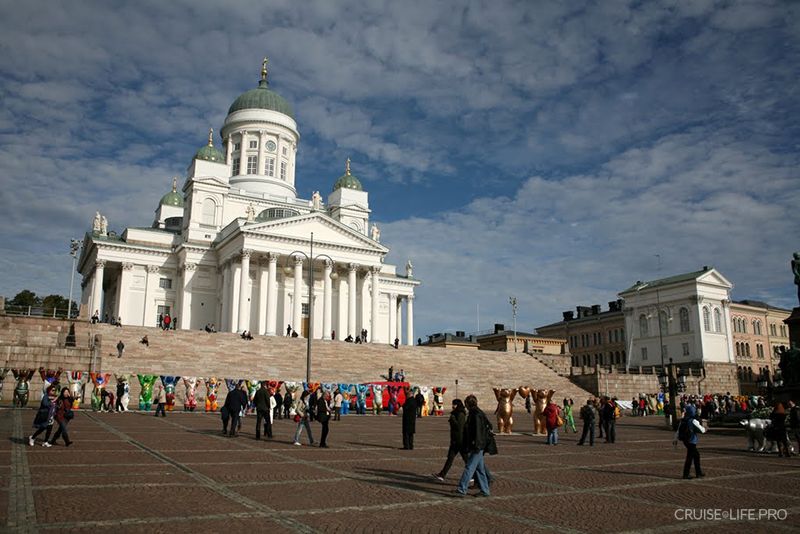
In the heart of Helsinki’s main square stands a monument to Alexander II, who granted the Finns autonomy. On Senate Square (Senaatintori) rise the capital’s main buildings-the Cathedral (from the outside resembling St. Isaac’s in St. Petersburg), the Presidential Palace, and the National Library. Also here are 18th-century mansions where merchants used to live-today, restaurants, cafés, and souvenir shops are located in them.
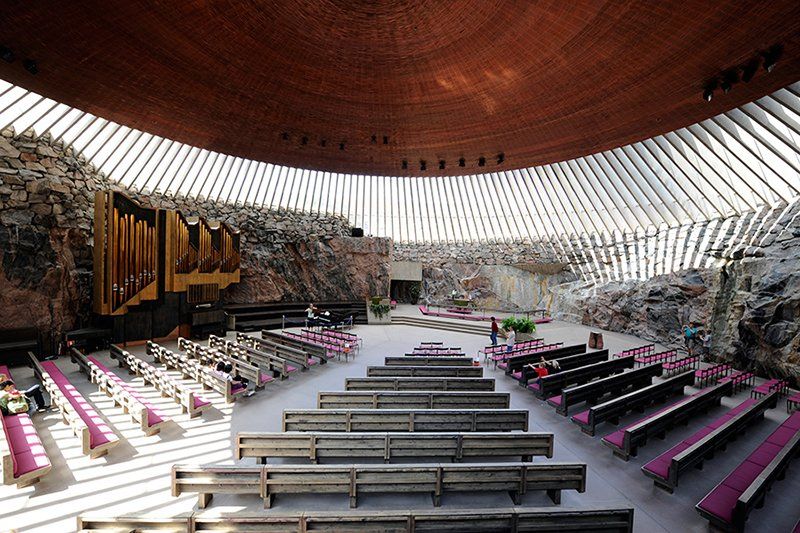
Temppeliaukio Church
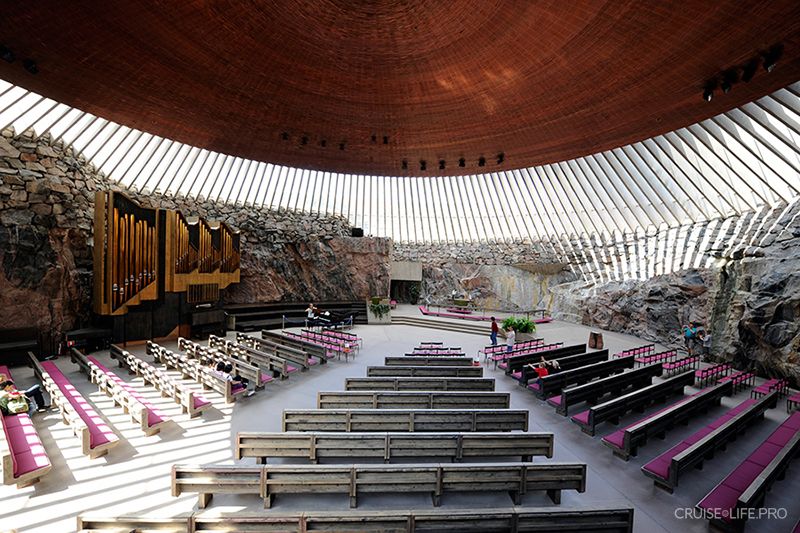
The most unusual structure in Helsinki is built right into the rock. Finnish architects blew up a boulder, processed the surface, and then added a dome on top, resembling a huge television dish. The dome was worked on the longest: a 22 km-long copper ribbon was laid in a spiral! This modern Lutheran church has many functions. Organ music concerts are held there regularly-inside, there is a powerful 43-tube organ. Mstislav Rostropovich was delighted with the local acoustics, believing that the sound within church walls is among the best in the world. Inside, Temppeliaukio looks impressive: it creates a sense of vast space and height, although the distance from the floor to the dome is comparatively small-about twelve meters.
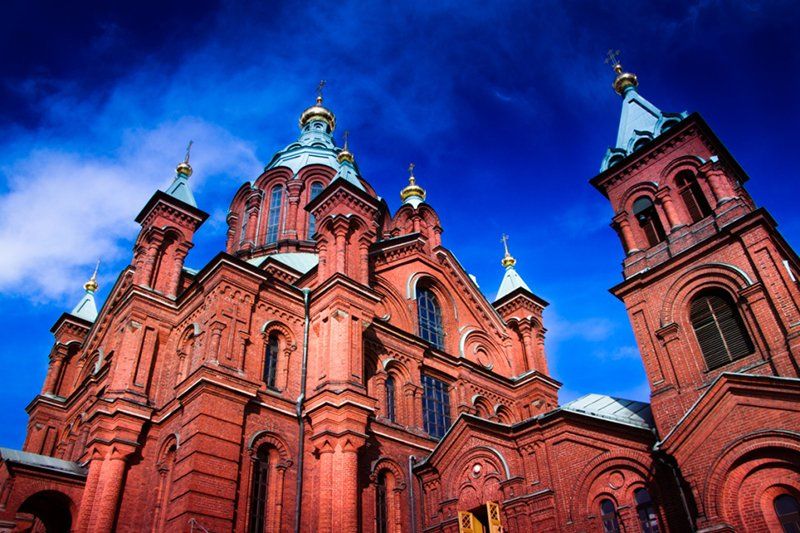
Assumption Cathedral
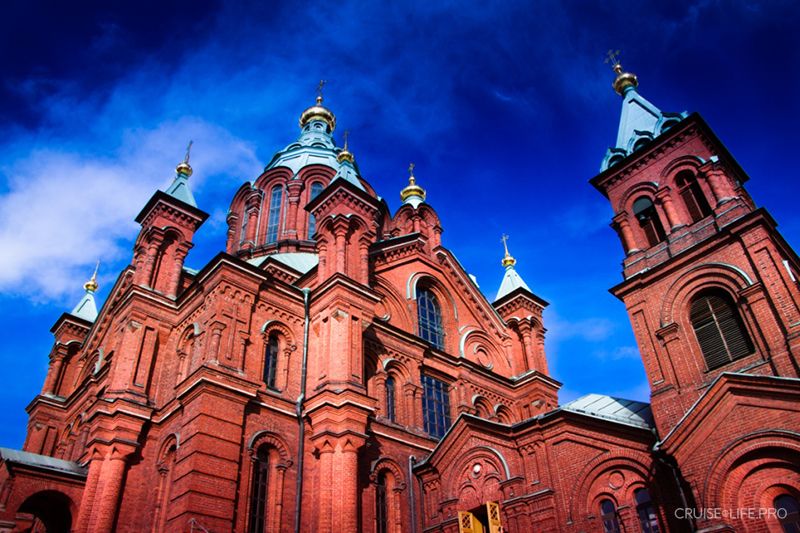
Uspenski Cathedral is the largest Orthodox church in Western Europe. It stands right in the heart of Helsinki, on a rocky hill overgrown with lilacs, near the South Passenger Harbour. The cathedral looks quite distinctive: it is a red-brick building topped with spires and thirteen domes with crosses. On its southern side there is a bell tower. Uspenski Cathedral was built in the 19th century, when Finland was part of the Russian Empire. It was decided to construct it after, in 1812, the capital was moved from Turku to Helsinki.
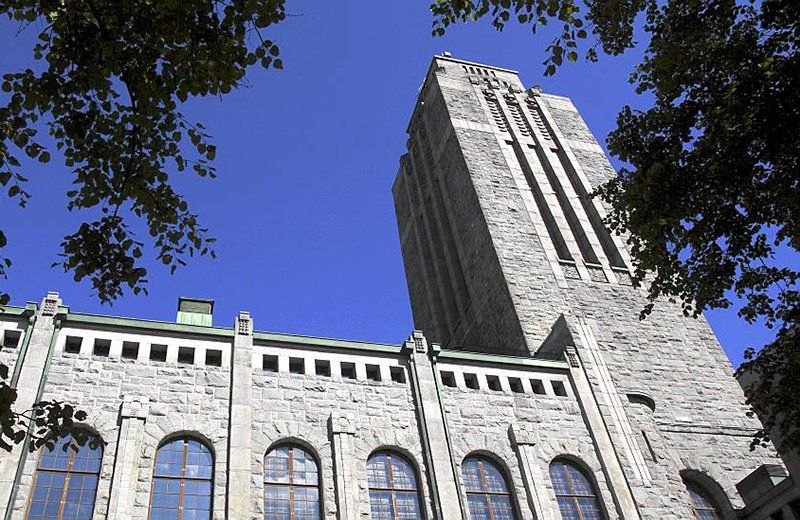
Church in Kallio
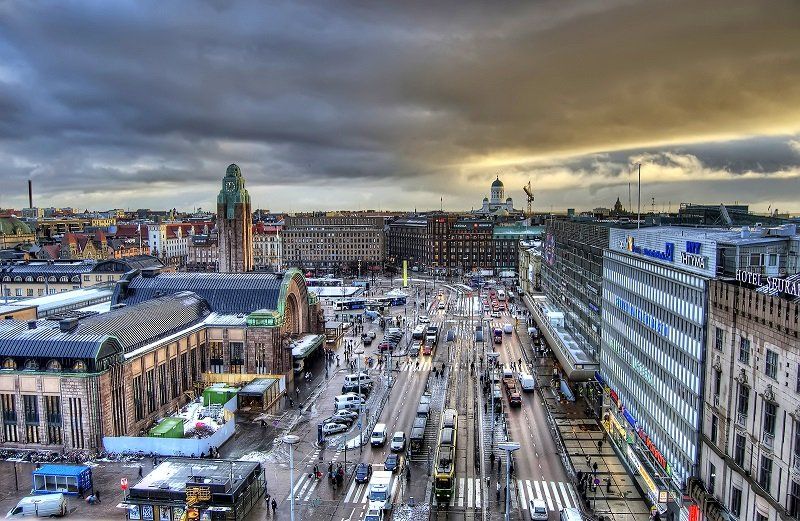
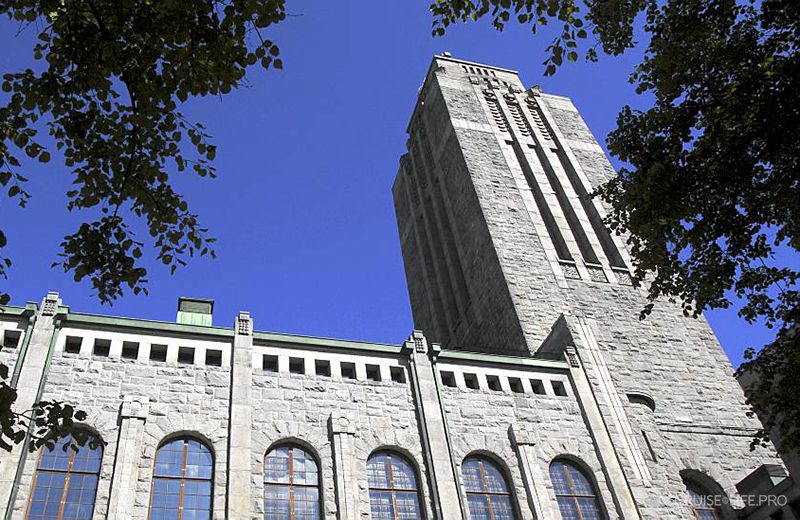
The church (kirkk) in the Kallio district stands on a hill, giving the impression that this already large place of worship is simply enormous. Its main adornment is an exceptionally tall belfry tower, whose clock plays melodies by the famous Finnish composer Jean Sibelius. Inside, as with all Lutheran churches, the kirkk is simple and spacious. It has very few decorations; only the chandeliers hanging from the ceiling enliven the interior. The church was designed by Finland’s best-known architect of the 20th century, Lars Sonck, who left behind a rich architectural legacy for the country: churches, government buildings, and even country residences.
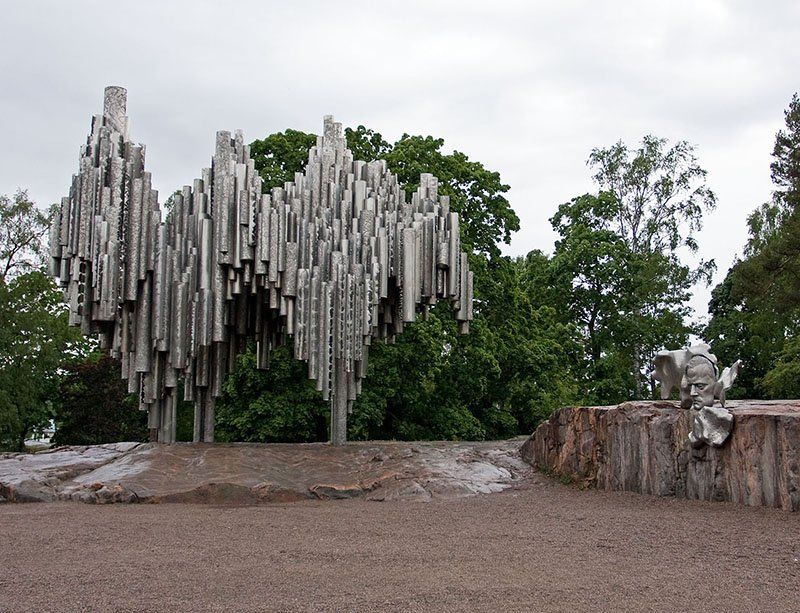
Jean Sibelius Monument
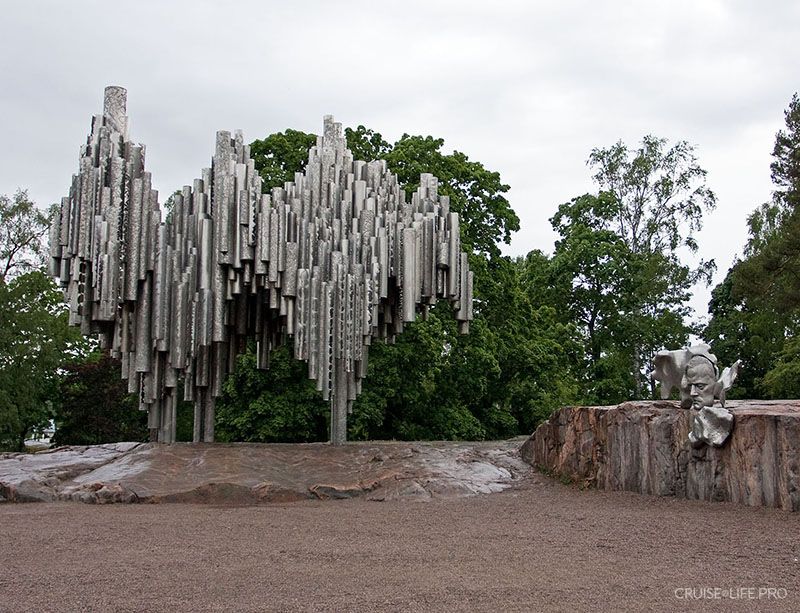
You can not only look at the monument to the Finnish composer-you can also listen to it. The main part of the monument consists of 600 powerful metal tubes fused together, through which the wind mournfully moans. It is believed that these sounds resemble the music of Jean Sibelius, and the unusual structure is similar to an organ. Nearby is the composer himself-in the form of a giant bronze head. The head has hair and a moustache, which means that Sibelius here is quite young, because in adulthood the maestro was bald and without a moustache. Not far from the monument there is a park with a charming lake and quacking ducks.