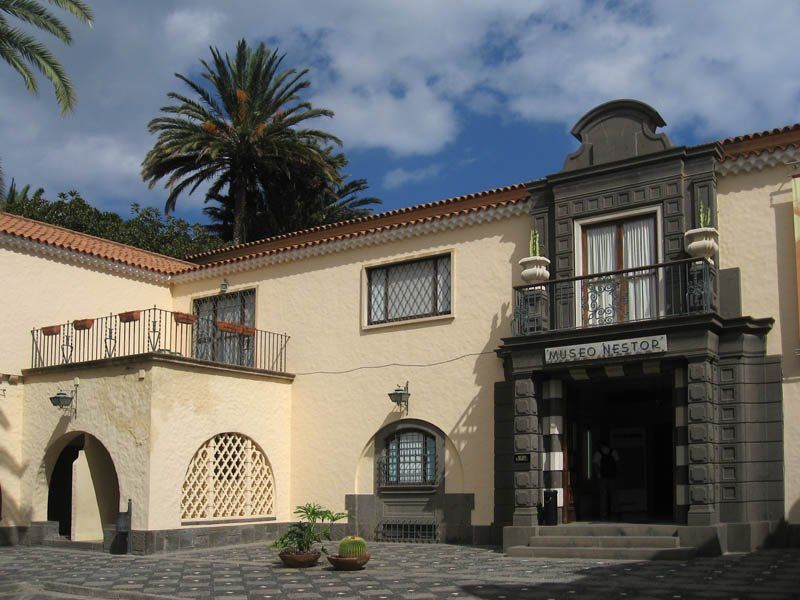
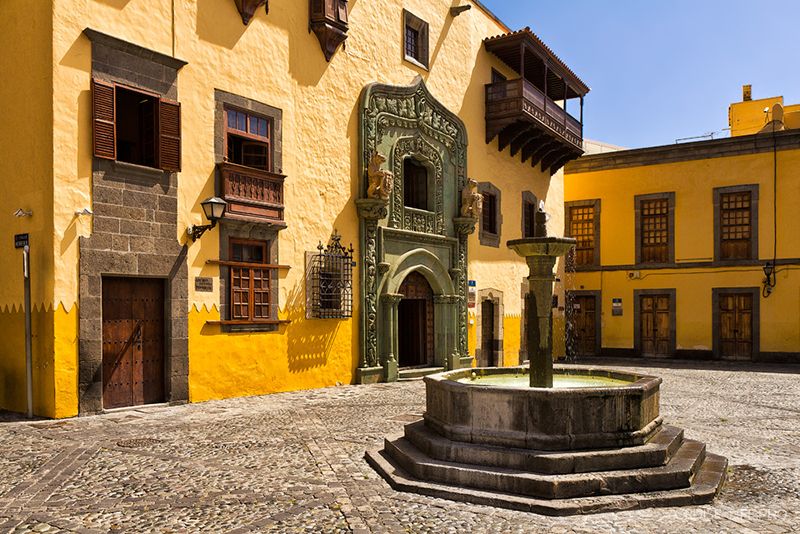
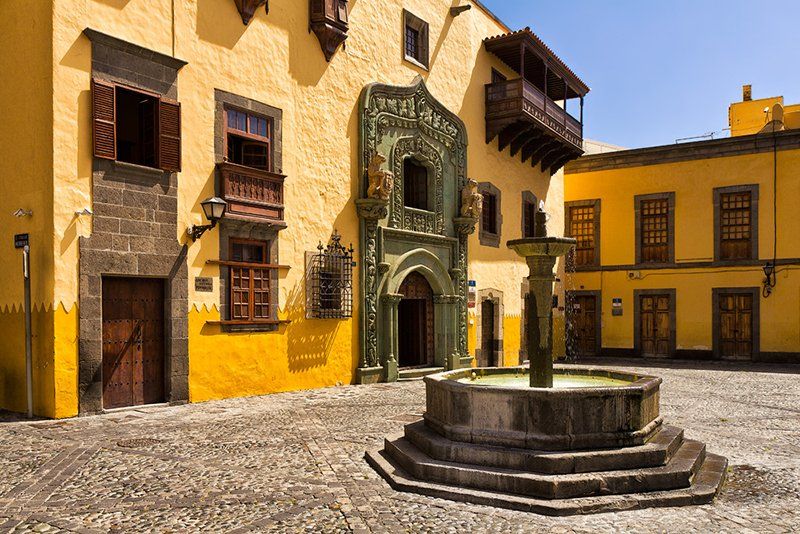
Columbus House Museum
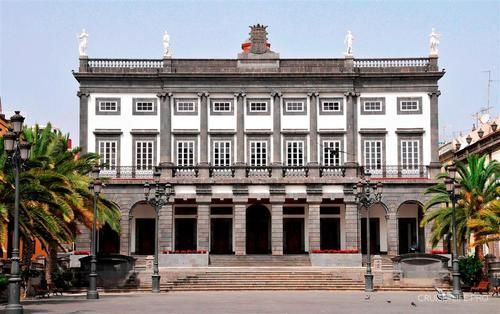
One of the most beautiful buildings in the city of Las Palmas: decorative doorways, lattice balconies, and intricately carved wooden ceilings. This palace was the island governor’s first residence. It was here that the great traveler Christopher Columbus stayed while one of his ships was in port for repairs. The museum features 13 permanent exhibition halls, a library, a training center, and venues for cultural events. The exhibit is fully devoted to the maritime theme: ship models, replicas of parts of a vessel, maps, navigation items, and much more. In the courtyard, visitors are entertained by a couple of very talkative parrots.
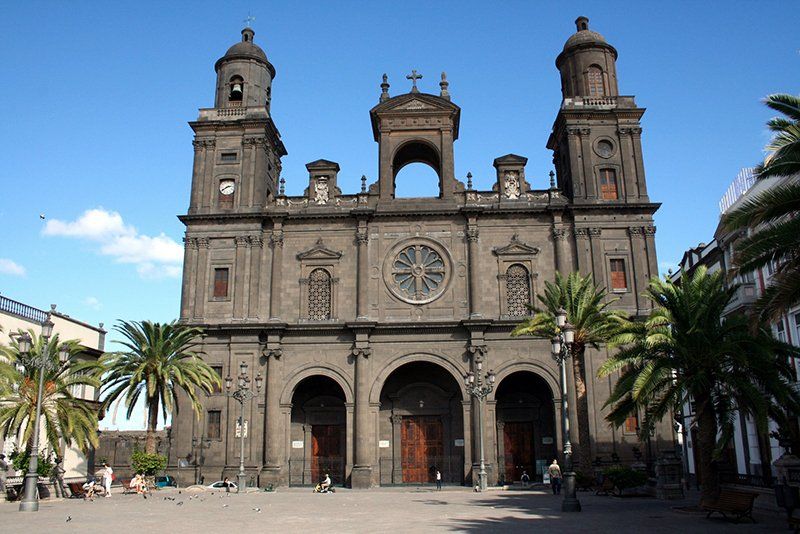
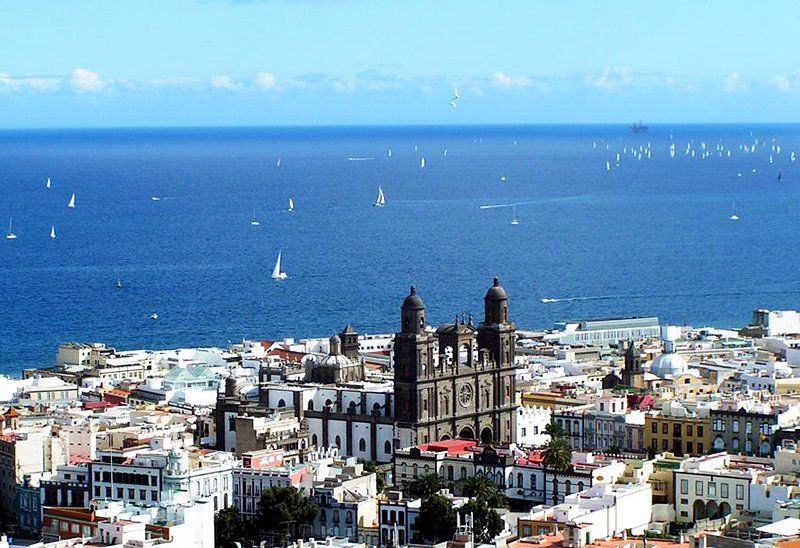
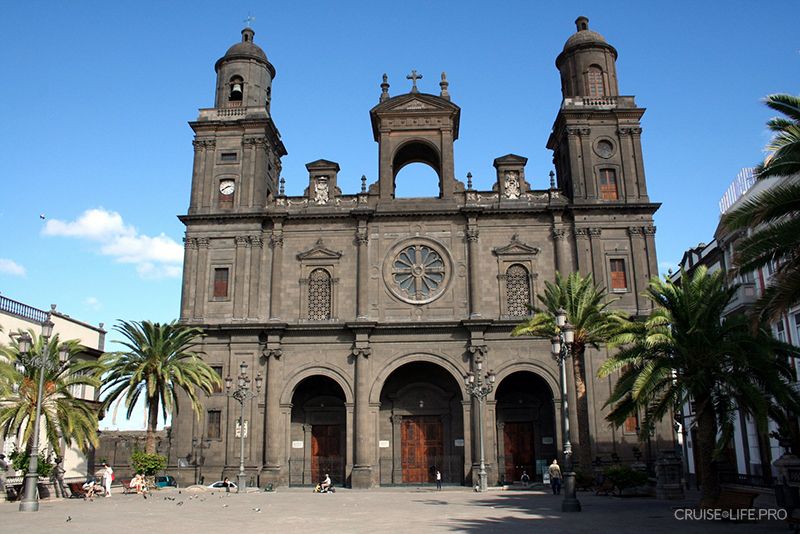
Cathedral of the Canary Islands
The temple’s second name is the Cathedral of Saint Anne, named after the city’s patron saint, Las Palmas. The church is located in the historic center of the capital. It is the most important monument of Canarian architecture, the first basilica in the archipelago, and the modern residence of the Catholic Diocese. Construction of the Cathedral began back in the 15th century, by the personal order of the cardinals of the Vatican, Queen Isabella I and King Ferdinand II. However, due to a lack of funds, the work was suspended several times. As a result, it is interesting to see how this is reflected in the building’s architecture: a fascinating blend of styles, from late Gothic to neoclassicism.
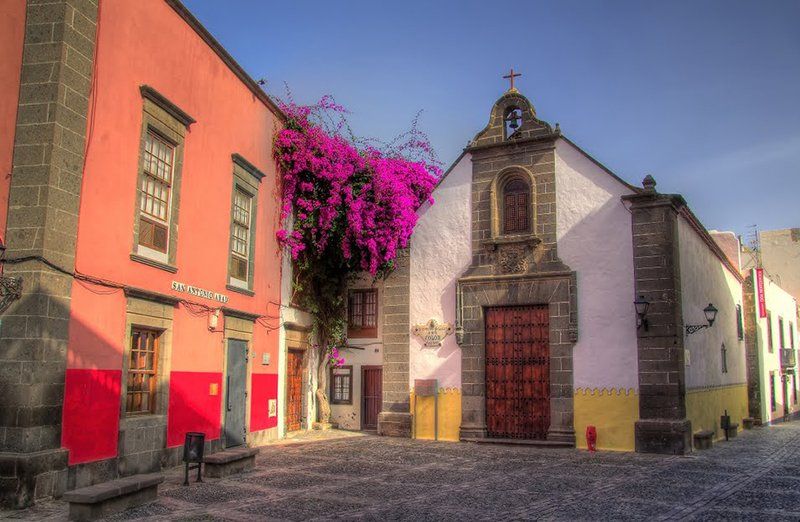
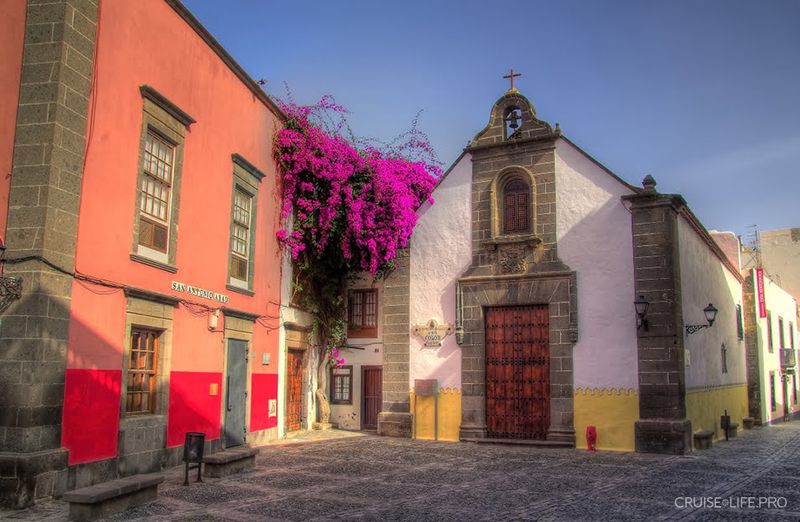
Church of San Antonio Abad
The small church of San Antonio Abad (Ermita de San Antonio Abad) was built in 1777 and is associated with the name of Christopher Columbus. Here Columbus prayed on several occasions before setting out again on his voyage across the ocean.
Bishop’s Palace
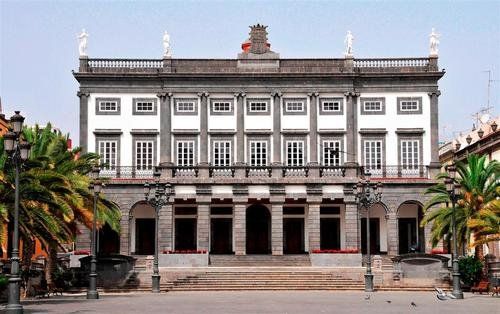
On Plaza de Santa Ana there is also the Bishop’s Palace (Palacio Episcopal), built in the early 16th century and rebuilt in 1630 after the city was besieged by the Dutch, the Las Palmas town hall, and eight bronze dogs-just like those on the coat of arms of the Canary Islands.
Canary Islands Museum
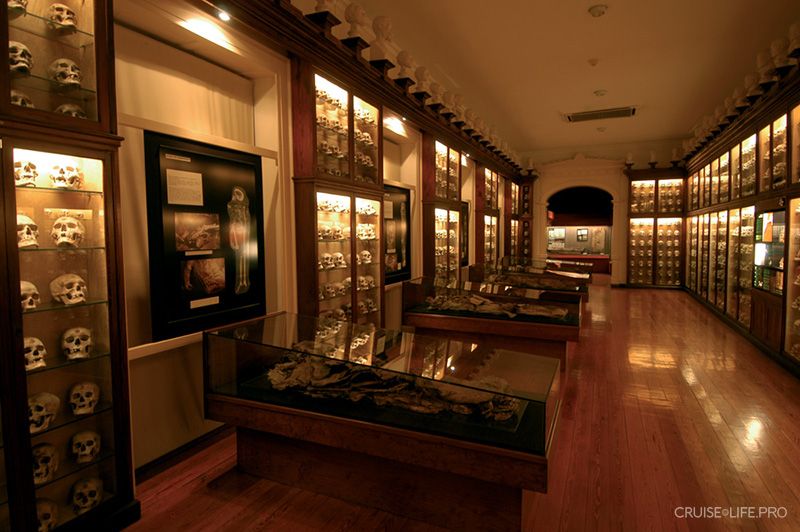
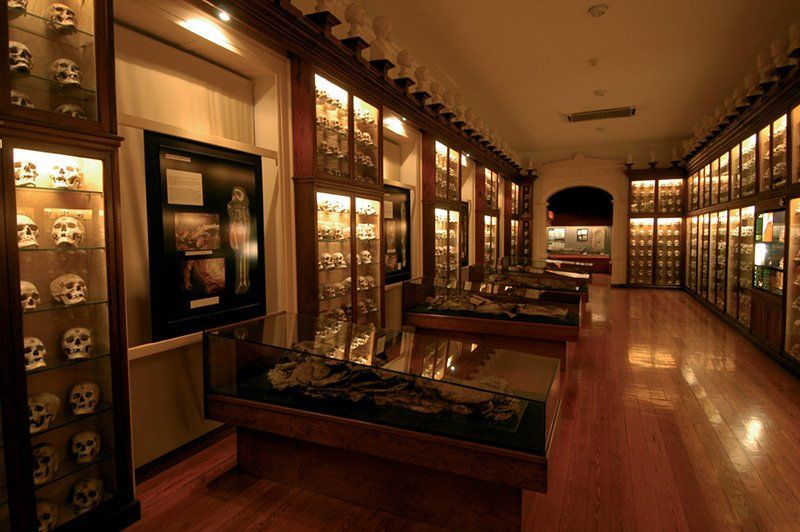
The Museum of the Canary Islands (Museo Canario), founded in 1879, will tell you about the lives of the indigenous people of Gran Canaria before Spanish colonization: you can see jewelry and tools of the Guanches, cave paintings, everyday items and mummies.