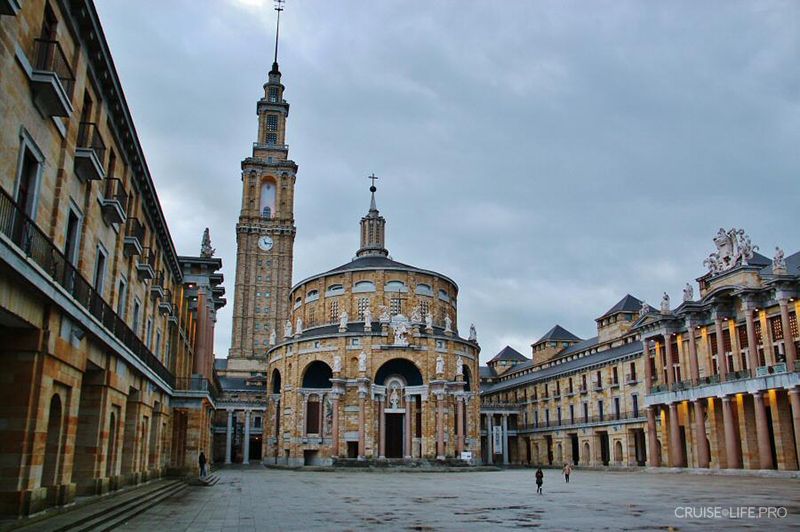
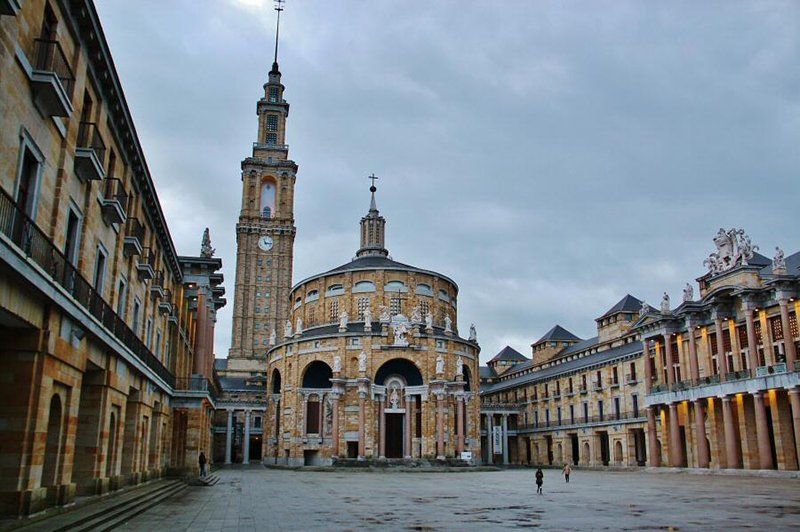
University of Working Life in Gijón
The university ensemble, considered the most important architectural work of 20th-century Asturias, is the largest building complex in Spain (it is located on a site covering 27 hectares). This grand complex of historic buildings impresses with its refinement and grandeur. In addition to the many beautiful structures, there are also small park areas and shady avenues, a stroll along which will provide you with a wealth of impressions. The 120-meter university bell tower corresponds to the model of the famous Seville Giralda. Its lift takes you up to the viewing platform-the best in Gijón.
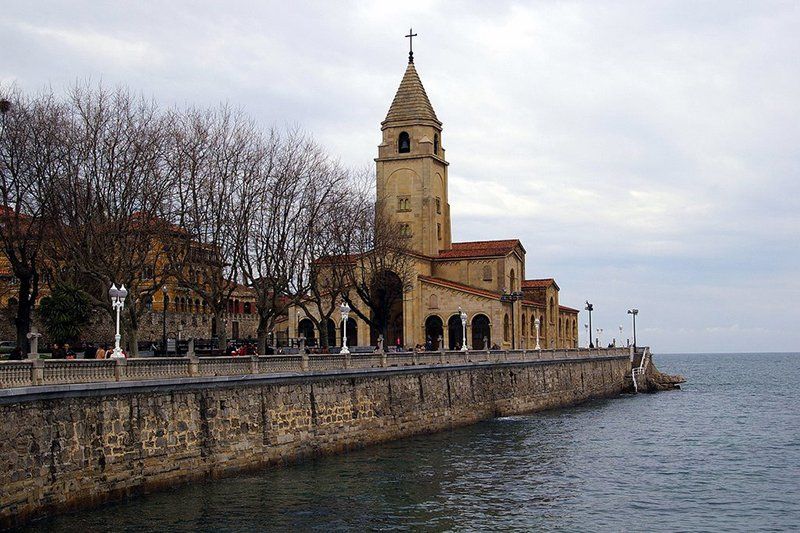
St. Peter’s Church
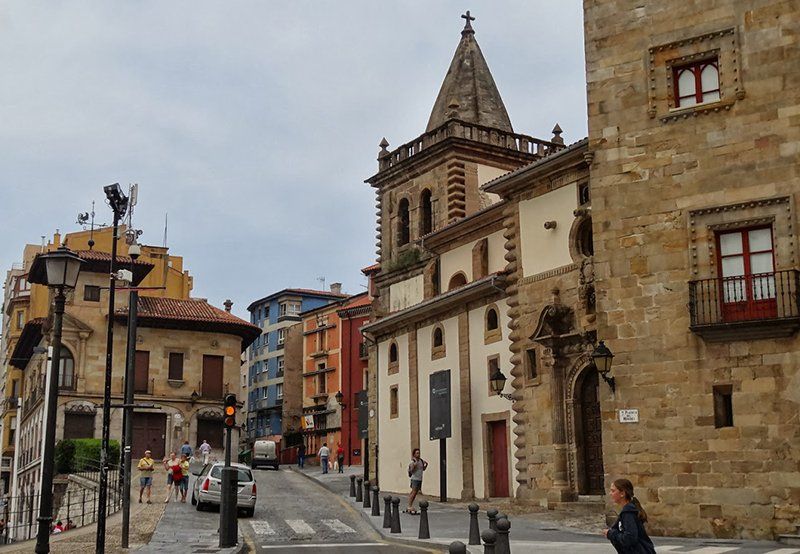
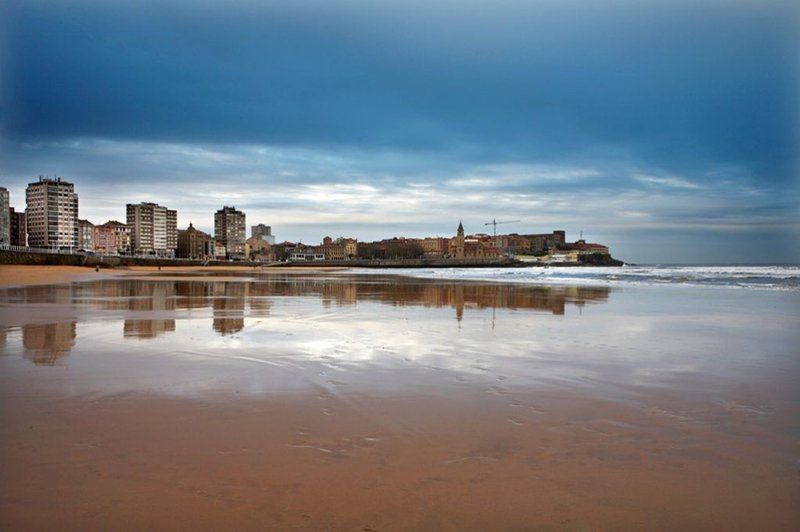
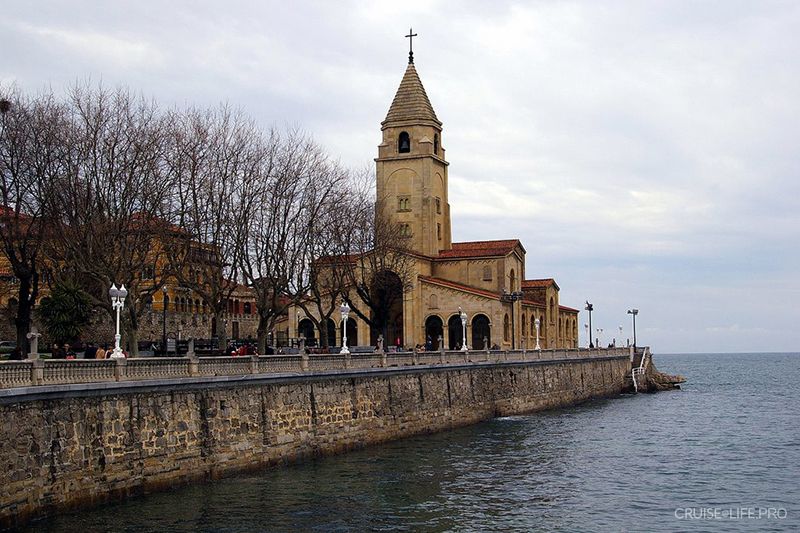
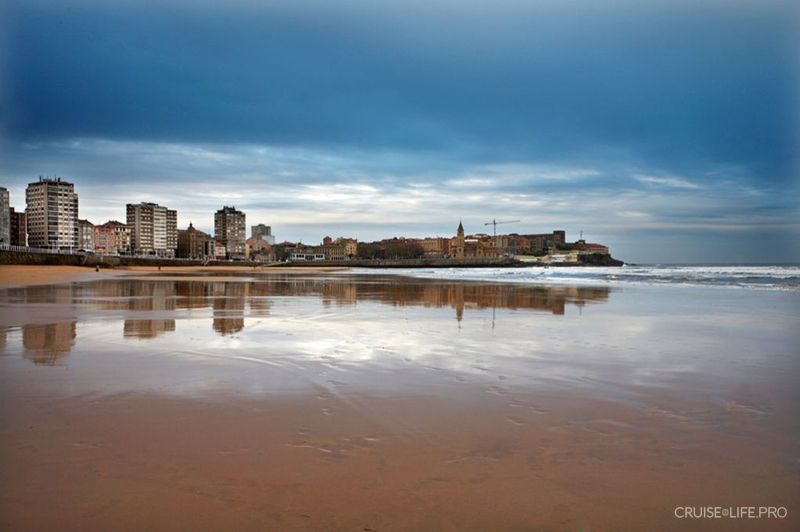
The Main Church of Saint Peter the Apostle is located at the northern end of Saint Lawrence Beach, on Campo Valdés Street. The church was built on the site of another temple, also dedicated to Saint Peter, which was constructed in the early 15th century in the Gothic style. During the Civil War, the old church was destroyed, and its foundation was used to build the new church. A design competition held in 1945 was won by the architects Francisco and Federico Somolinos. The work was completed by 1955. To create the monumental look of the building, the architects turned to the pre-Romanesque style, taking as their models elements from the surrounding pre-Romanesque churches. Only the central tower and the neoclassical portico have survived from the old temple.
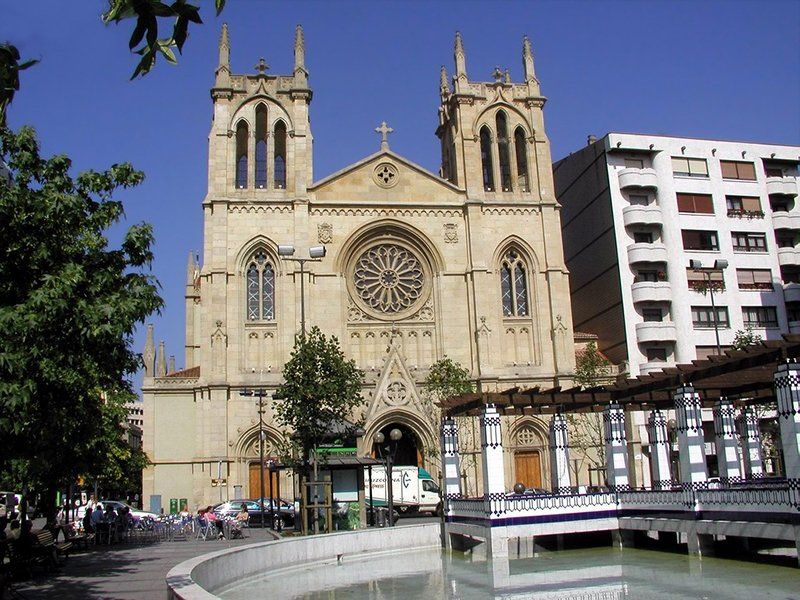
St. Lawrence Church
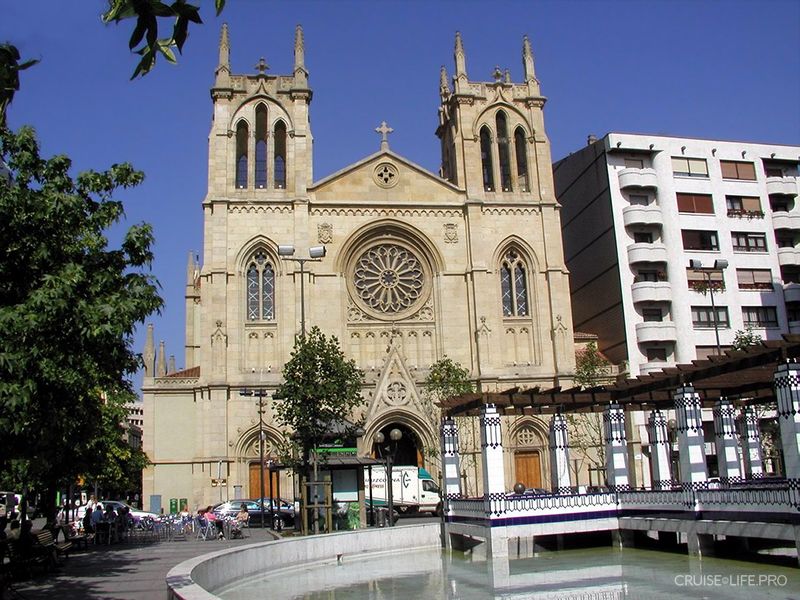
The construction of the church began in August 1896: it was then that the first stone was laid. However, the foundation was started only in January 1897, since the local authorities did not have enough funds for this predominantly working-class neighborhood. The required sum was collected by enthusiasts from all over Gijón. This church, which has the shape of a proper Latin cross in plan, generally corresponds to the Spanish late Gothic style. But for hygienic reasons (in the early 20th century, stables were located in the area of the church), the architect did not include the large window openings typical of Gothic architecture. During the Civil War (in 1936), the church was severely damaged and was reconstructed after the war. Unfortunately, almost nothing has survived of the original interiors.