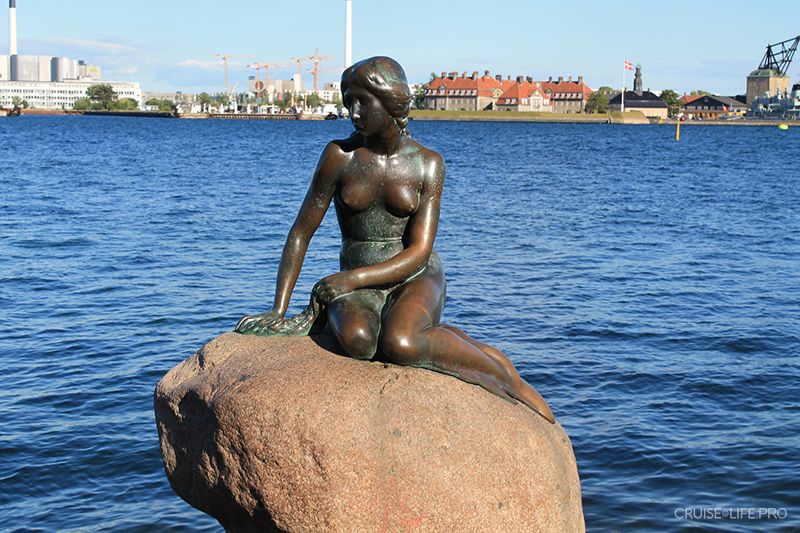
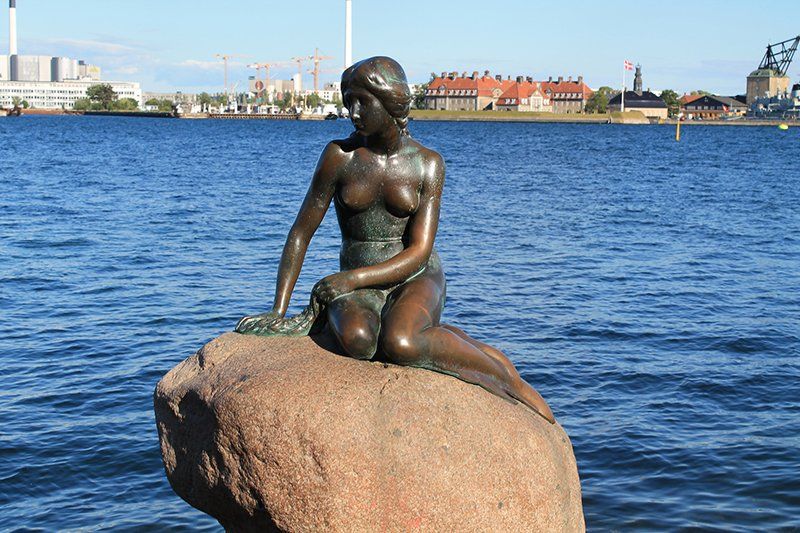
The Little Mermaid
A symbol not only of Copenhagen, but of all of Denmark as well. A world-famous sculpture, standing-and more precisely, sitting on a rock-in the capital’s harbor. Not exactly being carefully preserved: the Little Mermaid has already been damaged by some vandals several times, and once her head was even knocked off, so the statue had to be recreated.
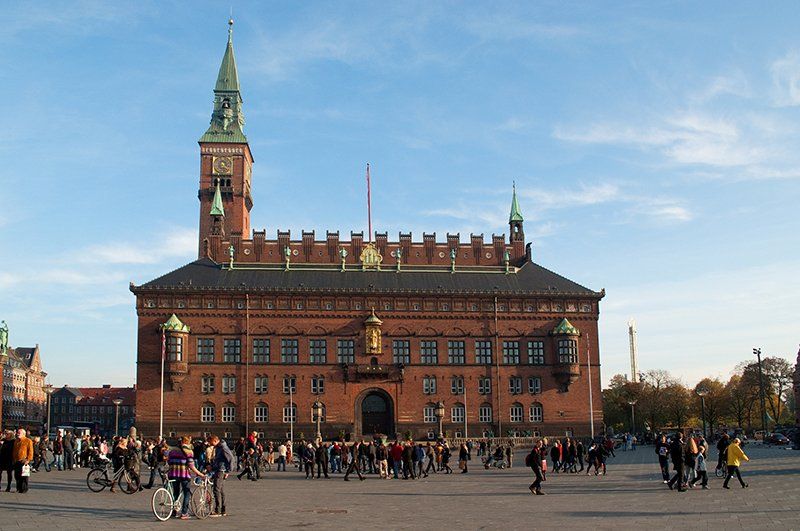
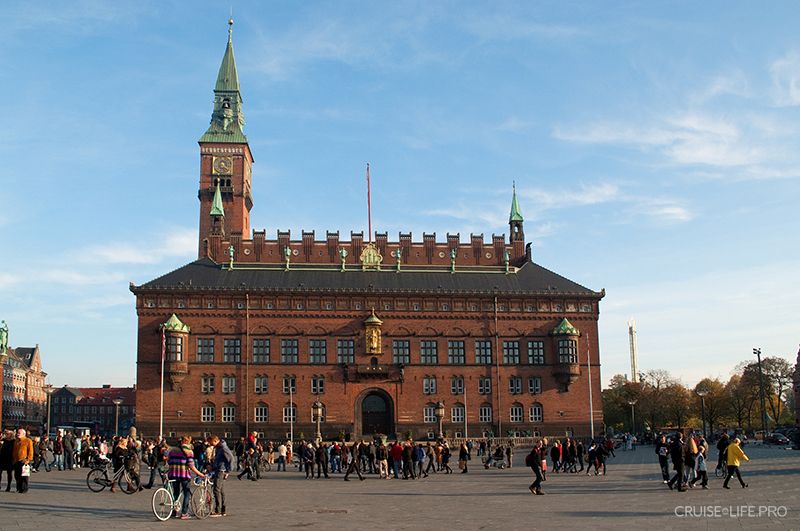
Town Hall
The very first building for Copenhagen City Hall was built back in the 18th century. Then there were another 5, but only the 1905 City Hall, designed by architect Martin Nyrop, has survived to this day. The building is very beautiful, in the late Romantic style, with a gilded sculpture of the founder of Copenhagen, Bishop Absalon, on the façade and large clock chimes that strike every day exactly at noon. Guided tours are available at City Hall. One of the most interesting rooms is on the first floor, featuring the famous astronomical clock by Jens Olsen. It was made in 1955, consists of more than 15,000 parts, and shows the time with such precision that an error of 0.4 seconds could accumulate only over 300 years.
Round Tower
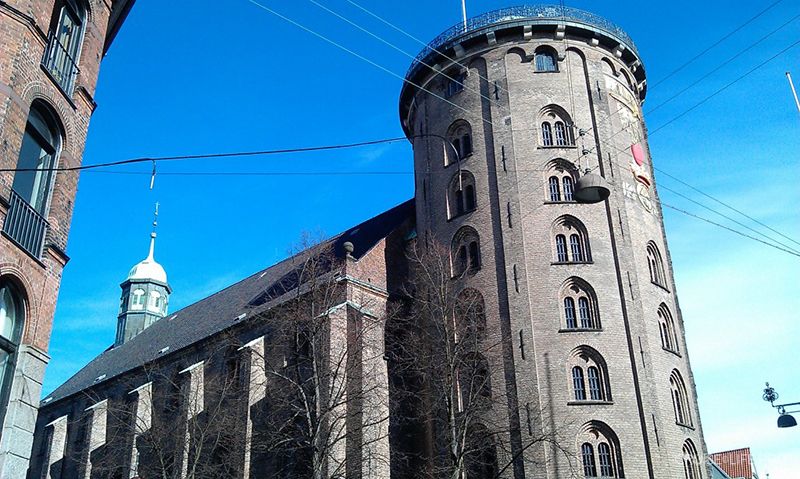
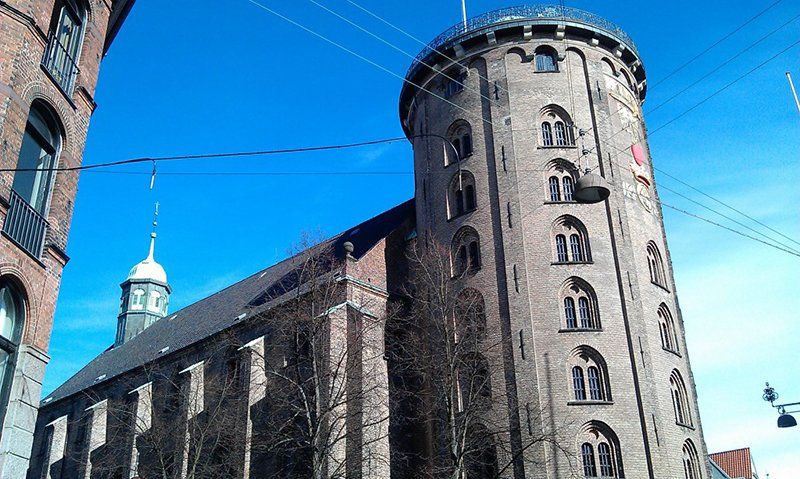
The Round Tower, Rundetaarn, from the outside looks like a thick, twisted waffle squeezed between buildings. You can’t slip past the open mouth of its entrance. It beckons you to climb the broad spiral road (there are no stair steps; the ascent is smooth) up to a platform where, 4 centuries ago, the royal astrologer and astronomer Tycho Brahe gazed at the stars. Back then, the tower served as an observatory and was part of a monastery complex. Today, it is still a vantage point for observing celestial bodies, as well as a museum, a concert hall, and a viewing platform from which you can see the Old Town. It is this tower that Hans Christian Andersen mentioned in his fairy tale “The Tinderbox”. One of the main characters-a magical dog-had eyes “like the round tower”.
Exchange (market)
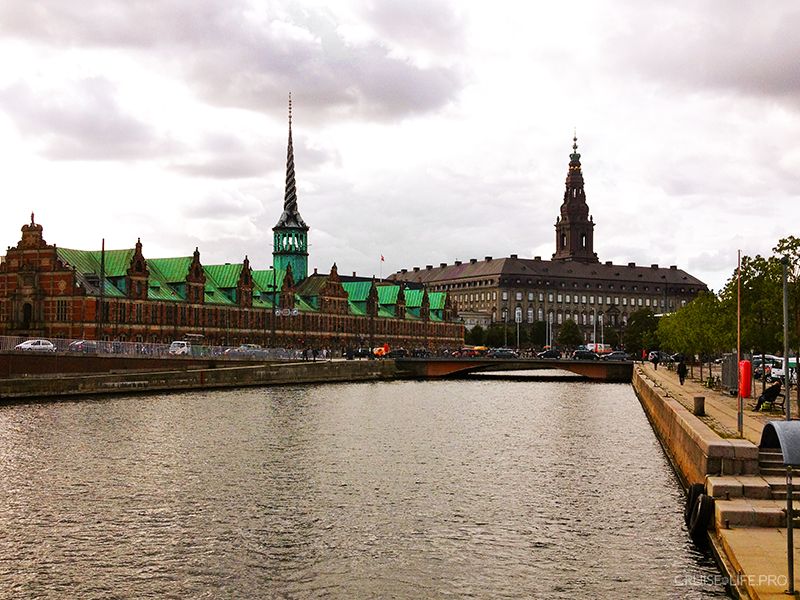
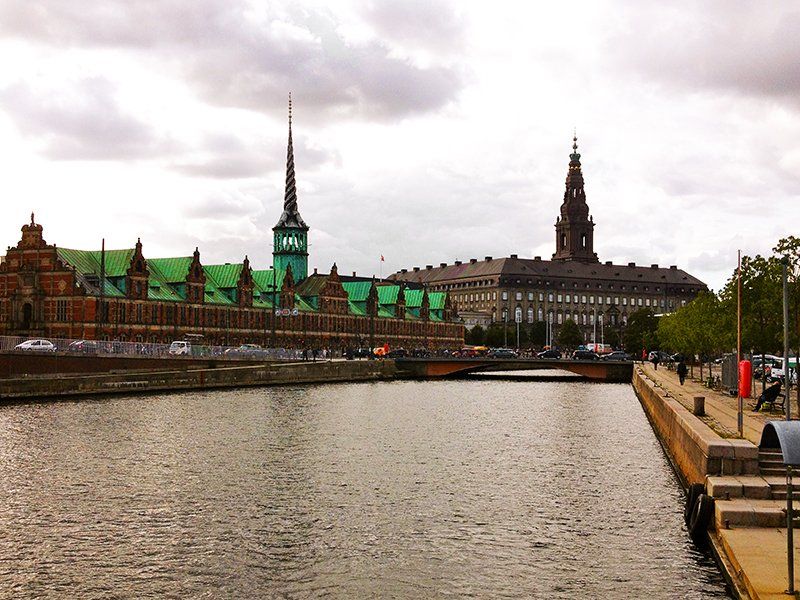
This beautiful red-and-white building on the waterfront was built in the mid-17th century. For many years it was home to thriving and prosperous exchange trading, and in the 19th century it was sold to the Chamber of Commerce and Industry. The exchange’s main attraction is a delightful spire-talisman made in the form of raised, intertwined tails of four dragons. The spire is 54 meters tall; at its peak there are three crowns symbolizing the union of Denmark with Sweden and Norway, and Copenhageners sincerely believe that it was this spire that helped save the exchange building from numerous city fires. The exchange roof, now copper and green, took on that look in the 19th century; before then, it was heavy and leaden until, during the Swedish war, it was melted down into cannon shells.
Church of Christ the Savior
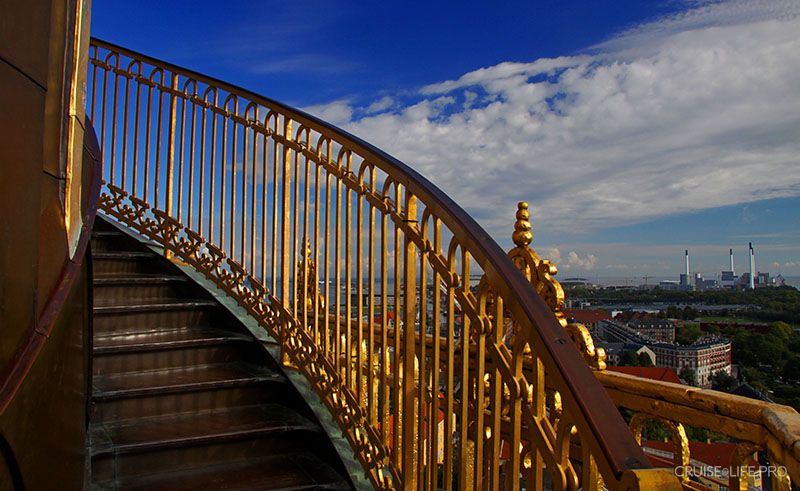
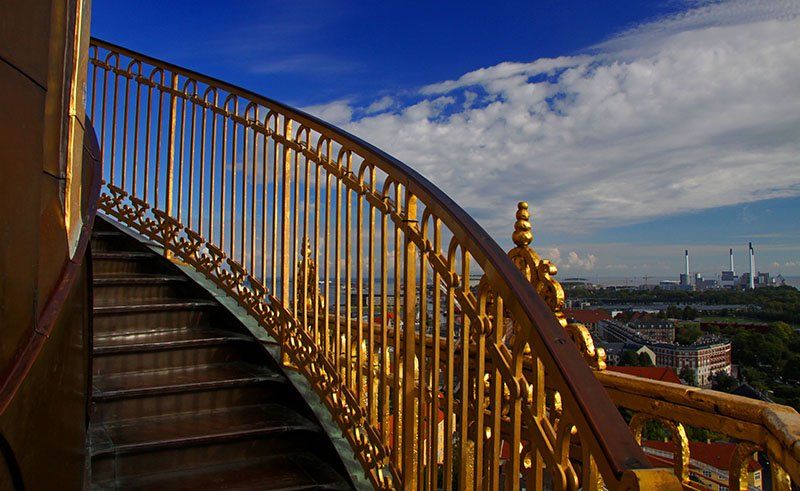
This Protestant church in the Baroque style is considered one of the most recognizable buildings in Copenhagen, mainly thanks to its wonderful spiral belfry: around the tower, a steep staircase winds up in a spiral with 400 steps. Once you reach the very top (86 meters), you’ll enjoy an exquisite panorama of the Old Town, Copenhagen Bay, and-very close by-the golden sphere with a four-meter figure of Christ at the end of the tower spire. If you’re lucky with the wind, and it’s strong enough, you’ll clearly feel the swaying of the spire and the sphere-pure, perfect extremity. The Church of Our Saviour was built at the end of the 17th century according to a design by architect Lambert van Haven, while the bell tower was erected only 80 years later.