Getting to know Buenos Aires makes sense to start at the place where it was founded and take a stroll through the park «Parque Lezama». It is said that in 1536 the conquistador Pedro de Mendoza ordered the construction of the first wooden settlement here, which laid the foundation for the Argentine capital. From here, you can see the Orthodox Holy Trinity Cathedral, built with funds from Russian monarchs.
The Argentines themselves are Catholics. And although in the Buenos Aires Metropolitan Cathedral there is an Orthodox icon of the Theotokos of Vladimir hanging right at the entrance, the city’s Catholic fervor is impressive. It has only intensified since an Argentine, Jorge Mario Bergoglio (Pope Francis), was elected Pope. It is rumored that the Pontiff has even become more popular in the country than Maradona. The cathedral is worth visiting to see the tomb with the relics of Argentina’s national hero, José de San Martín.
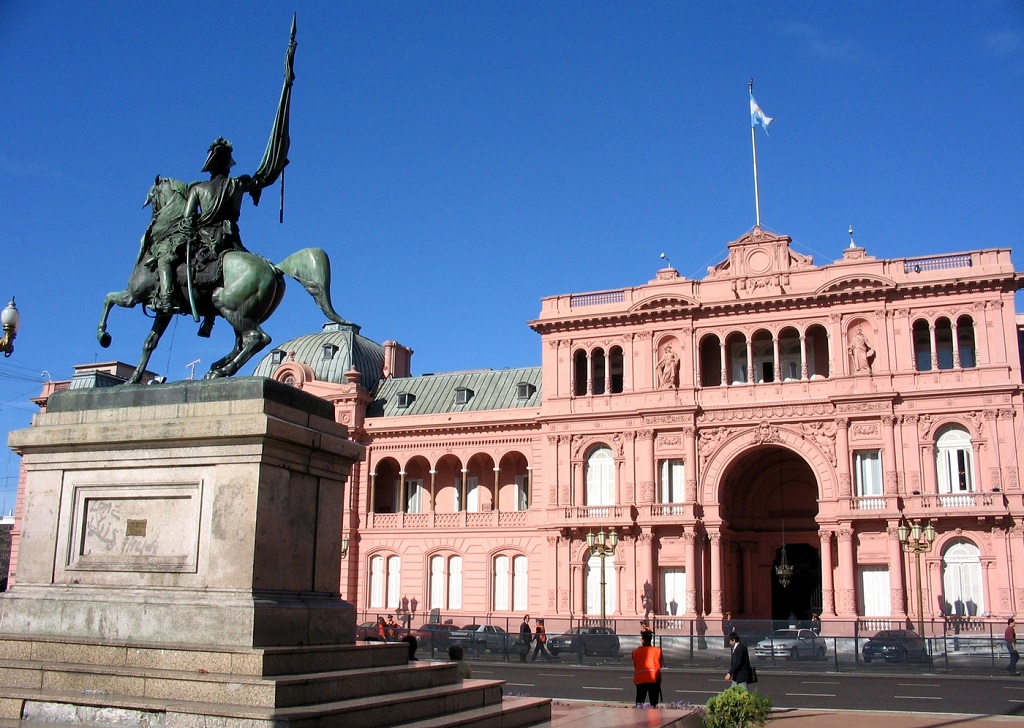
The architecture of the capital delights with a variety of styles. For example, the Palace of the National Congress on the eponymous square was built in 1906 based on the model of the Capitol in Washington. And the Pink House (Casa Rosada, the Presidential Palace) on May Square was designed in the Italian style.
Works of art are exhibited in the capital’s main city museum-the National Museum of Fine Arts (admission is free). You can see the industrial architecture of the early 20th century at the Usina del Arte cultural center. It is housed in a power-station building and is known for excellent acoustics. In the center’s symphony hall, tango, rock, jazz, and classical operas are performed.
On the world’s widest street-Avenida 9 de Julio-you need to stop by the «Teatro Colón». Tickets for performances sell out six months in advance, but guided tours in English and Spanish of the theatre building are held every day. And they’re worth it. The theatre has recently been restored for 100 mln USD. Teatro Colón is the pride of Buenos Aires. It is the main opera stage in all of South America and a hub of classical music. You should see it even if you’re not an opera fan. What’s interesting is both the Teatro Colón building itself, designed in the Renaissance style, and its interior decoration.
In the very heart of Buenos Aires there is a huge Obelisk-the symbol of Argentina’s capital. More precisely, it stands at República Square, where Avenida 9 de Julio and Calle Corrientes intersect. What’s interesting is that the Obelisk was installed exactly at the spot where the Argentine flag was first raised.

.jpg)