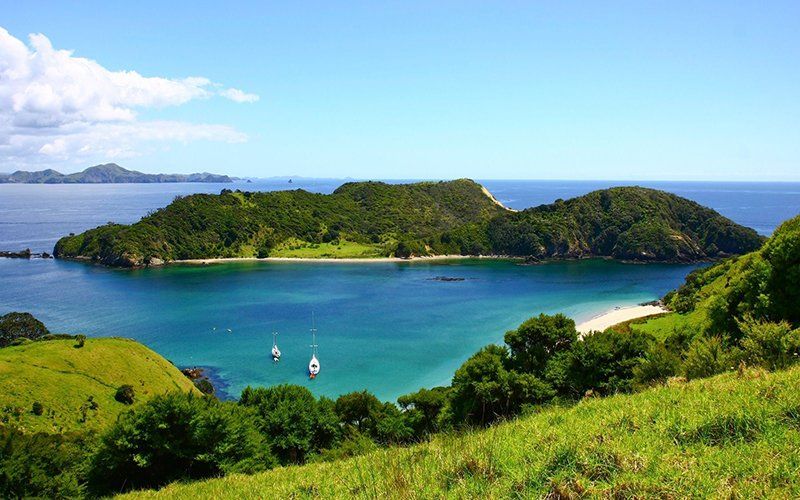
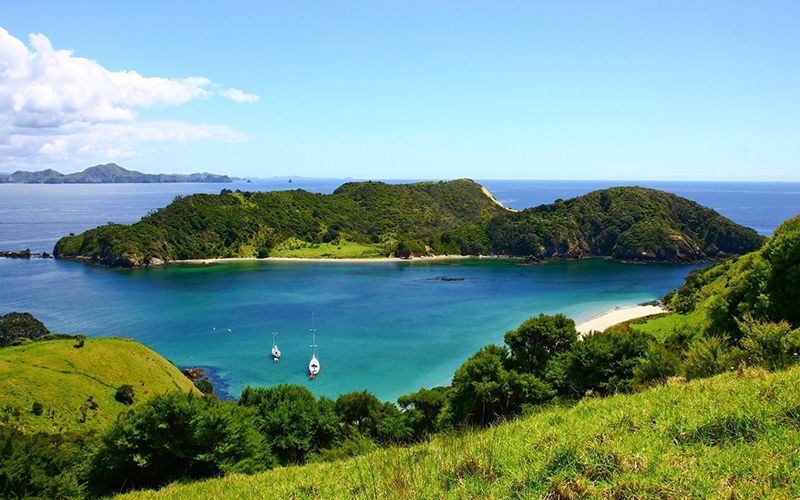
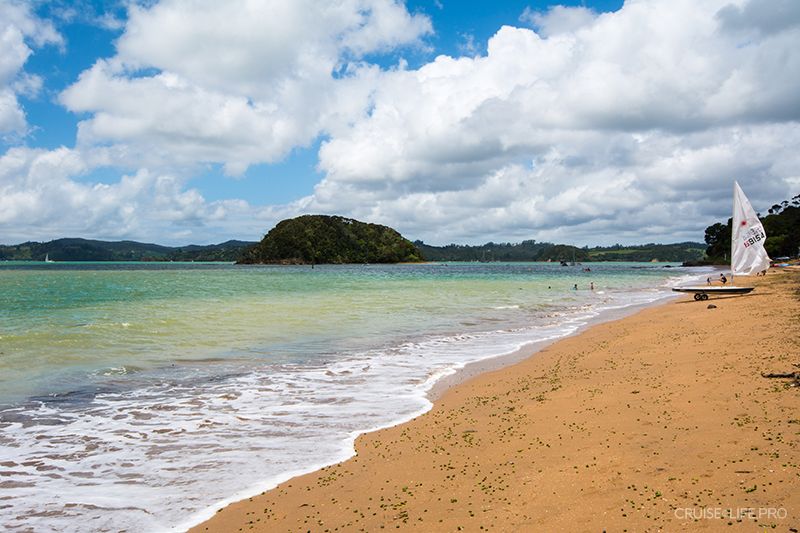
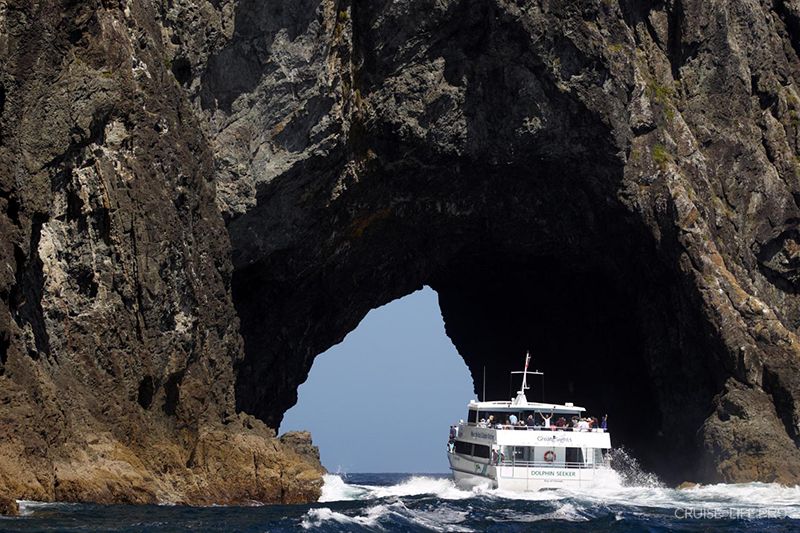
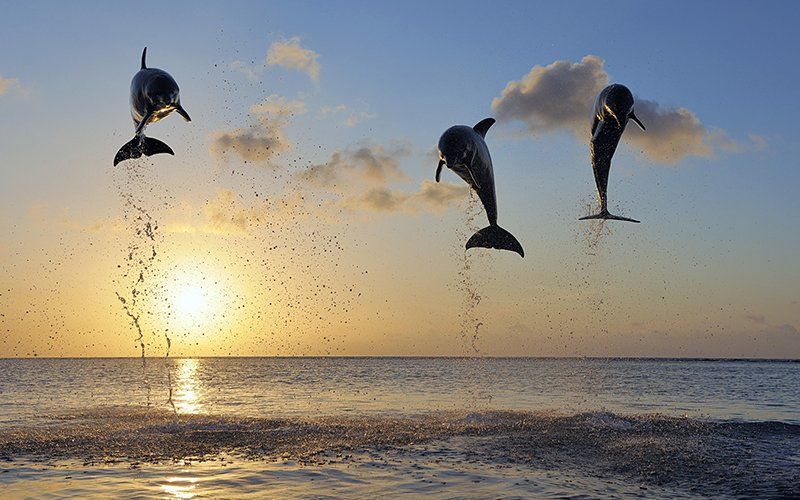
Bay of Islands - a bay in the north-eastern part of North Island (New Zealand), in the Northland region. It is located 60 km northwest of the city of Whangārei. The bay, in shape, resembles a fjord, with an average width of 16 km.
Inside the bay there are many coves, the best-known of which are Waitangi in the south and Kerikeri and Te Puna (Mangonui) in the north-west. To the north of the bay there are small islands. On both sides, Bay of Islands is surrounded by peninsulas: in the western part, by the Purerua Peninsula, and in the eastern part, by the Cape Brett Peninsula.
The first European to visit the bay was the English traveler James Cook, who sailed here in 1769. The coastline of Bay of Islands became the place in New Zealand where the first Europeans settled.
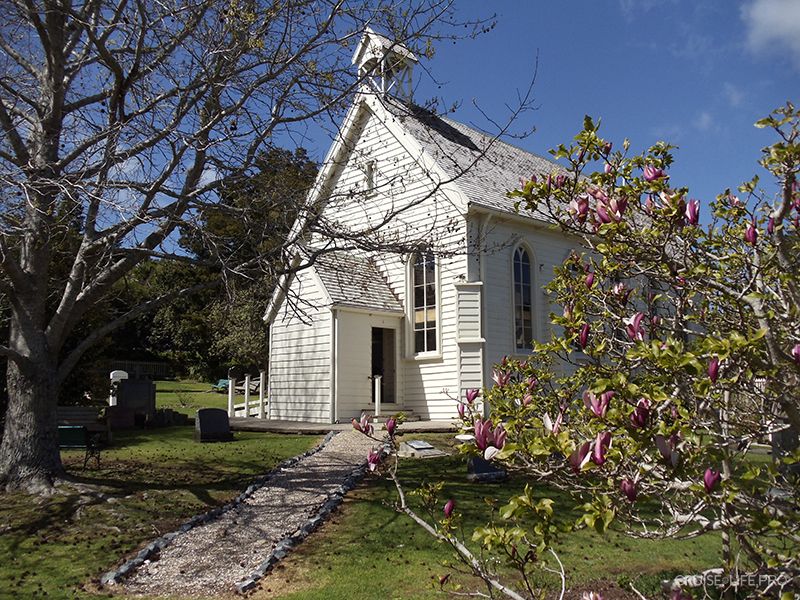
On the shore washed by the bay there are the towns of Russell, Paihia, and Kerikeri. Russell, formerly known as Kororāreka, became the first permanent European settlement in New Zealand. In Kerikeri there are many attractions associated with the first European colonists.
The bay is popular with tourists who come to simply enjoy the nature of New Zealand, take a break from stuffy cities, swim in the sea, and lie back and sunbathe on the beach.
Climate
The climate of Bay of Islands is maritime-subtropical: temperatures are relatively stable, without sharp changes. In July-August the air temperature is 8-12 degrees Celsius. The most favorable time to relax in the bay, oddly enough, is in winter. In winter the air temperature is 14-20 degrees Celsius, and the water temperature reaches +22 degrees Celsius.