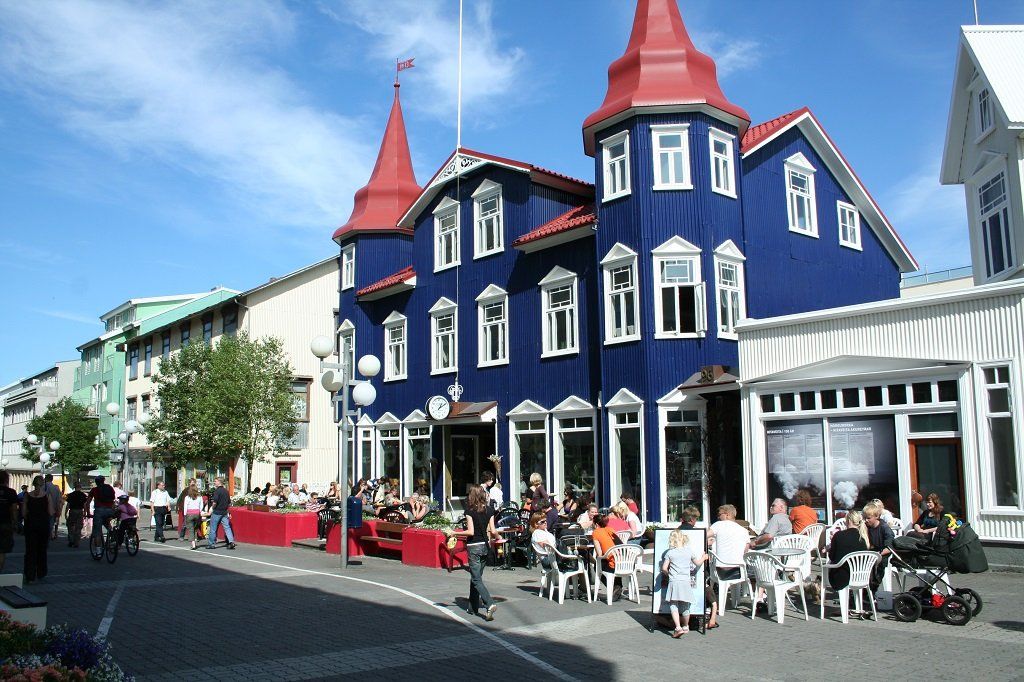
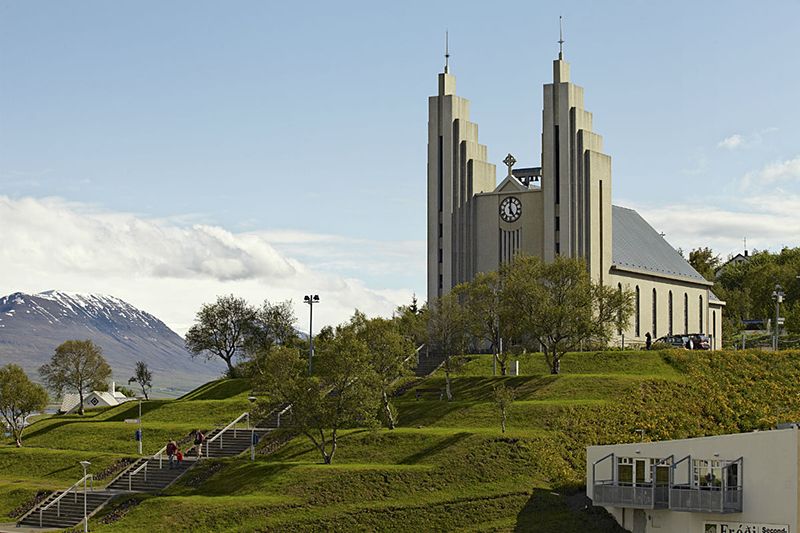
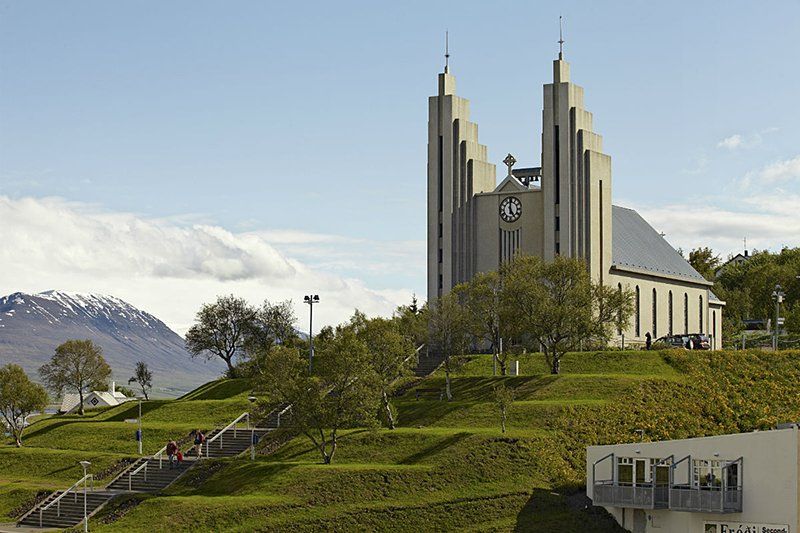
Akureyri - a town and municipality in the northern part of Iceland; the fourth largest town in the country (after Reykjavík, Kópavogur and Hafnarfjörður). According to the 2009 census, the town has a population of 17 563. It is also known as the “northern capital” of Iceland.
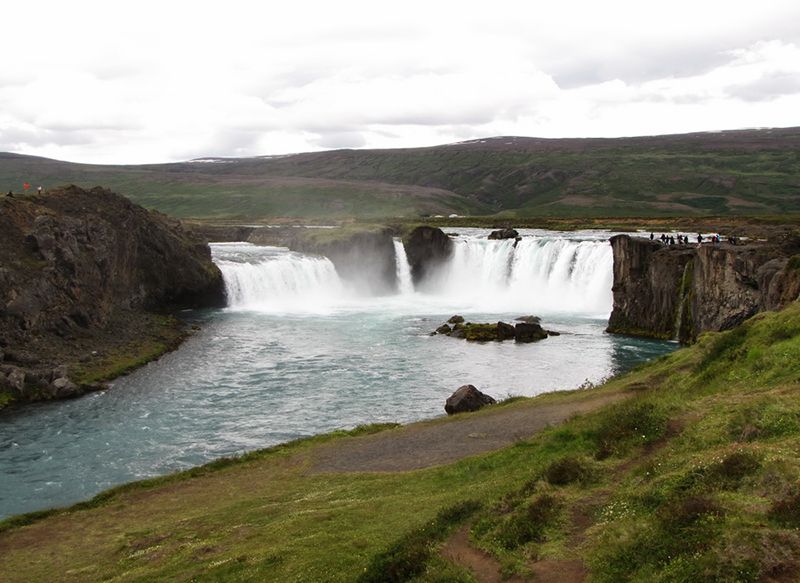
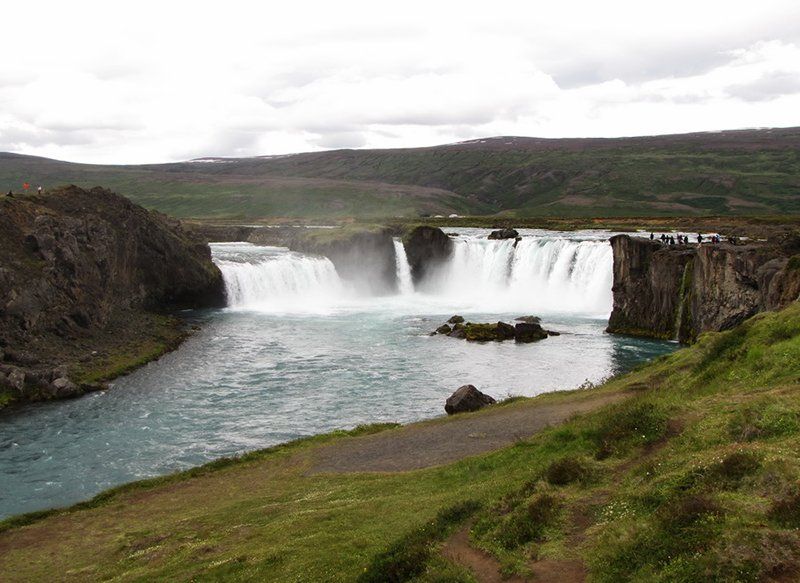
The town is located at the bottom of the western part of Eyjafjörður fjord; it is surrounded by mountains, the highest of which is Mt. Súlur, with an elevation of 1213 m. The seacoast is a narrow, flat strip in front of a steep, low hill. The river Glérau runs through the town. Not far from Akureyri is the famous waterfall Godafoss, where, at the time of the christening of Iceland’s inhabitants, pagan idols were thrown.
The first Vikings settled in the Akureyri area as early as the 9th century AD. The name Akureyri has been mentioned since 1562, when a woman was exiled here for adultery. Permanent settlements have been known since 1778. Since 1786, Akureyri has had city status granted by the King of Denmark.
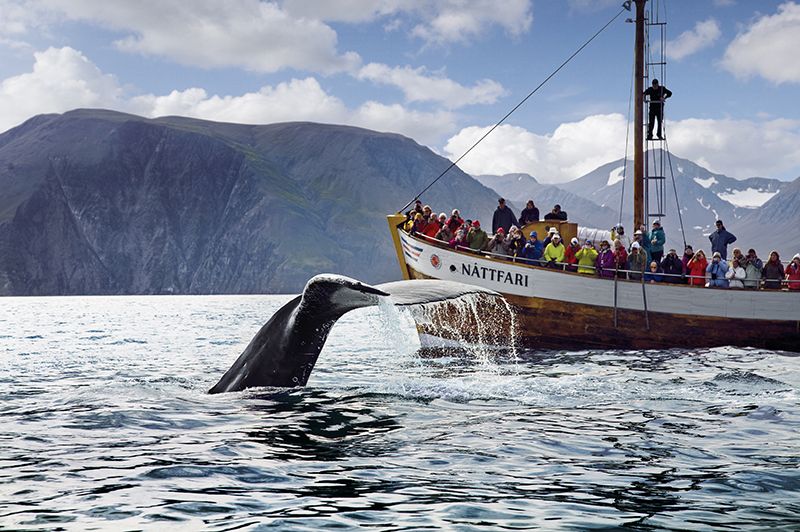
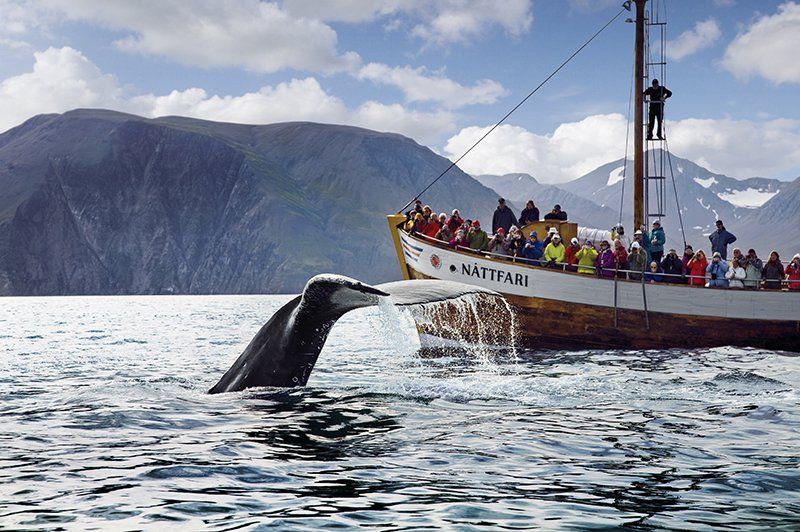
From here, it is convenient to make trips to the picturesque surrounding areas - to Húsavík, to the Godafoss waterfall, and to the island of Grímsey - the only part of Iceland that lies north of the Arctic Circle, where a flight operates from Akureyri.
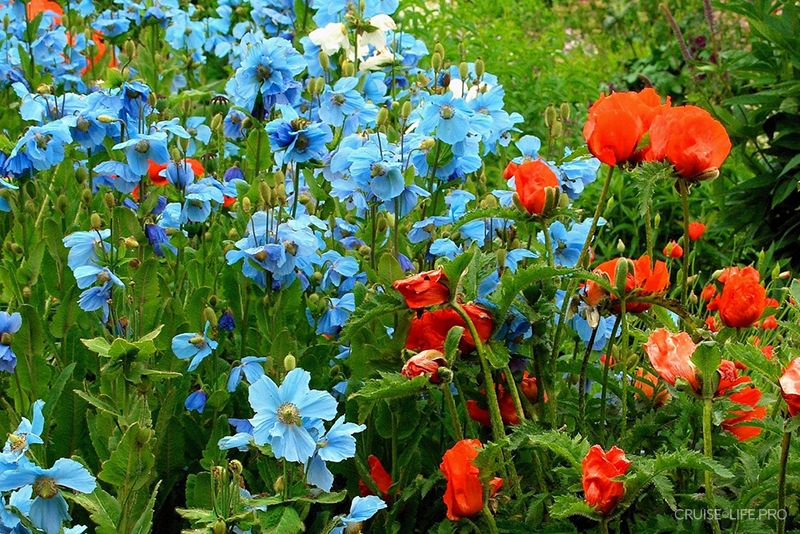
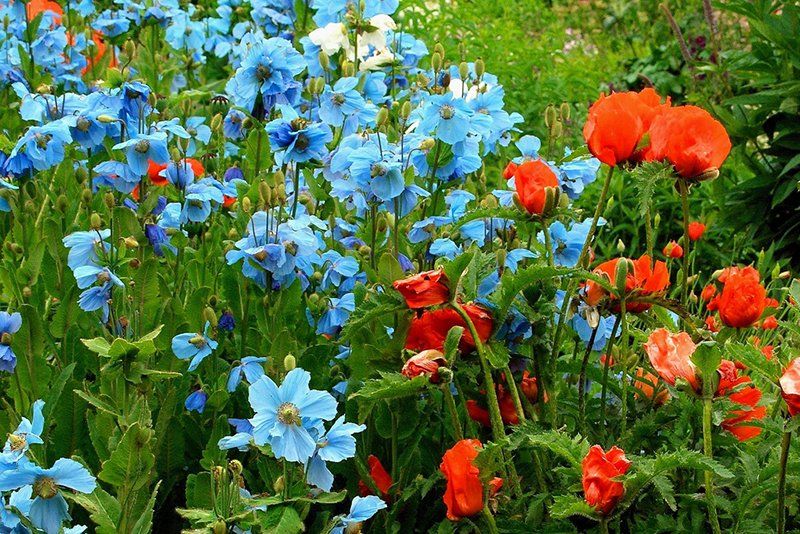
Akureyri is widely known as a town surrounded by fertile soil: here potatoes and fruit trees are grown successfully. There are even competitions for the best garden and vegetable plot. The Botanical Garden, one of the town’s gems, was opened in 1912 and is the northernmost botanical garden in the world. It contains almost all the plants that grow in Iceland, as well as about 4000 species of plants from such remote places as Spain and New Zealand.
ClimateDue to the town’s location at the end of a long fjord surrounded by mountains, the climate is more inland than coastal: here there are more significant temperature variations (warm summers, cold winters) than in many other parts of Iceland. The mountains protect Akureyri from the winds.