

Information center
Mistakes First-Time Cruisers Make: What Not to Do
Published: 7 min read
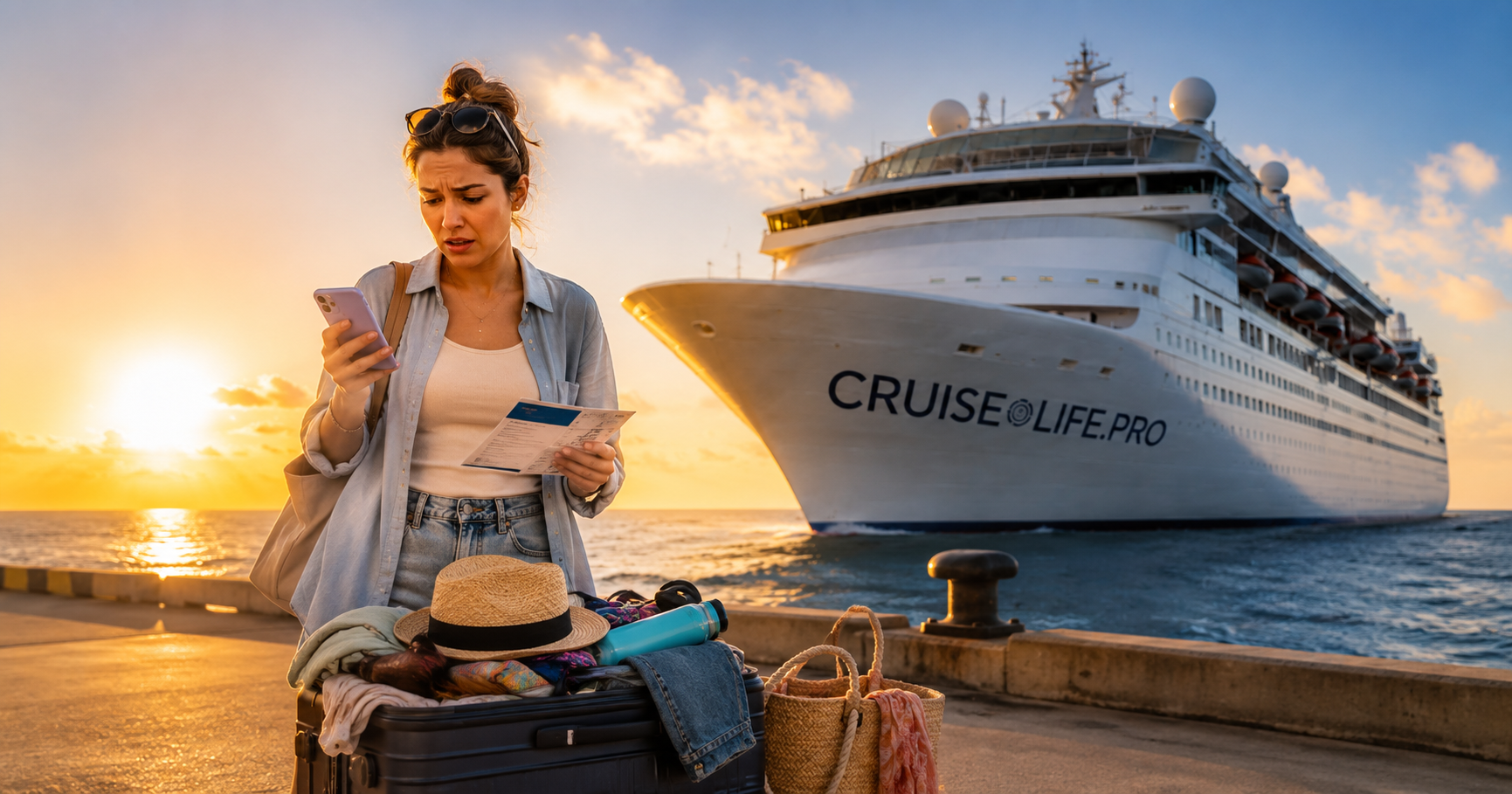
Your first cruise is something you’ll remember forever. But often it’s not just the port stops or evenings on deck that make it memorable—it’s also the little things that can spoil your mood during the first few days. The sad thing is that these little things are typical. Almost all first-timers make them, and almost all of them later say, “If only I’d known beforehand.” We’ve compiled a list of the most common mistakes to make your first cruise go more smoothly.
Why You Shouldn’t Fly In on the Day of Departure
It seems logical: a morning flight, boarding the ship in the evening, and you’ll even save on a hotel. In practice, this is one of the riskiest strategies in cruise planning.
A flight delay, bad weather, baggage issues, or even just traffic on the way to the port could cost you the entire cruise. The ship won’t wait for late passengers, and no one will offer you compensation for a missed departure.
The rule of thumb for experienced travelers is simple: arrive one day—or better yet, two days—before departure. This gives you a buffer for any unforeseen circumstances, as well as a chance to calmly explore the port of departure, which is often worth visiting in its own right.
Do you really need to dress up for dinner?
Yes, and this isn’t just a whim. On most cruise ships, there are at least one or two evenings when the main restaurant expects a more formal look: a dress, classic pants, or a shirt. A tuxedo is usually not required, but shorts and a T-shirt are definitely out of place here.
First-timers often overlook this, packing only beachwear, and then feel too self-conscious to enter the restaurant or end up dining at the café on the upper deck for the entire cruise. That’s a shame, because a festive dinner in the main restaurant is often one of the best parts of the cruise.
Tip: Check the itinerary in advance and pack at least one smart outfit and a pair of shoes. It doesn’t have to be expensive. The main thing is that it looks appropriate.
How Much Does a Cruise Actually Cost, Including All Fees?
The cruise price listed on the website is almost never the final price. Port fees are usually added to it, and on many ships, there’s also a service charge, which is calculated daily for each passenger and is typically automatically deducted from the cabin bill.
First-timers calculate their budget based only on the base price and are then surprised when the total turns out to be significantly higher. Add to that drinks not included in the base package, shore excursions, and purchases at onboard shops, and the difference becomes noticeable.
What to do before booking:
check whether port fees are included in the price;
find out the amount of the service charge and how it’s calculated;
set aside a separate budget for excursions and entertainment;
set aside a reserve for unexpected expenses in ports.
Why check in online in advance
Almost all cruise lines offer online check-in a few weeks before departure: fill out your passport information, choose your boarding time, and sometimes even book a table or a show right away. It’s easy to skip this step, especially when you’re preparing for your first trip and don’t even know this option exists.
The result is predictable. At the port, you’ll have to fill out all the paperwork by hand and stand in a longer line while those who checked in early are already boarding. And the time spent on paperwork could have been spent enjoying your first lunch on deck with a view of the sea.
Set aside an hour a week before the cruise, complete the check-in process, and print or save your confirmation on your phone.
Should you buy all your excursions through the cruise line?
Buying excursions through the cruise line itself is convenient: you’re guaranteed that the ship will wait for you if the group is delayed, and you don’t have to arrange anything on your own. But this convenience often comes at a significantly higher cost than organizing the same itinerary with a local guide or on your own.
First-time travelers often buy the entire excursion package all at once, while still at home, out of fear of missing something. As a result, they end up overpaying for tours that could easily be replicated more cheaply—and sometimes more interestingly—in a small group with a local guide.
Here’s a smart approach: save the cruise line’s official excursions for complex or distant locations where the risk of missing your ship is genuinely high. But in ports that are easy to reach on your own, feel free to explore alternatives.
What to Do on a Sea Day When There’s No Shore
A day at sea, when the cruise ship simply sails across the ocean without calling at a port, sounds like the perfect way to relax. And it often is, if there are activities on board that suit your taste. But first-timers who imagined a nonstop series of city tours sometimes feel lost when they suddenly realize they have a whole day ahead of them without going ashore.
Large cruise ships usually offer plenty of activities: pools, shows, workshops, sports facilities, and a spa. But it’s best to check the cruise itinerary in advance rather than hoping to figure things out on the spot first thing in the morning.
Besides, a day at sea offers a wonderful opportunity to simply relax without a plan, so you don’t have to fill every hour. The main thing is to consciously choose what you want today: activity or quiet.
Why You Should Bring an Adapter and an Extension Cord
A small detail that can ruin your mood more than you might expect. Cabins often have very few outlets, and their standards may differ from what you’re used to at home, depending on the country under whose flag the cruise ship is registered.
Without an adapter and an extension cord with multiple outlets, it will be inconvenient to charge your phone, tablet, and camera at the same time. And you’ll want to take plenty of photos.
Bring a universal adapter and a small extension cord without a built-in voltage converter. For safety reasons, most cruise ships only allow simple extension cords. This is one of the cheapest ways to make your trip more comfortable.
Why the time on a cruise ship doesn’t always match the time at the port
This confusion catches almost every first-timer at least once. A cruise ship may operate on so-called “ship time,” which doesn’t always match the local time at the port of call, especially when the route crosses multiple time zones.
Missing the departure due to this discrepancy is unfortunate but entirely possible. The schedule is always announced and published in the daily program, but first-timers sometimes check the clock on their phone, which has automatically adjusted to the port’s local time.
Every morning, check the current time for returning to the ship in the daily program, which is usually delivered to your cabin or displayed in the cruise line’s app. And plan to return with at least a half-hour, or better yet, an hour, to spare before the official departure time.
The main thing to remember
None of these mistakes is critical on its own, and almost all can be corrected during the preparation phase. The key is to start planning well before the week of your cruise: check your documents, the dress code, and your budget (including all fees); complete check-in; and make a list of small items like an adapter. Then your first cruise will be remembered for the sea, the ports, and new experiences—not for the hassle that could easily have been avoided.
Google will show our content marked as a "preferred source" in search and AI answers.
Frequently asked questions
Why shouldn't you arrive on the day of departure?
A flight delay, bad weather, baggage issues, or traffic congestion could cost you the entire cruise, because the cruise ship won’t wait for late passengers, and no one will offer compensation for a missed flight. It’s recommended to arrive one day—or better yet, two days—before departure.
Do you really need to wear nice clothes for dinner?
For example, on most cruise ships, there are one or two evenings when a more formal attire is expected in the main restaurant: a dress, classic pants, or a shirt. A tuxedo is usually not required, but shorts and a T-shirt are inappropriate.
How much does a cruise actually cost, including all fees?
The price listed on the website is almost never the final price: port fees are usually added, and on many cruise ships there is also a service charge, which is calculated daily for each passenger and is typically automatically deducted from the cabin bill. There may also be additional costs for beverages not included in the basic package, excursions, and purchases at onboard shops.
Why should I register online in advance?
Many cruise lines offer online check-in several weeks before departure so you can enter your passport information, choose your boarding time, and sometimes even book a table or a show right away. If you miss this, you’ll have to fill out the paperwork by hand at the port and wait in a longer line while those who checked in early are already boarding.
Why should you bring an adapter and an extension cord?
There are often not enough outlets in a cabin, and their standards may differ from what you’re used to at home, depending on the country under whose flag the cruise ship is registered. Without an adapter and an extension cord with multiple outlets, it will be inconvenient to charge your phone, tablet, and camera at the same time, so it’s recommended that you bring a universal adapter and a short extension cord without a built-in voltage converter.